
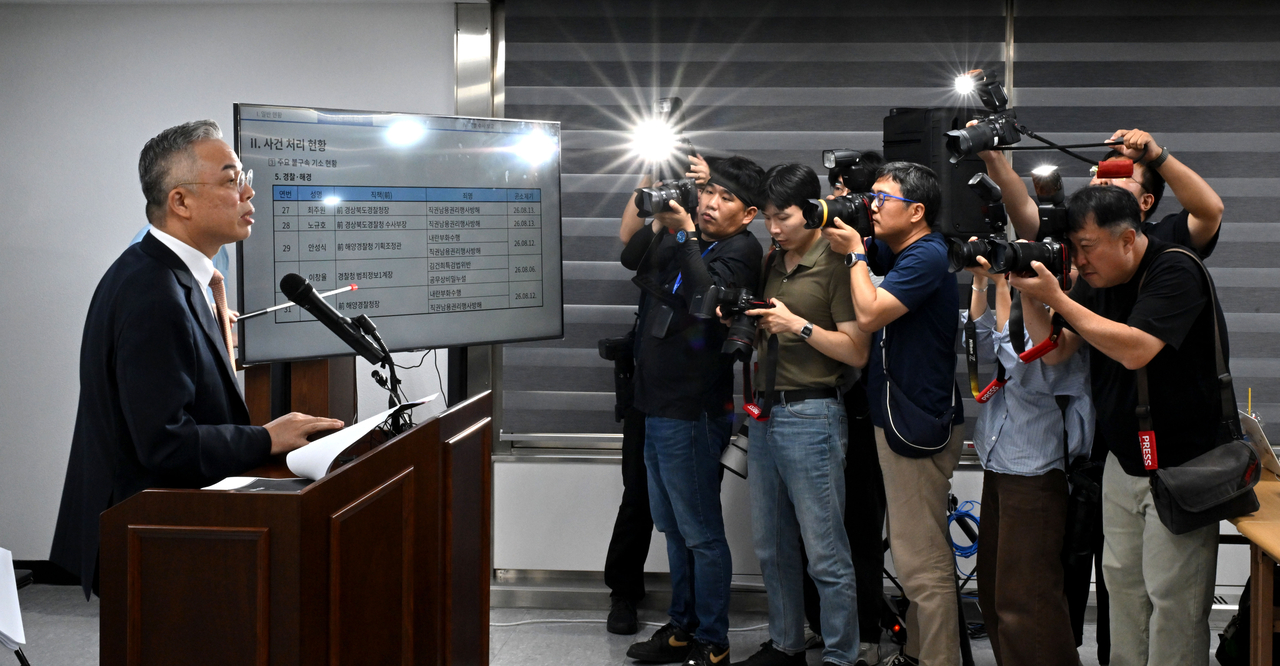
Even as the second comprehensive special prosecutor team, led by Special Prosecutor Kwon Chang-young, recently wrapped up its investigation into allegations left unresolved after three earlier special prosecutor probes, at least one case remains in limbo. The case involves former Justice Minister Park Sung-jae on charges of violating the Improper Solicitation and Graft Act. The insurrection special prosecutor team, led by Special Prosecutor Cho Eun-seok, says it transferred the case to the comprehensive team on the grounds that it falls within the scope of the comprehensive special prosecutor act — the legal basis for the second team's mandate. The comprehensive team, which has since concluded its work, disagrees, saying the case was never properly transferred to it. With the two teams at odds, the investigation has nowhere to go.
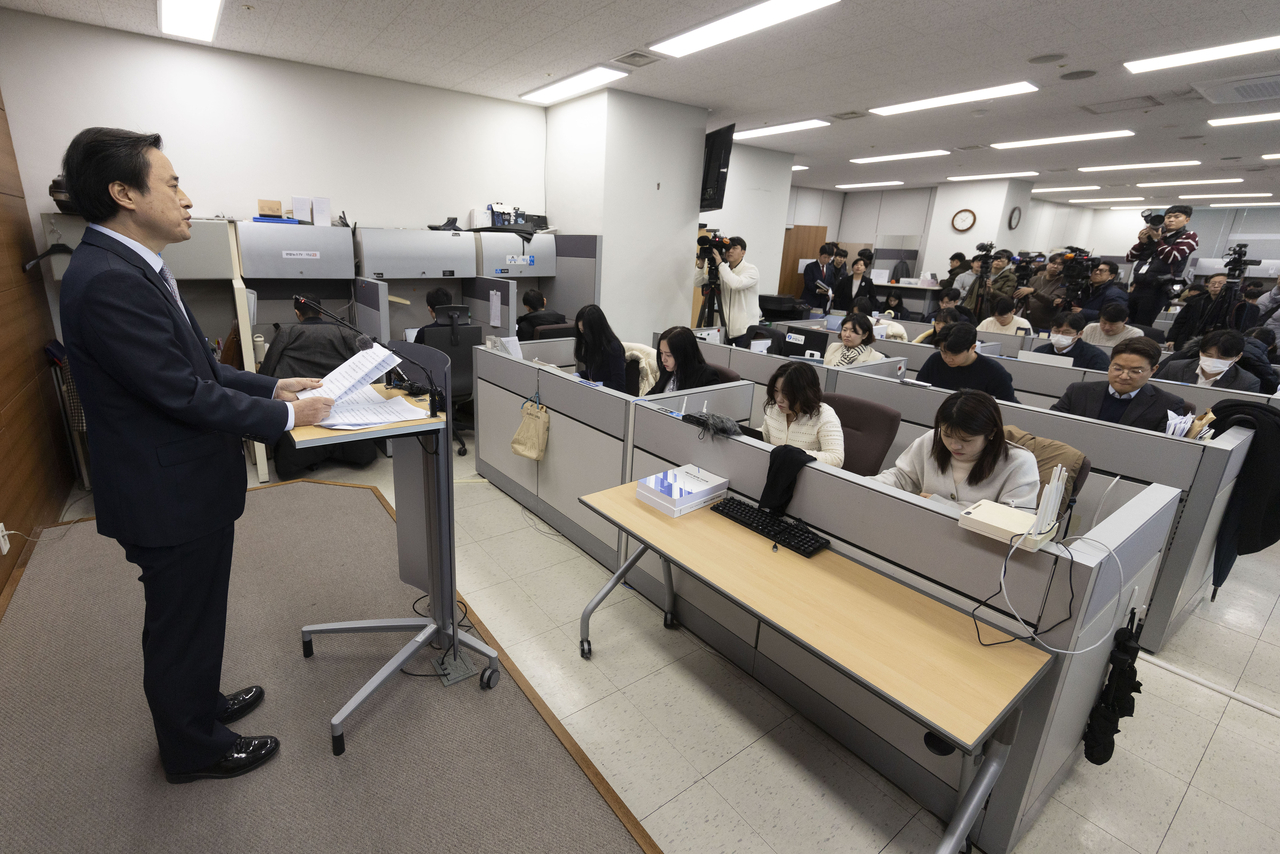
According to legal sources, the comprehensive special prosecutor team announced Monday the results of its six-month investigation and said it had decided to refer a case involving alleged abuse of power related to the suppression of the probe into Kim Keon Hee's receipt of a Dior handbag to the Korean National Police Agency's National Investigation Headquarters. However, the team said it had never received the Park case — the Anti-Graft Act violation — from the insurrection special prosecutor.
The allegation against Park centers on claims that Kim Keon Hee made improper solicitations to him on May 5, 2024 — at around 2:04 p.m. and again at around 7:28 p.m. — asking him to use the Justice Ministry's prosecution bureau director and other officials to find out why then-Prosecutor General Lee Won-seok had ordered the formation of a dedicated prosecution task force on the luxury bag case, and to obtain details on how that investigation was proceeding.
On the broader case involving Park and other prosecution officials, the comprehensive special prosecutor said it had "confirmed indications that Kim intervened in the prosecution's investigation — including by sending Park a Telegram message containing an 'information sheet related to the formation of the dedicated task force.'" It also said it had confirmed that prosecutors "began reviewing a decision not to indict and drafted a non-indictment document even before questioning Kim as a suspect." Nevertheless, the team said it had decided to transfer the case because it "could not complete all aspects of proving the charges within the investigation period."
On the Anti-Graft Act case against Park specifically, however, the comprehensive team said it had not received a transfer from the insurrection team. "The case is finished and there is no subject to transfer," it said, adding that "it would be faster for the insurrection special prosecutor to refer the matter directly to the National Investigation Headquarters." In response, a spokesperson for the insurrection special prosecutor team said Tuesday that the case had been transferred.
Earlier, the insurrection special prosecutor had indicted Park on charges of both participating in a key role in insurrection and violating the Anti-Graft Act, alleging that after receiving the improper solicitation from Kim, Park directed the then-head of the criminal planning division at the Justice Ministry's prosecution bureau to report on the progress of the investigation — and that Park received a related report via Telegram at around 9:50 p.m. the same day.
The Seoul Central District Court's Criminal Division 33, presided over by Judge Lee Jin-gwan, convicted Park in the first trial in June on the insurrection charge and sentenced him to 25 years in prison. However, it dismissed the Anti-Graft Act charge on procedural grounds, ruling that the charge was difficult to regard as falling within the scope of the insurrection special prosecutor's investigative mandate under the insurrection special prosecutor act.
The court found that the Anti-Graft Act violation involved entirely different elements and legal characteristics from insurrection or foreign conspiracy charges, and that it was difficult to establish a connection between the Telegram messages from Kim and others found on Park's phone and the Dec. 3, 2024 emergency martial law declaration and the insurrection case arising from it.
The court added, however, that "if a ruling dismissing a case on procedural grounds becomes final, a 'lawful investigative agency' may, barring special circumstances, open a new investigation and proceed accordingly, after which a party with lawful authority to indict may bring charges again — allowing for a balance between the principle of due process and the pursuit of substantive truth."
The insurrection special prosecutor subsequently appealed the first-instance ruling but withdrew its appeal of the Anti-Graft Act dismissal on July 27. The team said it did so because, if the appeal of the dismissal were accepted, the case involving the insurrection conviction — on which a 25-year sentence had already been handed down — could be remanded for retrial, causing delays. The insurrection team stressed, however, that withdrawing the appeal did not mean it accepted the court's legal reasoning on the dismissal.
The insurrection special prosecutor then decided to transfer the Anti-Graft Act case to the comprehensive team. On July 30, it announced it had transferred the case against Park to the comprehensive special prosecutor, citing Article 2, Paragraph 1, Item 13 of the comprehensive special prosecutor act as the basis, saying the case fell within the comprehensive team's investigative scope and had been transferred in accordance with the relevant transfer provisions.
Article 2, Paragraph 1 of the comprehensive special prosecutor act defines the scope of investigation, and Item 13 covers alleged crimes in which Yoon Suk Yeol and Kim Keon Hee received reports on the status of investigations into cases involving themselves or others, and caused investigative agencies to abuse their authority or violate due process — including concealing, suppressing, appeasing, fabricating evidence, or hiding evidence — in connection with investigation and indictment procedures.
The comprehensive team, however, said the following day — July 31 — that it had received an official document from the insurrection special prosecutor stating that the Anti-Graft Act case against Park was being transferred, but rejected the transfer. It said the case was one in which the Seoul Central District Court had issued a dismissal ruling and the insurrection special prosecutor had filed and then withdrawn an appeal, making it a finalized case that could not be subject to transfer.
The comprehensive team cited Article 18 of the insurrection special prosecutor act as its basis. That provision states that once a ruling on a case brought to trial becomes final, the special prosecutor must within 10 days submit a written report to the president on expenditures and activities, and hand over all relevant documents in its possession to the prosecutor general.
Three special prosecutor teams were launched and conducted investigations, but political circles argued they had been unable to complete thorough probes of their respective mandates due to time constraints — and so the comprehensive special prosecutor was established. The outcome, however, is that a disagreement between the teams has left the case itself adrift.
The National Assembly amended the comprehensive special prosecutor act last month to include a provision requiring the team to consult with each of the other special prosecutor teams before making any decision that differs from their decisions or affects the maintenance of indictments — but the provision has proved ineffective.
A lawyer who previously served as a senior prosecutor said both interpretations were legally plausible — the insurrection team's view that the comprehensive team holds investigative authority over the case, and the comprehensive team's argument that the matter is closed. "Special prosecutors are premised on the idea that regular prosecutors find it difficult to investigate a given case," the lawyer said. "Now that they have effectively become standing institutions, this is a problem that arose from a failure to draft the provisions of the special prosecutor acts with sufficient precision."
bell@heraldcorp.com




