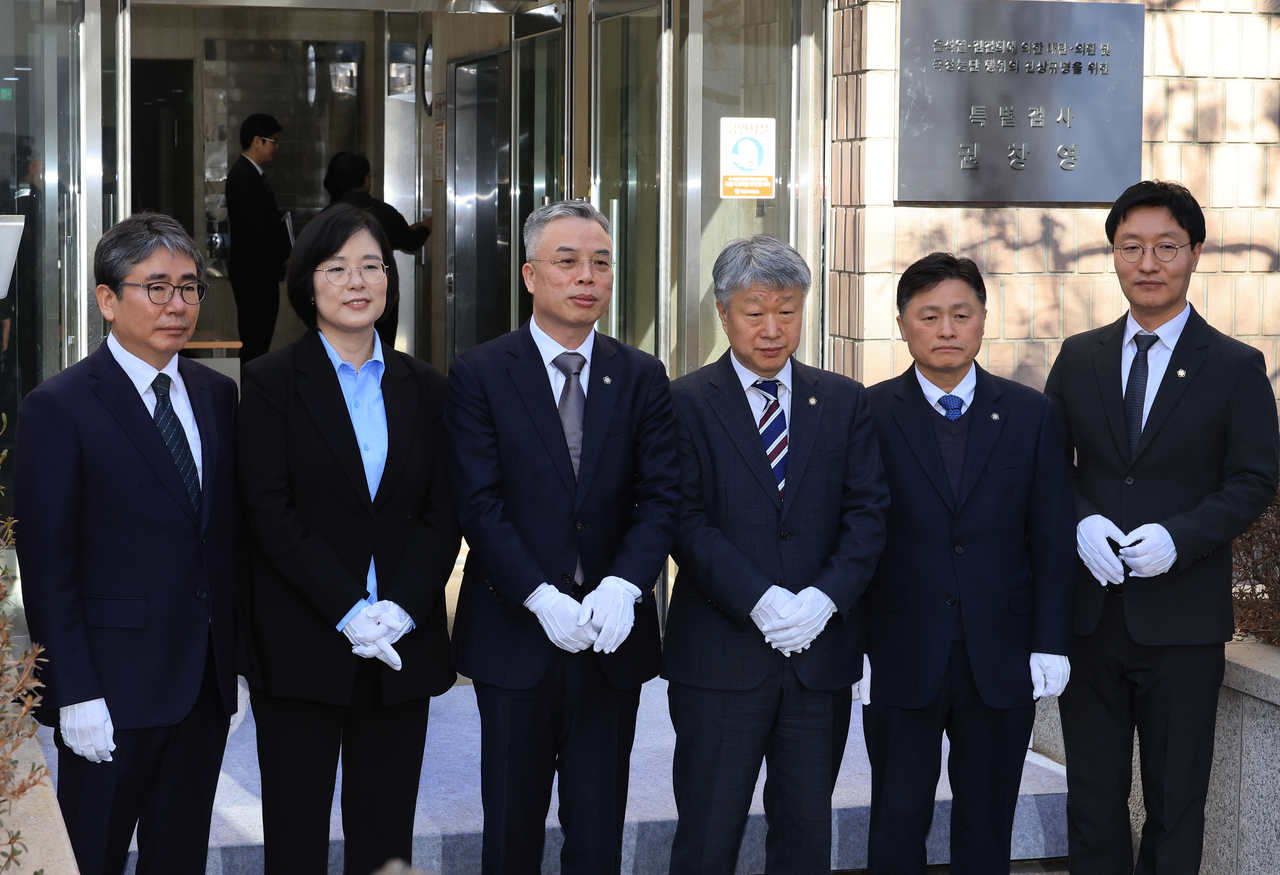
The comprehensive special prosecutor team, launched to investigate unresolved cases left over from three earlier special counsel inquiries, has concluded its probe. While the team succeeded in shedding light on allegations surrounding the presidential residence relocation, it has drawn criticism for referring a large number of cases back to the Korean National Police Agency's National Investigation Headquarters.
According to legal sources, the second comprehensive special prosecutor team led by Kwon Chang-young wrapped up its 180-day investigation Sunday. A final briefing is scheduled for Monday morning at the team's office in Gwacheon, Gyeonggi Province.
The team was officially launched Feb. 25 to investigate cases left unresolved by the so-called three major special counsel inquiries — the insurrection special prosecutor, the Kim Keon Hee special prosecutor and the Marine Corps death special prosecutor. In total, 58 people were indicted, including former President Yoon Suk Yeol and first lady Kim Keon Hee — seven in custody and 51 without detention, including corporate entities.
Among the team's notable achievements was its investigation into allegations surrounding the relocation of the presidential residence under the Yoon administration. In June, the team became the first to indict former Minister of Interior and Safety Lee Sang-min, former presidential chief of staff Kim Dae-gi, former general affairs secretary Yoon Jae-soon and former administrative secretary Kim O-jin on charges of illegally diverting and disbursing state funds. Subsequent indictments followed against Kim Keon Hee, People Power Party lawmaker Yoon Han-hong and Kim Tae-young, chief executive of 21gram.
Yoo Byeong-ho, an auditor at the Board of Audit and Inspection, and senior BAI officials facing charges of suppressing an investigation were also indicted. The team broadened the scope of the inquiry — building on the residential relocation preferential treatment allegations it inherited from the Kim Keon Hee special prosecutor team to also probe suspected illegal diversion of state funds by the presidential office and the Ministry of Interior and Safety, as well as allegations that the BAI conducted a lenient audit.
Former President Yoon, former National Security Office chief Shin Won-sik and former first deputy national security adviser Kim Tae-hyo were also indicted on charges of ordering the spread of messages to allied nations, including the United States, justifying the Dec. 3 emergency martial law declaration.
The team also indicted Lee Si-won, a former presidential office official in charge of public service discipline, on charges of leaking information related to the Marine Lance Cpl. Chae Sang-byeong case; former Defense Counterintelligence Command chief Hwang Yu-seong on charges of concealing the so-called "VIP fury" allegation; and former Marine Corps counterintelligence unit commander Moon Yeon-cheol on related charges.
Still, a number of cases remain unsolved. The team was unable to reach conclusions on several major allegations, including those surrounding the notebook of former Defense Intelligence Command chief No Sang-won and the Seoul-Yangpyeong expressway route change.
On the Seoul-Yangpyeong expressway route change allegations, the team failed to reach a conclusion regarding former Minister of Land, Infrastructure and Transport Won Hee-ryong, who had been identified as a key figure higher up the chain. The team imposed a travel ban on Won, summoned him twice and conducted a forensic examination of his mobile phone, but ultimately could not establish the charges.
The allegations surrounding the "No Sang-won notebook" ended in a similar outcome. The team flew by helicopter to personally inspect the Yeonpyeong unit detention facility listed in the notebook as a "collection point," and investigated former Defense Minister Kim Yong-hyun as a suspect on charges of preparation and conspiracy for insurrection-motivated murder. Without securing testimony from former commander No, however, the team was unable to prove the charges.
The team's decisions to reverse course on the handling of key figures linked to the insurrection also drew scrutiny.
The team indicted Hong Jang-won, former first deputy director of the National Intelligence Service who had publicly exposed orders from former President Yoon, on charges of participating in the insurrection. It also indicted Cho Seong-hyeon, a former Army Capital Defense Command 1st Security Group commander who had ordered troops moving toward the National Assembly during the emergency martial law not to cross Sogang University Bridge — an act for which he had received a military decoration — on the same charges.
Both had been regarded as key witnesses who helped establish the insurrection charges against Yoon and others during the earlier insurrection special prosecutor investigation. The insurrection special prosecutor team had submitted a written opinion opposing the indictment of Col. Cho, but the comprehensive special prosecutor team ultimately proceeded with the charges.
park.jiyeong@heraldcorp.com