The South Jeolla-Gwangju Special Integrated City said Sunday it is developing and deploying its own AI technology in administrative operations.
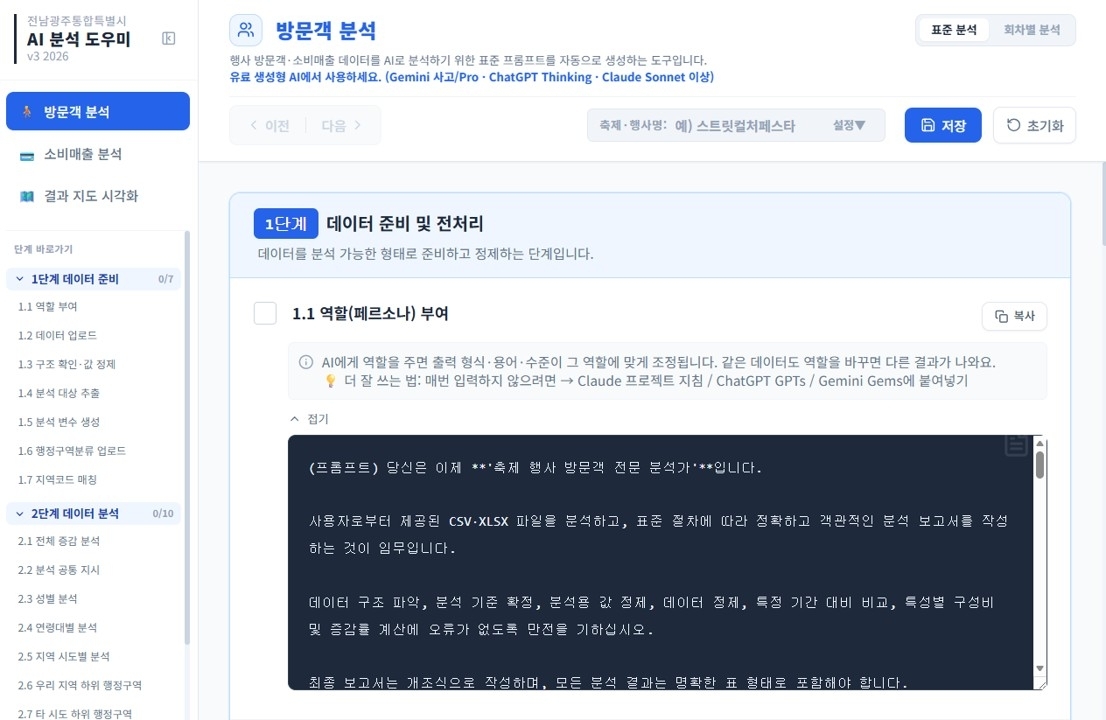
The city has built an "AI analysis assistant" tool it is using to evaluate festivals and public events.
The system runs customized prompts for festival and event analysis in sequential steps against pre-verified base data, allowing generative AI to analyze foot traffic and card-based consumer spending from multiple angles and automatically produce draft reports.
The city said the shift has lowered the barrier to entry and maximized work efficiency, as civil servants in charge can now conduct festival and event analyses themselves — work previously handled by dedicated data analysis staff.
The number of data analysis tasks the city completed jumped threefold in three years, rising from nine in 2023 to 16 in 2024, 21 in 2025 and 27 this year.
An analysis of how Gwangju and South Jeolla Province residents use airports outside the region has also yielded results: the findings have been used as supporting evidence at Ministry of Land, Infrastructure and Transport consultations to make the case for a new direct route between Gwangju and Incheon.
This year, the city plans to conduct a financial conditions analysis by combining income, loan and consumption data across all 27 districts and counties in the South Jeolla-Gwangju area to identify financially vulnerable occupational groups and localities.
To uncover residents' actual behavioral patterns that conventional data such as card spending and foot traffic cannot easily capture, the city is drawing on mobile carrier app usage records to pinpoint areas with high concentrations of pet walkers and hidden tourism spots.
"Data-driven administration is central to building policy credibility," said Park Hye-mi, the city's director of data and informatization. "We will continue to strengthen AI-based data analysis support to develop tailored policies that citizens can feel directly in their daily lives."
sij@heraldcorp.com