The government will extend for one year the foreign land transaction permit zones it designated across Seoul and parts of Gyeonggi Province and Incheon to curb speculative home purchases by foreigners. Since the zones were first designated last year, foreign residential property transactions in the Greater Seoul area have fallen 27 percent from the same period a year earlier.
The Ministry of Land, Infrastructure and Transport announced Thursday that the permit zones, first designated in August last year, will remain in effect from Wednesday through Aug. 25 next year. The scope of the zones is unchanged, and the ministry reissued the public notice to reflect administrative boundary changes in Incheon made last month.
The number of homes owned by foreigners in South Korea has grown steadily — from 83,512 units in 2022 to 91,453 in 2023, 100,216 in 2024 and 108,231 last year, a roughly 30 percent increase over three years. Foreign residential transactions in the Greater Seoul area also climbed from 4,568 cases in 2022 to 7,296 in 2024, before falling to 6,451 last year after the permit zones were introduced.
The decline became more pronounced after the zones took effect. From September last year through June this year, foreign home purchases in the Greater Seoul area totaled 4,397 transactions, down 27 percent from 6,024 in the same period a year earlier. By region, Seoul fell 37 percent, Gyeonggi Province 23 percent and Incheon 29 percent. By nationality, transactions by Chinese nationals dropped 24 percent and those by American nationals fell 40 percent.
The three Gangnam-area districts — Gangnam-gu, Seocho-gu and Songpa-gu — and Yongsan-gu saw steeper declines, with foreign home purchases in those four areas falling 49 percent year on year. Seocho-gu recorded the sharpest drop at 73 percent.
Gyeonggi Province accounted for 66 percent of all foreign residential transactions in the Greater Seoul area, with Seoul and Incheon each making up 17 percent. By nationality, Chinese buyers represented 72 percent of transactions and Americans 13 percent. Properties priced at 600 million won ($428,000) or below made up 81 percent of deals by transaction value, while apartments accounted for 62 percent of purchases by housing type and multi-family homes 33 percent.
Within Seoul, the districts with the highest volumes of foreign home purchases were Guro-gu, Geumcheon-gu, Songpa-gu and Gangseo-gu, in that order. In Gyeonggi Province, Ansan, Bucheon, Pyeongtaek and Suwon led, while in Incheon, Bupyeong-gu, Michuhol-gu and Seo-gu topped the list.
The renewed designation covers all of Seoul, 23 cities and counties in Gyeonggi Province, and nine autonomous districts in Incheon. The Gyeonggi municipalities included are Suwon, Seongnam, Goyang, Yongin, Ansan, Anyang, Bucheon, Gwangmyeong, Pyeongtaek, Gwacheon, Osan, Siheung, Gunpo, Uiwang, Hanam, Gimpo, Hwaseong, Gwangju, Namyangju, Guri, Anseong, Pocheon and Paju. In Incheon, the designated districts are Michuhol-gu, Yeonsu-gu, Namdong-gu, Bupyeong-gu, Gyeyang-gu, Seohaee-gu, Geomdan-gu, Yeongjong-gu and Jemulpo-gu.
The categories of housing subject to permit requirements remain the same as before: detached homes, multi-unit detached homes, multi-family homes, row houses and apartments. Transactions exceeding 6 square meters in residential zones and 15 square meters in commercial zones require a permit. The designation runs through Aug. 25 next year.
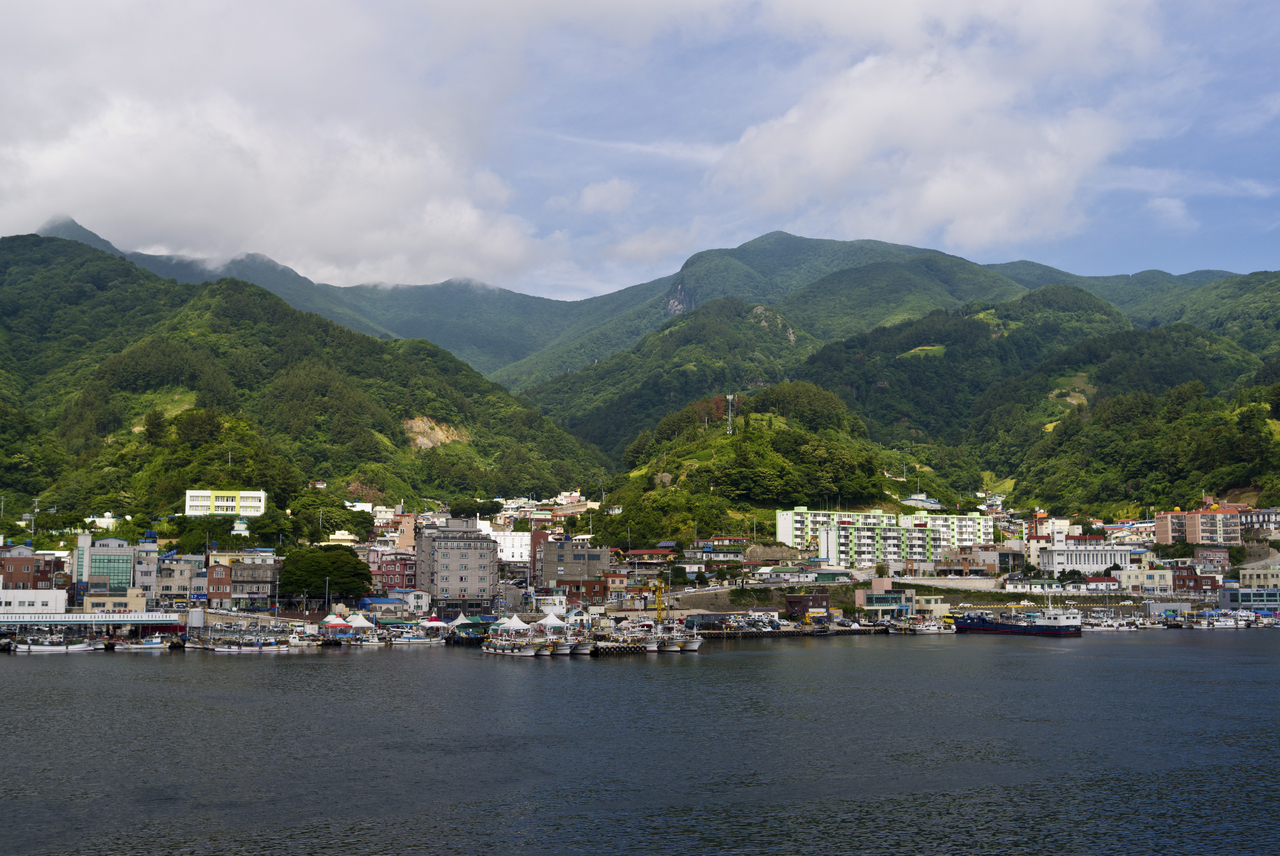
Separately, 353 outer islands — including Ulleungdo and Udo off Jeju — have been newly designated as foreign land transaction permit zones. The Ministry of Land, Infrastructure and Transport announced Thursday that the 353 island areas require preemptive management for national defense and strategic reasons. Foreigners seeking to purchase land in these areas must obtain approval from the relevant local government before signing any contract.
This is the third such designation aimed at reinforcing territorial sovereignty, following earlier rounds in December 2014 and February last year. In 2014, the government designated eight baseline points of the territorial sea, and last year it added the five West Sea islands and 12 more baseline points, for a total of 25 locations.
This round represents a significant expansion, driven by discussions among related ministries including the National Intelligence Service on preemptive protection measures for areas of national defense and strategic importance. The NIS requested the designation of the 353 sites, and the Ministry of Land, Infrastructure and Transport confirmed and officially announced the list after review by the Central Urban Planning Committee.
The newly designated areas include Ulleungdo in North Gyeongsang Province at 72.3 square kilometers, Daeheugsando in Sinan, South Jeolla Province at 21.2 square kilometers, Deokjeokdo in Ongjin, Incheon at 20.8 square kilometers, Jawoldo in Incheon at 7.1 square kilometers, Seodo in Yeosu, South Jeolla Province at 7.0 square kilometers, Boleumdo in Incheon at 6.6 square kilometers, and Udo off Jeju at 6.2 square kilometers.
The government verified the full list of designated islands using continuous cadastral maps and assigned permit zone status on a plot-by-plot basis.
The designation takes effect immediately upon official notice. Foreigners seeking to acquire land in the designated areas must obtain approval from the relevant city, county or district government before entering into any land acquisition contract.
Local governments will determine whether to grant permits in consultation with relevant agencies including the Ministry of National Defense and the NIS. Any land acquisition contract a foreigner signs without the required permit will be void, and the offender may face up to two years in prison or a fine of up to 20 million won.
"The expansion of foreign land transaction permit zones to outer island areas is expected to contribute to strengthening our territorial sovereignty," said Shin Yun-geun, the ministry's land policy director.
quq@heraldcorp.com