Two Seoul districts are responding in notably different ways to the government's announcement of new public housing sites — one embracing the plan outright, the other offering only conditional support.
Gangseo-gu has welcomed the government's plan to develop the degraded section of Yeomchang Neighborhood Park, calling it an opportunity to resolve a long-standing local problem. Nowon-gu, by contrast, said it broadly supports the government's push to expand housing supply but has attached conditions — including low-density development, traffic measures and expanded lifestyle and cultural infrastructure — amounting in effect to a conditional acceptance of the Taereung Golf Course project.
The divergence reflects the fundamentally different character of the two sites: their current state, historical and environmental significance, the traffic burden development would impose, and the tenor of local public opinion.
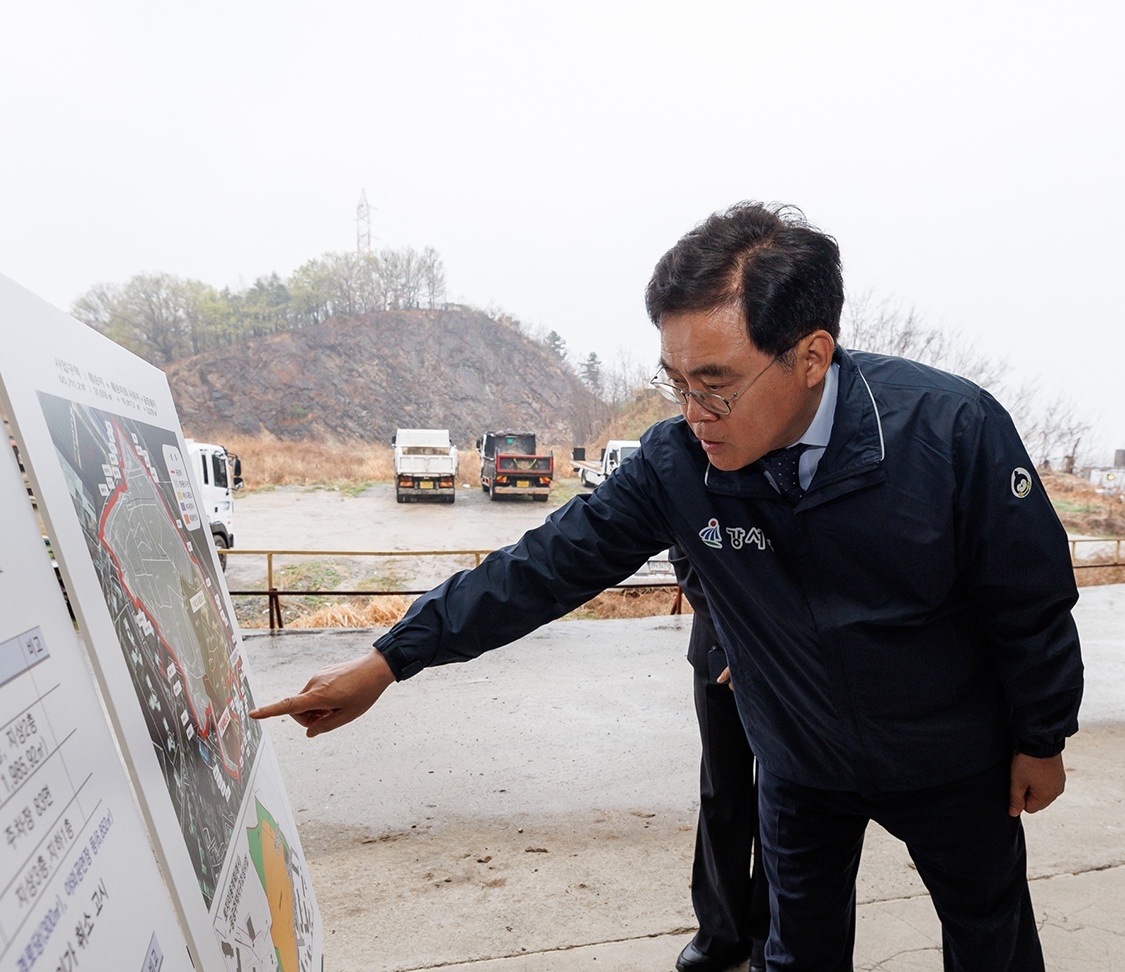
Gangseo-gu hails plan as solution to 20-year problem
Gangseo-gu District Mayor Jin Kyo-hoon welcomed the Ministry of Land, Infrastructure and Transport's Aug. 13 announcement designating the degraded section of Yeomchang Neighborhood Park as a candidate site for new public housing.
About 1,000 public housing units are planned for the site, intended for low-income residents without homes — including young people — who can afford public rental rates.
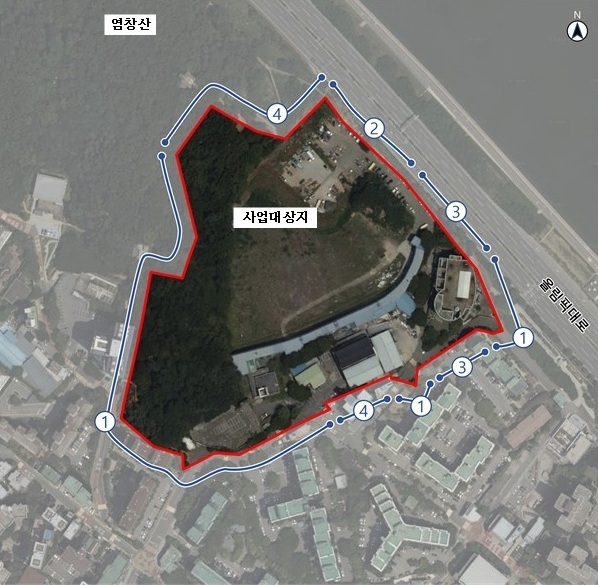
Although the area is zoned as a park, it has been effectively abandoned for two decades following the closure of businesses operating within it and the formation of a cut slope on Yeomchangsan during earlier development work. Residents have long complained that the site has lost its function as a park, poses safety hazards and blights the Han River waterfront.
In 1990, Gangseo-gu approved a private park development project on the condition that the operator build youth cultural facilities, a senior community space and an outdoor performance venue. The developer instead ran only a golf driving range without fulfilling those commitments, triggering the dispute.
The district canceled the developer's designation in 2006 and ordered a forced closure in 2009. Development then stalled for years: the site was large, land ownership was fragmented among multiple parties, and successive title changes compounded the complexity.
In response, Gangseo-gu reorganized its administration in 2024 to create a dedicated unit for balanced urban planning and development, which it expanded to a full bureau the following year. After sustained consultations with the Ministry of Land, Infrastructure and Transport and the Seoul Housing & Communities Corporation, the district settled on public development as the solution.
The degraded park section will be formally designated a public housing district after a public hearing and review by the Central Urban Planning Committee. Korea Land and Housing Corporation will then serve as the project operator, overseeing district designation, planning, site preparation and construction in an integrated process. The target groundbreaking date is 2029.
Yeomchang Neighborhood Park covers a total area of 111,769.4 square meters; the development site, excluding forested land, spans 50,711 square meters. Plans call for open green space linked to the existing park so that both residents of the new complex and the surrounding neighborhood can use it.
"Developing the degraded section of Yeomchang Neighborhood Park is the starting point for balanced local development and the fruit of residents' long-held hopes," Jin said. "We will spare no administrative support to ensure the project proceeds without a hitch."
Nowon-gu backs supply push but demands high-quality, low-density development
Nowon-gu District Mayor Seo Jun-o has taken a more cautious stance than his counterpart in Gangseo-gu.
Nowon-gu said it supports the government's broader direction of using idle land in the greater Seoul area to expand housing supply. But it said the Taereung Golf Course project must go beyond simply adding housing units — it must preserve the historical, cultural and environmental value of the Taereung and Gangneung royal tomb complex while also improving Nowon's residential environment, traffic conditions and everyday infrastructure.
In particular, the district called on the government to develop the Taereung Golf Course site as a high-quality, low-density, self-sufficient residential complex in keeping with UNESCO-guided principles for protecting the Taereung and Gangneung area.
Nowon-gu said the development should include not only housing but also an eco-friendly park and cultural facilities — a library, performance venue and gallery — to address the district's shortage of lifestyle and cultural amenities.
The district also urged the government to put in place preemptive metropolitan traffic measures to head off the congestion that large-scale housing development could worsen.
Nowon-gu proposed widening the Hwarang-ro and Nowon-ro road networks and the Taereung–Guri IC corridor, and creating a new branch line on subway Line 6 running from Hwarangdae Station through a proposed Taereung Country Club Station to Byeollae Station on Line 8. It also called for the timely advancement of the Baeksa Tunnel project, a metropolitan road linking Nowon and Namyangju.
The district requested that rental housing be capped at the statutory minimum of 35 percent of units, with priority given to newlyweds and young people, and that a portion of the for-sale units be reserved for Nowon residents.
Nowon-gu also said that land restoration work required by the lifting of development restrictions should focus on projects of genuine benefit to Nowon residents, covering 10 to 20 percent of the area where restrictions are removed.
"We take residents' concerns seriously," the district said. "Moving beyond a simple for-or-against divide, we will actively engage with the government — grounded in residents' voices — to find a path that balances housing supply with local development."

Seo met with Minister Kim on Wednesday to hand over the district's proposal on local issues surrounding the Taereung Golf Course development.
Neglected wasteland versus protected green space — the sites could not be more different
The contrasting positions of the two districts stem from the fundamentally different nature of their respective sites.
The degraded section of Yeomchang Neighborhood Park has long since lost its function and sat abandoned. Safety and aesthetic concerns have generated broad community consensus that development is needed. The prospect of simultaneously delivering public housing and restoring park functions has reinforced Gangseo-gu's enthusiasm for the project.
The Taereung Golf Course site, by contrast, is a large expanse of green space adjacent to the historically and culturally significant Taereung and Gangneung royal tombs — a UNESCO World Heritage site. Residents are also deeply concerned that housing development would severely worsen traffic on Hwarang-ro and surrounding roads.
Ultimately, Gangseo-gu has embraced the project as public development that revives long-neglected degraded land, while Nowon-gu has entered negotiations with the government with specific preconditions, treating the project as one that would open up green space of considerable conservation value.
The episode illustrates how the same housing supply policy can draw very different responses from local governments depending on a district's history, environment, traffic conditions and the mood of its residents.
seouldream01@heraldcorp.com