
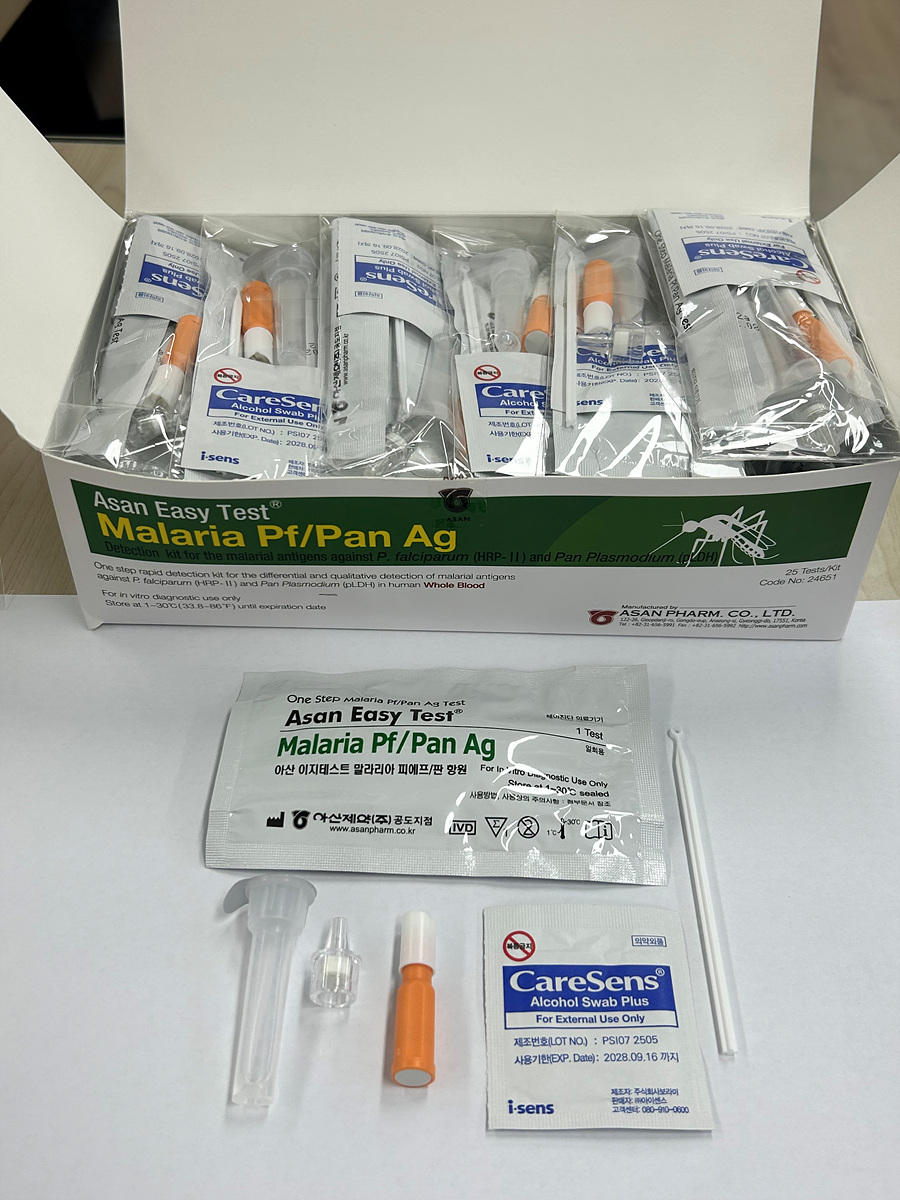
Yangcheon-gu is launching an intensive malaria control campaign — distributing free self-diagnosis kits and providing rapid diagnostic tests — to detect the mosquito-borne disease early and prevent it from spreading through the community.
Malaria is transmitted through the bite of an Anopheles mosquito carrying the Plasmodium parasite. In South Korea, the disease peaks between May and October.
Key symptoms include chills, fever, sweating and headaches. Because the disease is fully curable when caught and treated promptly, health officials stress the importance of getting tested and treated quickly at the first sign of symptoms.
This year, the district is distributing free self-diagnosis kits for the first time, allowing residents to check for infection on their own as soon as symptoms appear. Any resident who wants a kit can pick one up at the Health Administration Division on the second floor of the main building of the Yangcheon-gu Public Health Center. The district plans to actively encourage use of the kits among high-risk groups, including outdoor workers, family members of confirmed patients and people who have recently traveled abroad.
Residents can collect a kit in advance and test themselves at home if symptoms develop. When distributing the kits, the district will explain how to use them correctly and ask residents to submit their results via QR code. Anyone who tests positive will be quickly connected to follow-up measures, including confirmatory testing, contact tracing and disinfection.
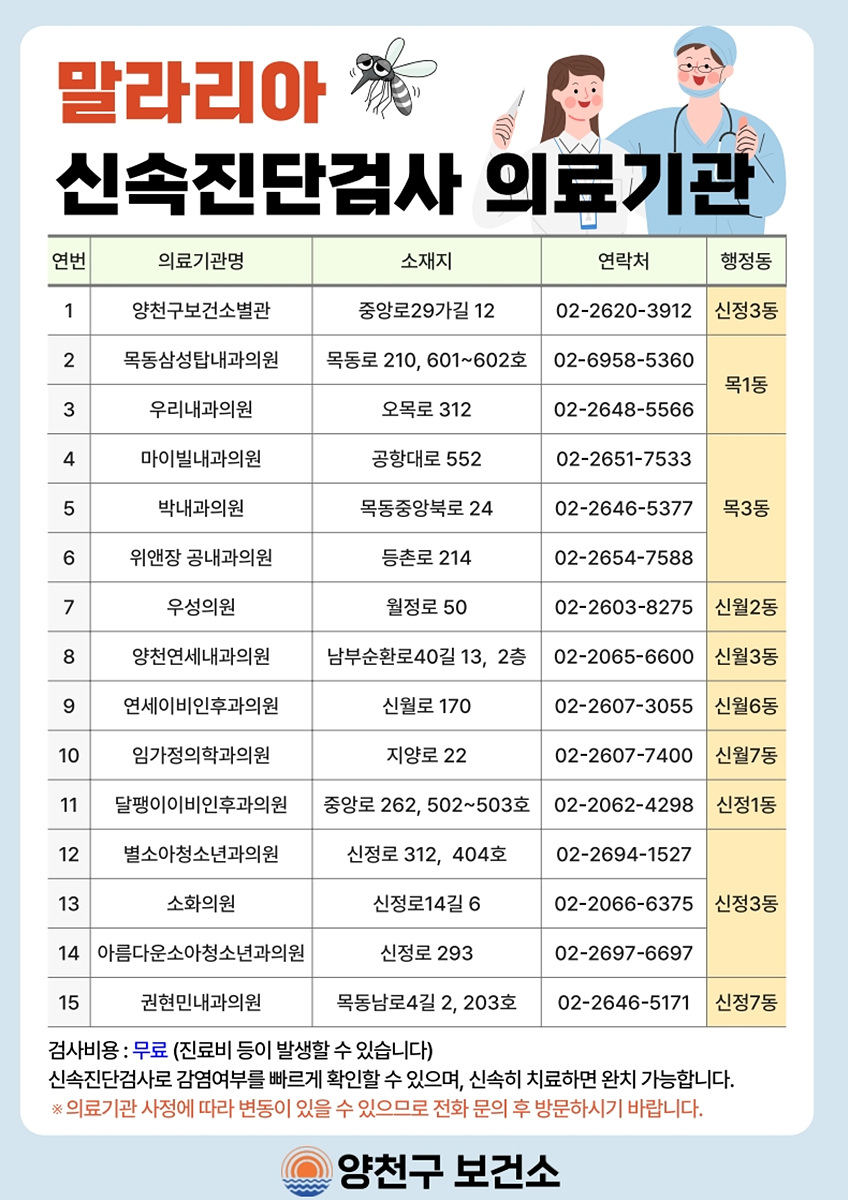
The district is also offering free rapid diagnostic tests. The test requires only a small blood sample from a fingertip and delivers results in about 30 minutes. Residents can visit the annex of the Yangcheon-gu Public Health Center or any of the 14 designated medical institutions participating in the program; the full list is available on the Yangcheon-gu Public Health Center website under "Infectious Disease Prevention Information."
Once a case is reported, the district will move quickly to limit further transmission through contact tracing and follow-up monitoring. Epidemiological investigations will begin within three days of a confirmed report, and blood samples collected before treatment will be sent promptly through the Korea Disease Control and Prevention Agency's specimen transport system to check for relapse or reinfection.
The district is also stepping up mosquito control as the insects' active season in South Korea grows longer. Through November, Yangcheon-gu will operate 199 insect-attracting traps in parks and other heavily used public spaces, reinforcing nighttime disinfection efforts during peak mosquito hours from 8 p.m. to 6 a.m.
"The most important thing with malaria is not to miss the warning signs and to connect residents with testing and treatment as quickly as possible," district mayor Lee Gi-jae said. "We will do our utmost to detect malaria early and prevent community spread by strengthening our step-by-step response — from self-diagnosis through clinical testing to patient management."
seouldream01@heraldcorp.com




