"Honey, you haven't sold our Samsung-Hynix shares yet?"
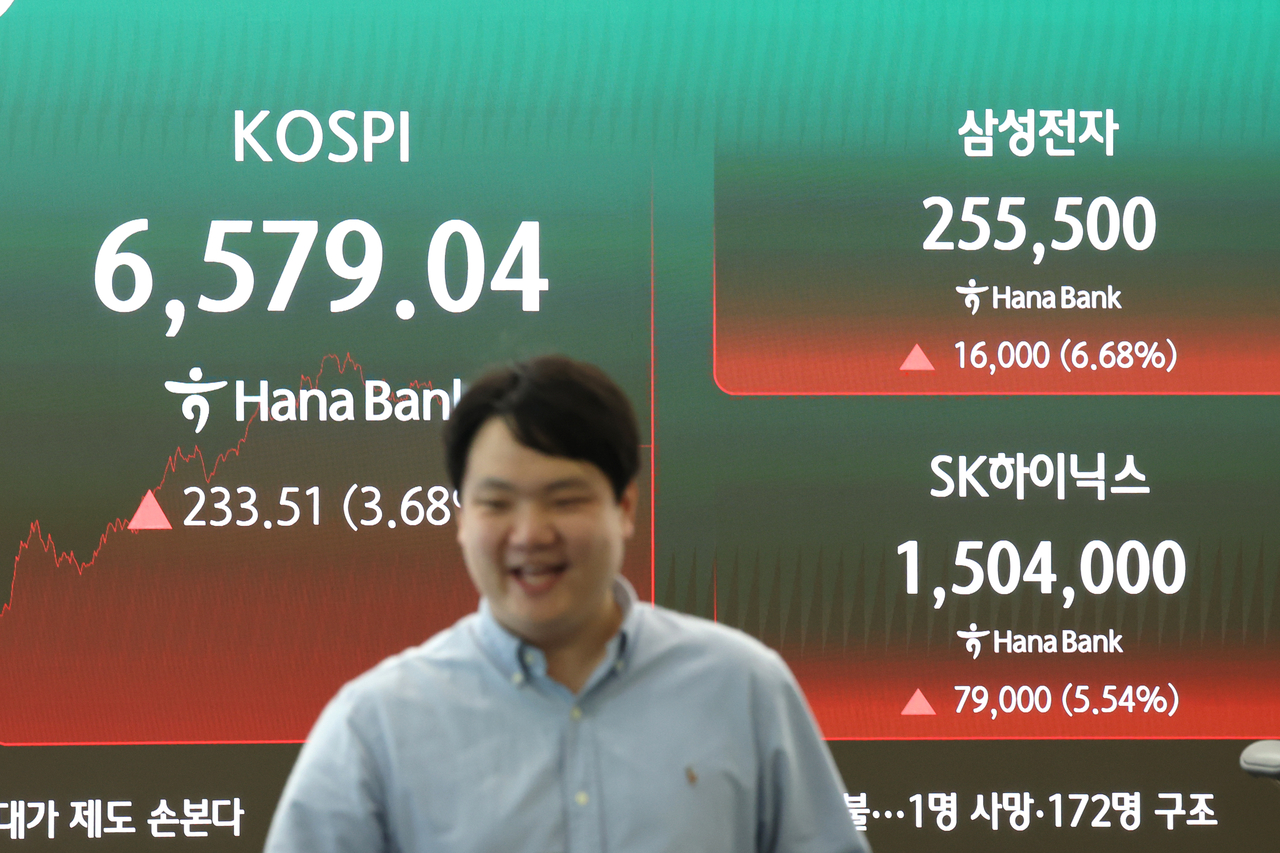
Samsung Electronics and SK Hynix — once derided as trading at a "half-price sale" despite record earnings — are stirring again ahead of expected shareholder-return policy announcements. The market is pricing in combined annual returns of up to 300 trillion won ($141 billion), and margin balances in both stocks are climbing once more, signaling renewed investor enthusiasm.
Yet with the two chipmakers posting hundreds of trillions of won in operating profit in the first half alone, driven by the AI memory boom, shareholder expectations have risen sharply — and analysts warn that how much of that cash the companies actually return will determine where the share prices go from here.
Samsung 200 trillion won, SK Hynix 100 trillion won? Announcement could come this month
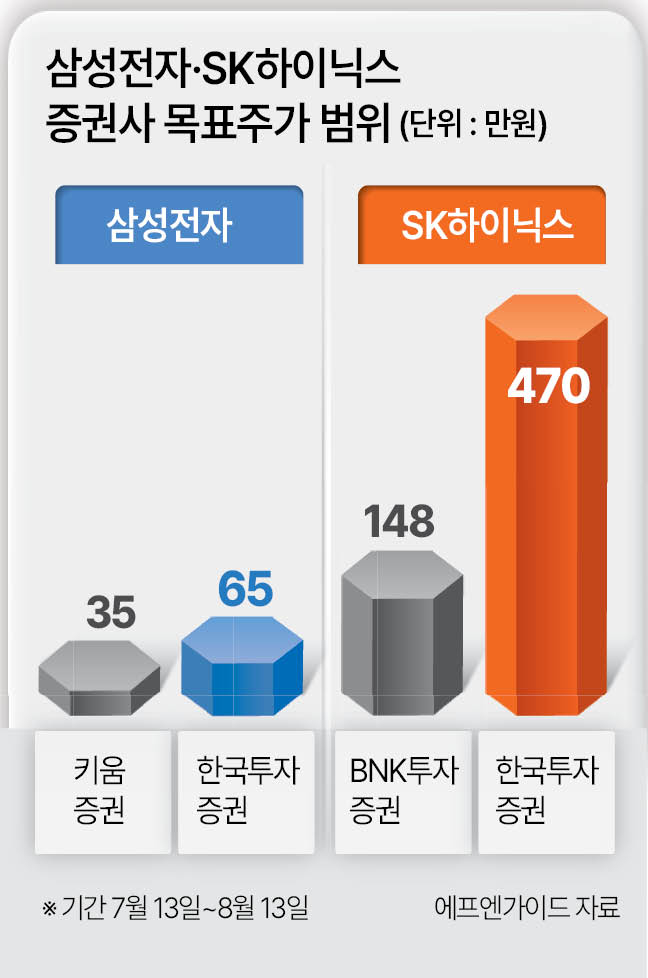
Samsung Electronics and SK Hynix are expected to unveil new shareholder-return policies as early as this month, according to sources in the electronics and financial investment industries Sunday. Some observers believe the combined annual figure could reach 300 trillion won.
Samsung Electronics plans to honor its current three-year (2024–2026) shareholder-return policy, which returns 50 percent of free cash flow to shareholders.
The company said it is also reviewing its next shareholder-return policy with the aim of maximizing shareholder value while striking the optimal balance between reinvestment for future growth and returns to shareholders.
SK Hynix has similarly committed to allocating 50 percent of FCF to shareholder returns over the three years from 2025 to 2027.
The company said it is actively reviewing additional return measures to enhance shareholder value, with specifics to be finalized and announced during the third quarter.
Market watchers have floated figures of 200 trillion won for Samsung Electronics and 100 trillion won for SK Hynix, putting the combined annual total at 300 trillion won.
Kim Dong-won, head of research at KB Securities, said that even if Samsung Electronics sets its minimum shareholder-return level at 100 trillion won, the dividend yield based on the current share price could exceed 7 percent. He forecast the annual total at between 100 trillion won at the low end and 200 trillion won at the high end.
That would represent a 10-to-20-fold increase from the company's previous annual shareholder-return figure of 9.8 trillion won.
DS Investment Securities estimated that if Samsung Electronics posts operating profit of 391.9 trillion won this year and spends 62.3 trillion won on capital expenditure, its free cash flow for the year would reach 263 trillion won.
On that basis, the brokerage calculated that Samsung could return an additional 131 trillion won — the amount left after subtracting total regular dividends of 29 trillion won from 161 trillion won, which equals 50 percent of cumulative FCF over the past three years.
Mirae Asset Securities estimated that if Samsung Electronics fulfills its three-year shareholder-return policy, the shareholder-return yield this year would reach 6.8 to 9.5 percent for common shares and 9.1 to 12.7 percent for preferred shares.
Daishin Securities said conditions are in place for SK Hynix to commit up to 100 trillion won to shareholder returns this year.
Analyst Ryu Hyeong-geun said SK Hynix had set a net cash target of 100 trillion won at its annual general meeting earlier this year and has already surpassed that goal. He added that proceeds from the sale of its Kioxia stake and the issuance of American depositary receipts could enable the company to pursue share buybacks and cancellations as well as special dividends.
Some analysts noted that with the share price having fallen roughly 50 percent from its recent peak, now is an opportune moment for shareholder returns through buybacks and cancellations.
Such a move could also help offset dilution concerns following the ADR issuance.
Mirae Asset Securities projected SK Hynix's FCF at 180 trillion won for this year. If the company sets aside 100 trillion won as a safety reserve, it would have roughly 80 trillion won available — returning 50 percent of that would yield shareholder returns of around 40 trillion won.
SK Hynix, responding to foreign media inquiries about expanding shareholder returns, said the company believes it can meaningfully increase returns while maintaining investment and financial soundness, backed by its record-high cash-generating capacity. "We expect to expand shareholder returns to a meaningful level," the company said.
With Samsung Electronics and SK Hynix each posting second-quarter operating profit exceeding 89 trillion won and 60 trillion won, respectively, and record earnings expected to continue through the second half and into next year, analysts say the capacity for future shareholder returns could expand further.
Amid the semiconductor supercycle, overseas rivals are also racing to boost shareholder returns.
SanDisk recently set a revenue growth target of roughly 15 to 17 percent for 2028 to 2030 and said it would return 100 percent of excess cash to shareholders. Micron had earlier announced plans to return 50 to 100 percent of excess cash to shareholders.
Margin balances on the rise again — a signal of revaluation?
Margin balances in Samsung Electronics and SK Hynix, which had slid to around 4 trillion won amid fears of a semiconductor peak-out, have begun climbing again of late.
As of Friday, margin balances in Samsung Electronics and SK Hynix stood at 4.88 trillion won and 4.81 trillion won, respectively, according to Yonhap.
Compared with July 31, Samsung Electronics was up 9.4 percent and SK Hynix up 20.9 percent.
Margin balance refers to the outstanding amount investors have borrowed from brokerages to fund stock purchases and have yet to repay — a common gauge of leveraged, or "debt-funded," investing. A rising balance signals an increase in leveraged positions.
Samsung Electronics' margin balance, which stood at 1.72 trillion won at the start of the year, climbed steadily on the back of an AI-semiconductor-driven bull run, reaching 5.54 trillion won on July 9.
It then retreated to the 4 trillion won range as the semiconductor sector correction dragged on, falling to 4.25 trillion won on Monday. By Wednesday it had rebounded to 5.07 trillion won, crossing back above the 5 trillion won mark, and has since hovered around that level.
SK Hynix's margin balance more than quintupled from 981.8 billion won on Jan. 2 to 5.46 trillion won on July 14, before pulling back to 3.98 trillion won on Tuesday. Since the start of this month, however, it has resumed an upward trend and is closing in on the 5 trillion won level again.
Samsung Electronics and SK Hynix both surged on July 31 — by 26.81 percent and 29.95 percent, respectively. This month, both stocks have posted four consecutive sessions of gains starting Tuesday, with Samsung Electronics closing at 274,500 won and SK Hynix at 1.65 million won on Friday.
Brokerages broadly believe semiconductor stocks have bottomed out and begun to recover. Margin balances are therefore likely to keep rising for now.
Kim of KB Securities said Samsung Electronics and SK Hynix are currently trading at 12-month forward price-to-earnings ratios of 4.5 times and 3.7 times, respectively, weighed down by concerns over US interest rate hikes, the sustainability of AI investment, the situation in Iran and a semiconductor peak-out. "However, we believe all four of those concerns are now in the process of fading, and a full-scale revaluation is expected to begin from the third quarter," he said.
hanimomo@heraldcorp.com