
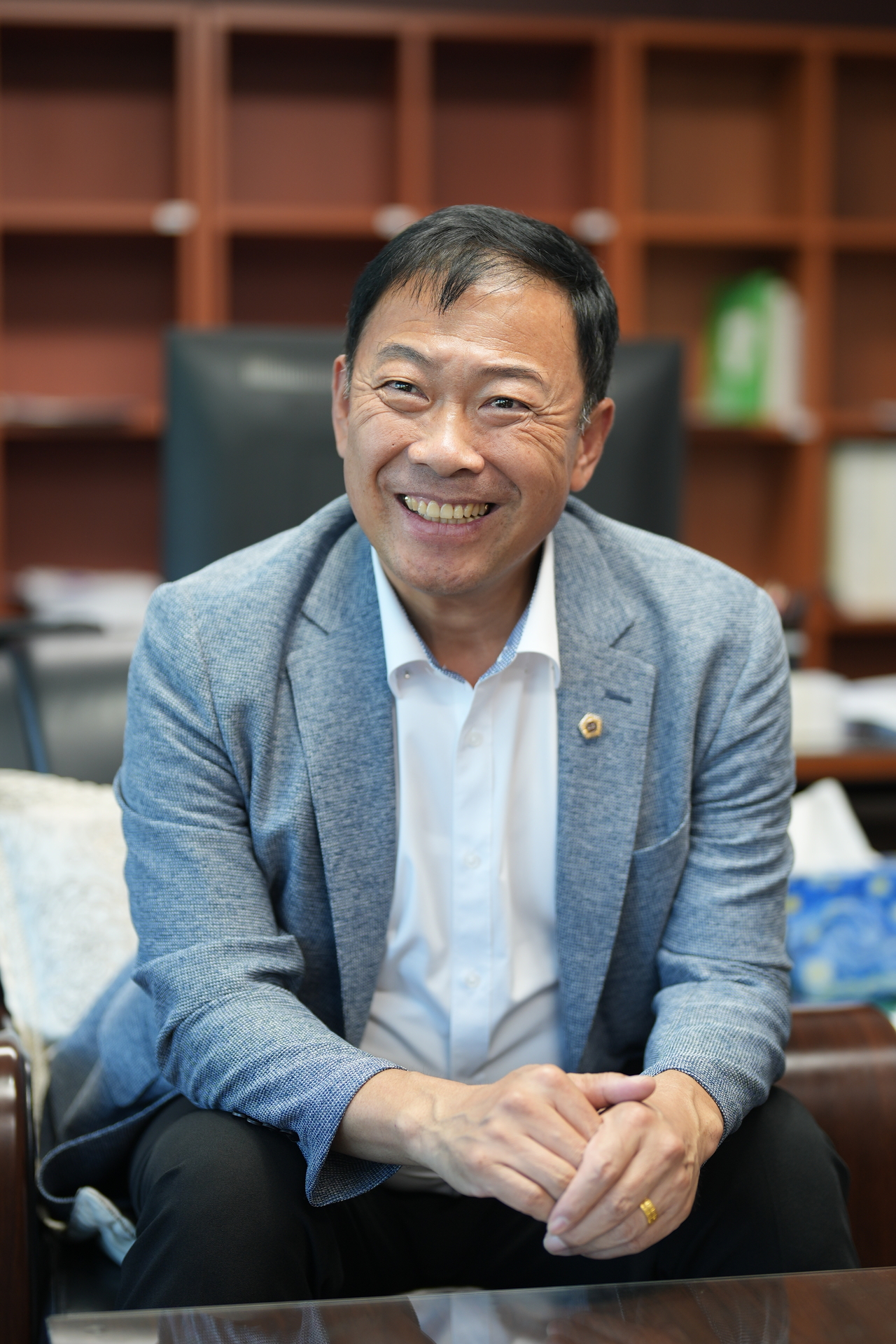
Debate over Seoul's housing policy tends to converge on a single question: how much can be built, and how fast? But in a city where large-scale redevelopment and reconstruction projects are advancing simultaneously, policymakers must also account for the existing homes demolished in the process and the relocation demand they generate — otherwise the true impact on the market cannot be properly assessed.
Park Seung-jin, chair of the Seoul Metropolitan Council's Housing and Space Committee and a Democratic Party of Korea member representing Jungnang 3, has identified "residential stability for citizens" and "sustainable urban development" as the committee's core priorities for the first half of the 12th council term. Rather than fixating on raw supply numbers, he intends to evaluate Seoul's housing policy through the lens of "real supply" — a framework that weighs demolitions, relocations and the knock-on effects on the jeonse and monthly rent markets alongside new construction.
Accelerating redevelopment and reconstruction while heading off resident conflicts before they escalate is also on his agenda, as is building a seamless housing welfare system that supports residents at every stage of life — from young singles and newlyweds through middle-aged families to the elderly.
"Expanding housing supply is an essential task for stabilizing the lives of Seoul residents and must be pursued without wavering, in accordance with established procedures," Park said in an interview Friday. "The key that must never be overlooked in supply policy is precise, systematic management of supply and demand that minimizes market shocks."
He said assessing supply plans by ground-breaking figures alone is insufficient; policymakers must also examine demolitions of existing homes, the timing of relocations and regional supply-and-demand conditions. When reconstruction projects concentrate in a particular period, a surge in relocation demand can strain the nearby jeonse and monthly rent market, making it essential to manage both the volume and the timing of supply.
'What matters is how many net units Seoul actually gains, not the 310,000 headline figure'
Park is paying particular attention to the real supply effect of Seoul's plan to break ground on 310,000 units by 2031.
The headline target matters, he said, but because reconstruction projects by nature tear down existing homes before new ones rise in their place, the city must calculate how much Seoul's total housing stock actually grows after demolitions are subtracted.
An analysis by the Housing and Space Committee of 72 redevelopment and reconstruction sites that have entered the relocation phase found a net housing increase rate of just 19.3 percent — well below the 39.2 percent net increase Seoul projects by 2031. Park said the gap means the city must distinguish between its stated supply targets and the actual growth in housing stock.
Even when large numbers of new homes are delivered through reconstruction, a substantial portion of the existing stock is demolished in the process, leaving the real increase in housing inventory smaller than the announced supply figures suggest. When the relocation schedules of multiple project zones overlap, jeonse and monthly rent demand can flood into the same area at once, putting pressure on the rental market.
Park said the city must therefore go beyond its current supply plans — which center on ground-breaking and completion figures — and build an annual, district-by-district supply-and-demand management system that incorporates demolitions and relocations.
"Seoul must transparently disclose to citizens an annual, district-by-district real supply plan that precisely reflects the scale of demolitions and actual relocation trends," he said. "The policy must also be balanced so that the benefits of expanded supply flow through to stronger public rental housing and welfare for lower-income residents."
Ultimately, Park believes the success or failure of housing policy hinges not on supply numbers but on whether citizens actually feel their housing situation is stable.

Push redevelopment faster — but defuse conflicts before they ignite
On redevelopment and reconstruction policy, Park stressed "procedural legitimacy" alongside speed. Streamlining procedures and rationalizing regulations is necessary, he said, but if resident conflicts intensify, projects can end up stalled for years.
Under the current Act on the Improvement of Urban Areas and Residential Environments, the "proposal request system" allows landowners and property holders representing at least 30 percent of a site to request that an improvement plan be drafted. The system is designed to lower the entry threshold and invigorate reconstruction activity, but Park warned that pushing projects forward without adequate consultation can fuel sharp divisions between supporters and opponents from the very start.
Because reconstruction projects directly affect residents' property rights and right to housing — and unfold over many years — sufficient information about project methods and procedures must be provided before candidate sites are even selected, he said.
"The success of urban improvement projects depends not only on speed but on procedural legitimacy that safeguards residents' rightful interests and promotes harmony," Park said. "There is a need to institutionalize a pre-deliberation process in which Seoul and the autonomous districts hold resident briefings before candidate sites are announced or selected, fully explain appropriate improvement methods and gather residents' views."
If a project launches before residents fully understand what it entails, conflicts can escalate later during association formation, project implementation authorization or management and disposal proceedings — making it essential to strengthen the public sector's role from the outset, he said.
'Designating a zone is not supply' — manage every step through to ground-breaking
Park said the same logic applies to Seoul's own initiatives — the Fast-Track Integrated Planning scheme and the Moa Town program — whose results should not be judged solely by the number of candidate sites selected or zones designated.
Housing supply as citizens experience it is only complete when projects reach actual ground-breaking, completion and move-in. Even after a zone is designated, projects can be delayed for years during association formation, various review processes or the relocation phase, pushing back the supply effect accordingly.
Park said a management system is therefore needed to oversee the entire project lifecycle — from candidate site selection through association formation, integrated review, project implementation authorization, management and disposal, relocation and demolition, and finally ground-breaking.
He specifically proposed deploying specialist reconstruction coordinators early at sites with a high potential for conflict. Rather than stepping in to mediate only after tensions have peaked, experts should be involved from the start to coordinate resident views and support communication among administrative agencies, associations and residents.
He also called for collaboration not only between Seoul and the autonomous districts but between the central government and the city council. Regulations and redundant administrative procedures that unnecessarily delay projects should be reformed, he said, while safeguards protecting safety, public interest and residents' rights must be preserved.
"Speed and procedural legitimacy are not opposing concepts," Park said. "Resolving conflicts early and improving the predictability of administrative procedures is ultimately what shortens the overall project timeline."
From youth to the elderly — building an unbroken housing welfare ladder
Alongside expanding supply, Park identified building a more comprehensive housing welfare system as a key priority for the Housing and Space Committee in the first half of the 12th council term.
Seoul currently operates a range of housing support programs targeting young single residents, newlyweds, housing-vulnerable groups and the elderly. SH already provides several types of rental housing for young residents and newlyweds.
Park said connecting individual support policies organically is just as important as expanding them. As people move through life stages — from young singles to newlyweds, then to middle-aged households with children and eventually to elderly households — gaps can emerge where existing support ends before new support seamlessly begins.
He said there is a need to build a "whole-lifecycle integrated housing welfare ladder" linking youth housing support, newlywed housing, support for households raising children, housing stability for the middle-aged and tailored housing for the elderly.
He also called for a personalized information system that systematically guides citizens to available support programs and connects them to the next tier of assistance whenever their age, household composition, income level or housing situation changes.
"From a citizen's perspective, what matters is not how many housing support policies exist, but whether they can get the right help at the moment they need it," Park said. "We must build a system where housing support does not lapse even as life stages change."
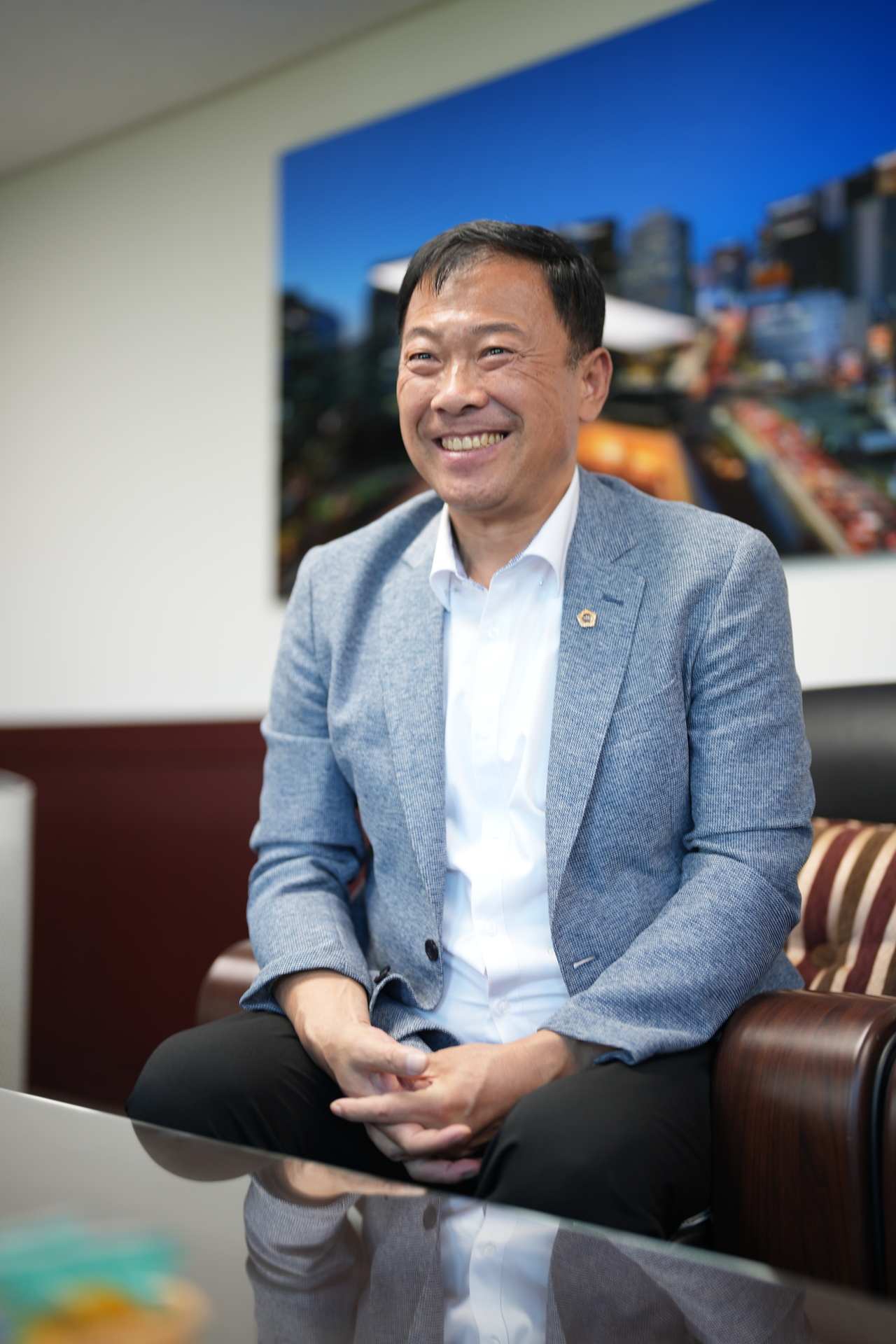
SH move to Sinnaedong — 'more than a headquarters relocation, a growth hub for the northeast'
Park named the relocation of the Seoul Housing & Communities Corporation to Sinnaedong and the accompanying mixed-use development as the most pressing issue for his constituency of Jungnang-gu.
The plan to move SH's headquarters to Sinnaedong was launched in 2019 as part of Seoul's balanced development initiative for areas north of the Han River, but it lost momentum for years due to concerns over project viability. Park said the project regained traction after a project real estate investment trust structure was put in place.
The Sinnaedong mixed-use development, with a total project cost of about 515 billion won ($373 million), is set to include SH's new headquarters building, a 600-seat multipurpose cultural performance venue, 388 residential units and neighborhood commercial facilities.
Park said the project must not be reduced to simply moving a public institution from Gangnam to the north of the Han River. SH's core functions and staff must genuinely relocate, and the development must combine office, residential, cultural and commercial uses if it is to fulfill the original policy goal of balanced development north of the river.
Linking the public institution's relocation to local economic revitalization is also a key objective. The vision goes beyond moving SH employees and affiliated agencies — the multipurpose cultural venue and residential and lifestyle facilities should draw foot traffic and inject vitality into surrounding commercial areas and the local economy, turning the site into a genuine hub.
"The SH relocation is not a simple public institution move," Park said. "It is only when the core functions and organization relocate together — not just the building — that the original intent of balanced development north of the Han River can be properly realized."
"I will closely monitor every stage of the project to ensure that the second-half 2027 ground-breaking and 2031 completion proceed without a hitch," he added. "I will make the SH Sinnaedong relocation and mixed-use development the defining project that transforms Jungnang-gu, and I will work to build Sinnaedong into a new growth hub for northeastern Seoul."
Park said Seoul's housing policy must ultimately be judged not by a single supply figure but by the real difference it makes in citizens' lives — delivering enough housing while carefully managing demolitions and relocations through the reconstruction process, reducing resident conflicts and strengthening the safety net for housing-vulnerable groups.
"Housing is the most fundamental foundation supporting citizens' lives," he said. "The role of the Housing and Space Committee is not to stop at counting how many units have been supplied, but to keep watching until citizens can genuinely feel that their housing situation is stable."
7toy7@heraldcorp.com




