As foreign patients increasingly turn to online channels to find and access medical services in South Korea, calls are growing for the country's medical advertising regulations to be updated to reflect the shifting global medical tourism market. Efforts to build a "K-medical wellness tourism" ecosystem — combining medical services with wellness, accommodation and tourism to extend foreign visitors' stays and boost spending — are also gaining momentum.
Private-sector cooperation aimed at pairing the medical tourism industry's on-the-ground networks with tourism research and data to develop regulatory reform proposals is likewise accelerating.
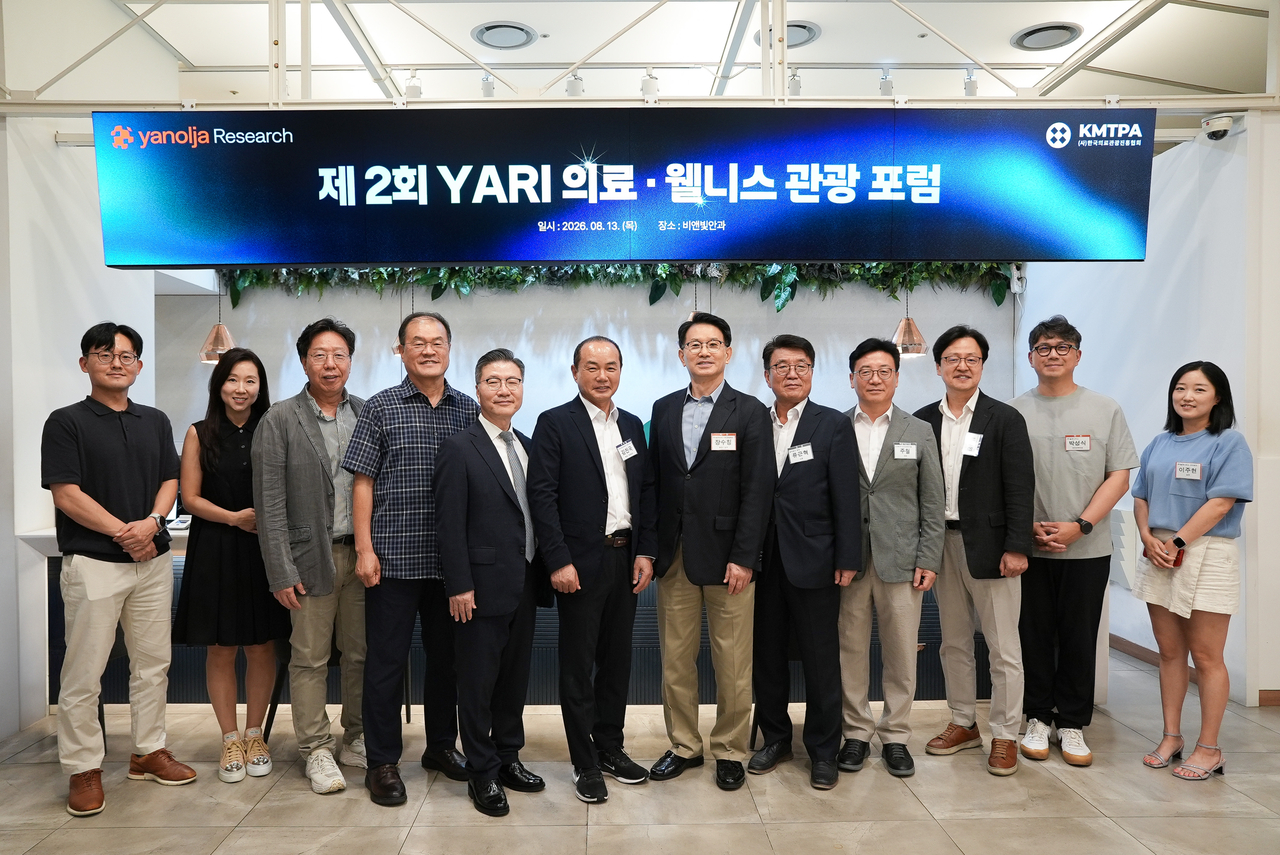
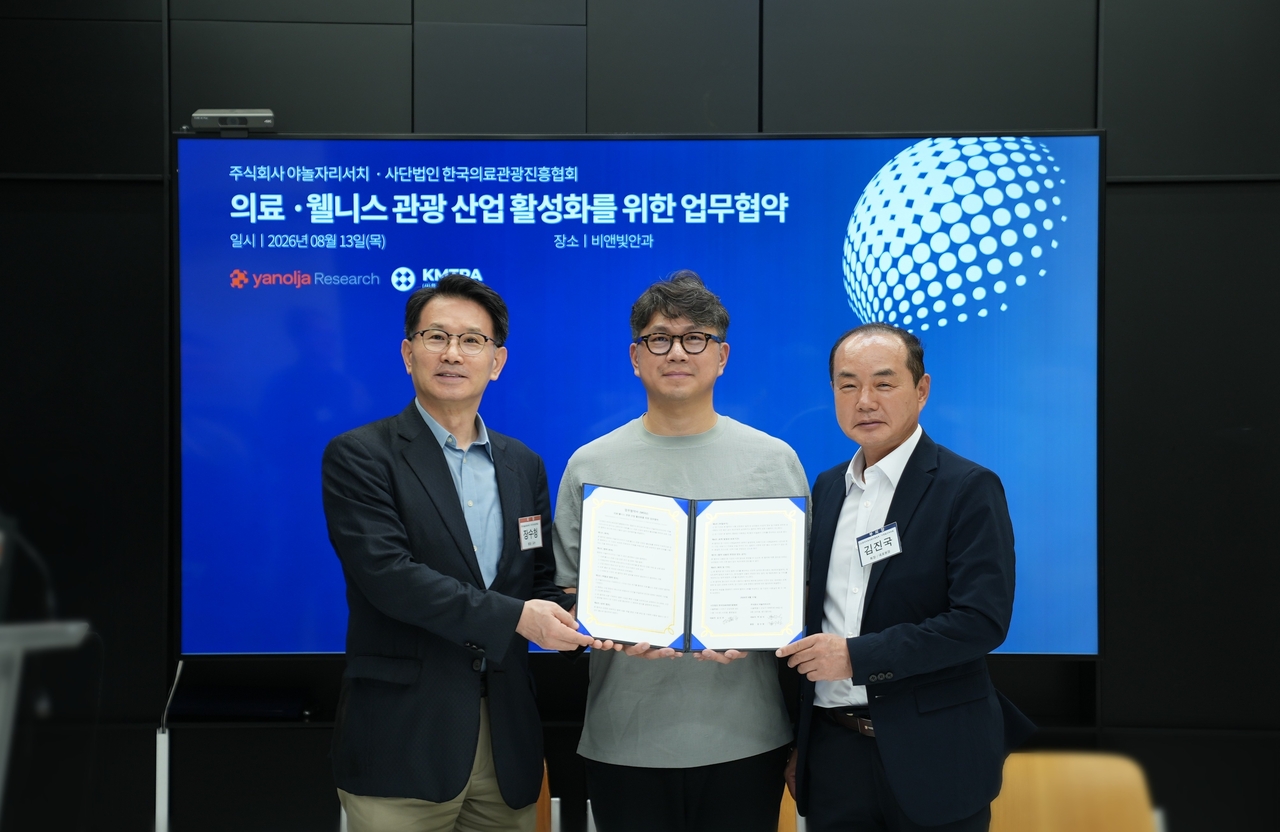
The Korea Medical Tourism Promotion Association (KMTPA), led by Chairman Kim Jin-guk, and Yanolja Research, led by Director Jang Su-cheong, signed an MOU to promote the medical and wellness tourism industry on Thursday and jointly hosted the second YARI Medical and Wellness Tourism Forum.
The agreement focuses on combining Yanolja Research's travel industry research capabilities with KMTPA's field network in medical tourism. The two organizations plan to bring policy, industry and research discussions on medical and wellness tourism under a single cooperative framework, and to translate regulatory and institutional reform issues raised in the field into data-driven policy alternatives.
The two sides agreed that the goal should go beyond simply attracting tourists. They aim to connect the entire journey into a single industry ecosystem — from the stage where foreign visitors research hospitals and services before arriving in Korea, through consultations, treatment, recovery and wellness programs, to accommodation and sightseeing.
Patients search online, but rules are still place-based: medical ad reform takes center stage
The forum, held after the MOU signing, drew government, academic and industry participants including Chairman Kim, Director Jang, Choi Gyu-wan, a professor at Kyung Hee University, Ju Cheol, head of the Ministry of Health and Welfare's overseas health industry expansion division, and Park Seong-sik, head of external strategy at Nol Universe.
One of the central topics was medical advertising regulations targeting foreign patients. Participants noted that while foreign patients now rely overwhelmingly on digital channels — search engines, social media and online platforms — to find Korean hospitals and learn about procedures and treatments, the existing regulatory framework has not kept pace with that shift.
Current medical advertising rules allow limited exceptions based on offline "locations" such as duty-free shops and airports, creating a disconnect with the online environment where prospective patients abroad actually search for information.
Restrictions on posting before-and-after photos and patient reviews also drew significant discussion. Participants argued that while the consumer-protection intent behind such rules should be preserved, overly limiting the information foreign patients need when choosing Korean medical services could in practice widen information asymmetry rather than reduce it.
When patients cannot easily verify information directly, they tend to rely on intermediaries rather than hospitals — which can ultimately make direct communication between medical institutions and patients more difficult, participants said.
The forum called for regulatory reforms that balance consumer protection with industry competitiveness, citing examples from Singapore and Turkey, such as operating dedicated multilingual channels for foreign patients or allowing information to be provided when certain posting requirements are met.

Beyond 'treat and leave': linking medical care with extended wellness stays
Building the institutional foundation to break down barriers between the medical and wellness industries and develop high-value, extended-stay tourism products was also identified as a key priority.
Participants closely reviewed the detailed criteria for the K-MediWell excellent facility certification system and the service and facility registration regime, in line with amendments to the Act on Promotion of the Healing Tourism Industry that took effect in April.
The core of the discussion was that while wellness sectors such as beauty and spa treatments and nature and forest therapy have each grown independently, they now need to be organically linked with hospitals, hotels, tourism facilities and online platforms.
Expanding the product structure so that foreign tourists do not simply use health checkups or cosmetic and medical services and leave — but also experience pre- and post-treatment recovery programs, wellness, accommodation, dining, shopping and cultural tourism — could allow medical tourism to raise the overall value of the broader tourism industry, participants said.
To achieve this, participants called for managing the quality of medical and wellness services — which have operated in separate domains — above a consistent standard, and for establishing integrated criteria for facilities and services that foreign tourists can trust.
For the K-MediWell certification system to take root as a trusted framework connecting medicine and wellness, participants said it must account for the objectivity of certification standards, service quality management and ease of use for foreign visitors.
Field voices plus data: 'beyond policy proposals, setting industry standards'
KMTPA and Yanolja Research plan to use the partnership as a springboard to translate on-the-ground opinions raised at the forum into concrete research and policy proposals, rather than letting them remain one-off suggestions.
KMTPA will gather input from hospitals, patient recruitment agencies and others in the industry, while Yanolja Research will combine that with tourism market data and research capabilities. Together, they aim to identify institutional obstacles in the foreign patient recruitment process and propose effective reform directions to the government and relevant agencies.
"The era of medicine and wellness operating in isolation is over," Chairman Kim said. "We will build an integrated ecosystem connecting prevention, treatment and management, boldly lower the regulatory barriers that foreign patients encounter before they even arrive, and firmly establish the global competitiveness of K-medical tourism."
Director Jang outlined plans to develop the forum into an ongoing policy and industry research platform. "We will continue publishing the YARI Forum Report, grounded in the field voices accumulated through the forum and rigorous data analysis, and evolve it into a knowledge platform that offers government policy recommendations and sets industry standards," he said.
Medical tourism regulatory reform discussions continue, industry issues brought into public debate
The YARI Medical and Wellness Tourism Forum is designed to bring regulatory and industry issues raised in the medical tourism field into public debate and explore concrete directions for reform.
The first forum focused on key agenda items including the reintroduction of a value-added tax refund system for cosmetic and medical services and deregulation of domestic online travel agencies' foreign patient recruitment activities. The second forum expanded the scope of discussion to medical advertising and wellness certification and healing tourism regimes.
As the push to transform medical tourism from a sector focused narrowly on bringing foreign patients to domestic hospitals into a complex tourism industry encompassing medicine, wellness, accommodation and sightseeing gains momentum, updating the relevant regulatory framework to match market changes stands as the central challenge ahead.
KMTPA plans to continue supporting public-private-academic cooperation in the medical tourism sector while serving as a bridge to convey industry reform demands and policy proposals to the government, the National Assembly and local governments.
7toy7@heraldcorp.com