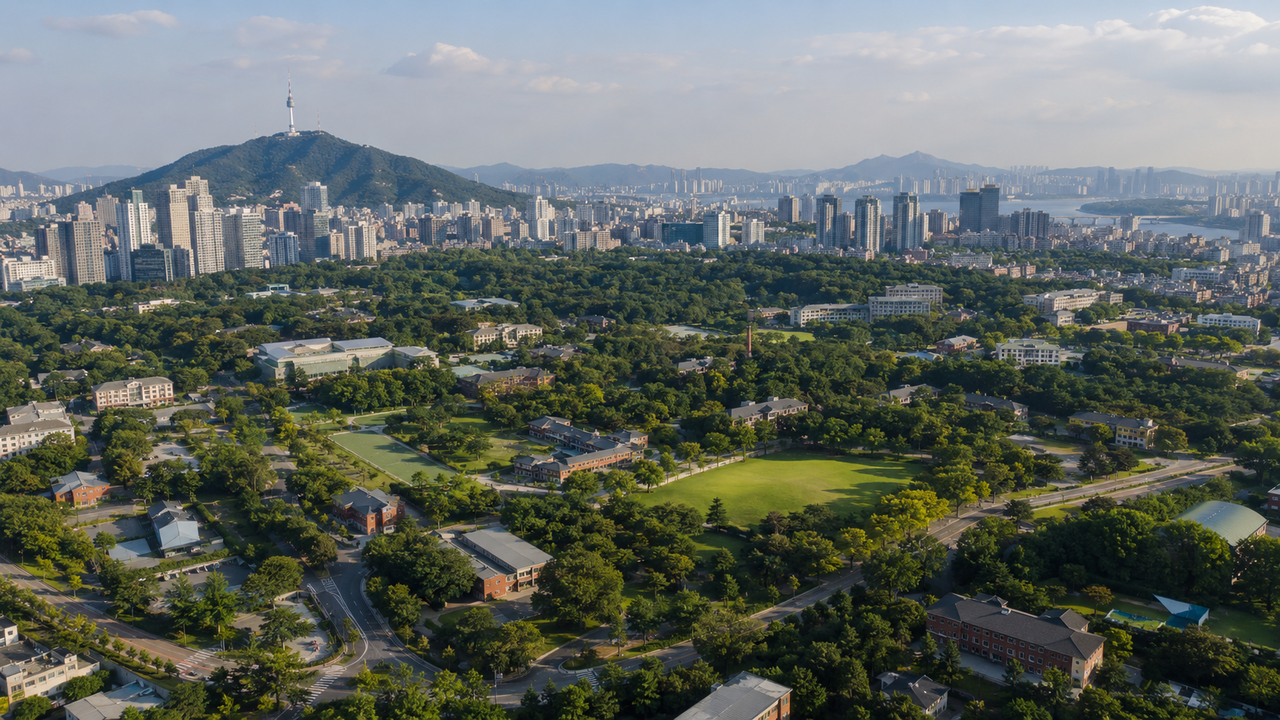
With the government signaling it is considering all of Yongsan Park — not just the Yongsan Children's Garden — as a potential housing supply site, attention is turning to whether such a plan could actually be carried out.
Yongsan-gu issued a statement Saturday expressing deep regret over the government's direction and declaring its strong opposition.
"Yongsan Park is the last large-scale national park in central Seoul, returning to the people after 120 years," the district said. "The symbolic national space that embodies Korea's history and future must not be viewed through the lens of 'is there land here that can be used for housing supply.'"
Minister of Land, Infrastructure and Transport Kim Yun-deok said at a press briefing Friday that the government was "thinking about the entire Yongsan Park, not just the narrower concept of the Yongsan Children's Garden." After the remarks drew controversy, the ministry clarified that the intent was not to build housing across the entire park, but to examine whether any portion of the overall site was suitable for residential construction. Kim also acknowledged that consultations with the National Assembly, Seoul Metropolitan Government, Yongsan-gu and the Ministry of National Defense would be necessary.
The question, then, is whether Yongsan-gu has the power to stop the government's plan.
In short, the district's legal authority to independently block the government's housing supply plan is limited. Analysts say, however, that by leveraging existing law, administrative procedures, a joint response with Seoul city and local public opinion, the district could significantly delay the project or in effect derail it.
The strongest line of defense is the current Special Act on the Creation of Yongsan Park.
Article 4, Paragraph 2 of the act stipulates that the state shall, as a matter of principle, develop the entire main site of the former US military base as Yongsan Park. It also explicitly prohibits changing the use of the main site for purposes other than a park, or disposing of it through sale or other means.
Constructing large-scale apartment complexes on the "main site" as defined by the special act would in all likelihood require amending the current law or enacting separate legislation of equivalent effect beforehand. The government cannot simply revise its administrative plans and begin building apartments.
If the National Assembly amends the special act, however, the situation changes. Yongsan-gu has no authority to reject a legislative amendment or to make the final call on how state-owned land is used.
The tools available to Yongsan-gu are concentrated mainly in the plan-revision and project-approval stages.
Should the Ministry of Land, Infrastructure and Transport move to revise the comprehensive master plan for the Yongsan Park improvement zone or the park development plan, the district can submit formal opinions and demand public hearings and community consultations. It can also press hard on issues such as soil contamination remediation, traffic measures, and the provision of infrastructure including water and sewage systems and schools.
The Yongsan base site is also entangled with soil decontamination requirements and US military base reversion procedures, meaning actual housing construction would inevitably take considerable time. If legal violations are found during the plan-revision or project-approval process, the district could also consider filing an administrative lawsuit or seeking an injunction. Whether Yongsan-gu would be recognized as having a legally protected interest to bring such a suit — and whether it could actually prevail — would depend on the specifics of any administrative disposition.
Political countermeasures are also possible, including resolutions by the Yongsan District Council, resident petition drives and National Assembly petitions aimed at blocking any amendment to the special act. Ultimately, the decisive actor in preventing a legal amendment is not Yongsan-gu but the National Assembly.
A joint response with Seoul Metropolitan Government is another important variable.
If Seoul opposes the plan, the government could face considerable obstacles in urban planning, traffic, environmental and infrastructure consultations. The Ministry of Land, Infrastructure and Transport has maintained, however, that Seoul's consent is not strictly required for the designation of a public housing zone. Seoul Mayor Oh Se-hoon has also indicated his opposition is based on the principle of preserving the national park and urban green space rather than on any specific legal authority.
Ultimately, if the government presses ahead through legislative amendment, it will not be easy for Yongsan-gu and Seoul city to block it entirely through legal means. Yet the hurdles are numerous — from amending the special act and completing the US base reversion, to remediating soil contamination, revising various plans, building out infrastructure and resolving community opposition.
Given the historical and symbolic significance of Yongsan Park, as well as the shortage of green space in central Seoul, pushing the project through unilaterally without broad public consensus would carry considerable political risk for the government.
Although the government has declared its intention to supply housing within Yongsan Park, layers of legal, administrative and political obstacles stand between that announcement and the first shovel in the ground. Whether the plan remains a preliminary concept or advances to a special act amendment will ultimately be decided by the balance of forces among the National Assembly, Seoul Metropolitan Government, Yongsan-gu and public opinion.
seouldream01@heraldcorp.com