
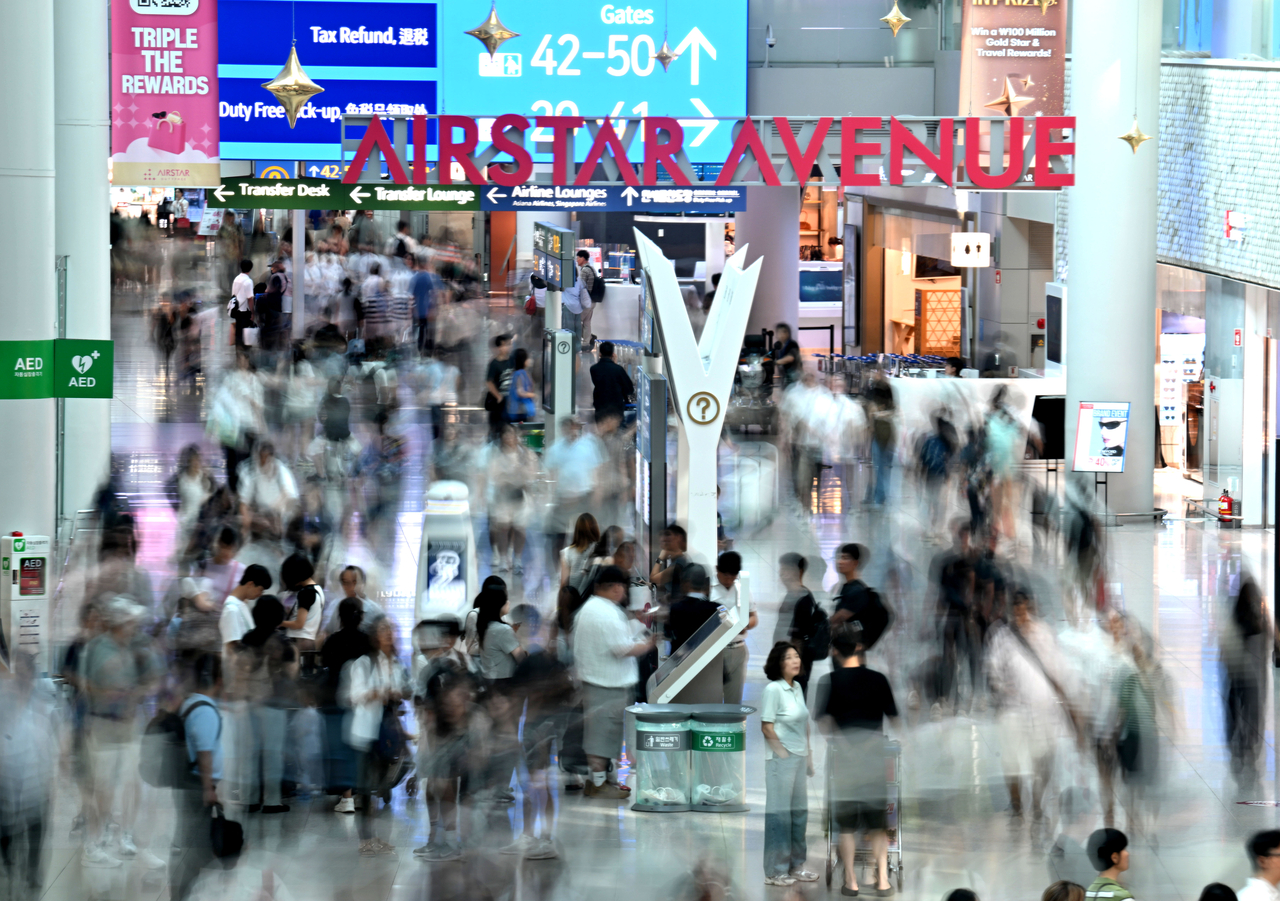
There was no winner's curse. Lotte and Hyundai duty-free, which secured concessions at Incheon International Airport in April, sharply lifted their second-quarter sales and operating profit. Hotel Shilla and Shinsegae, which gave up their concessions, also posted markedly improved results.
Hotel Lotte's duty-free division recorded second-quarter sales of 904.3 billion won ($639 million) and operating profit of 31.9 billion won, up 35 percent and 385 percent, respectively, from a year earlier. Growth was driven not only by a rise in foreign tourist arrivals but also by the Incheon airport stores that opened in April. Hotel Lotte's hotel division also posted its best-ever second-quarter performance, pushing the company as a whole to a profit for the first half of the year.
Hyundai duty-free swung to an operating profit of 6.2 billion won in the second quarter from a loss of 1.3 billion won a year earlier. Sales rose 5.8 percent to 310.4 billion won. The Incheon airport operation was cited as one of the key drivers of the improvement. "We expect the scale of profit to keep expanding, underpinned by steady growth at the airport store and improved profitability at city stores," a Hyundai Department Store official said.
Lotte and Hyundai duty-free began operating at Incheon airport's DF1 and DF2 zones, respectively, in April, winning the concessions in a re-tender held earlier this year after Hotel Shilla and Shinsegae returned theirs. The two incumbents had been widely expected to bid again but chose not to, allowing Lotte and Hyundai to take over without a contest.
A key reason the two operators avoided the winner's curse was a significantly lower per-passenger rental fee. Incheon International Airport Corp. set the fee at 5,031 won per passenger for DF1 and 4,994 won for DF2 in the new tender — roughly half the approximately 9,000 won per passenger that Hotel Shilla and Shinsegae had previously paid. The dispute over those high fees ultimately led the two operators to hand back their DF1 and DF2 concessions.
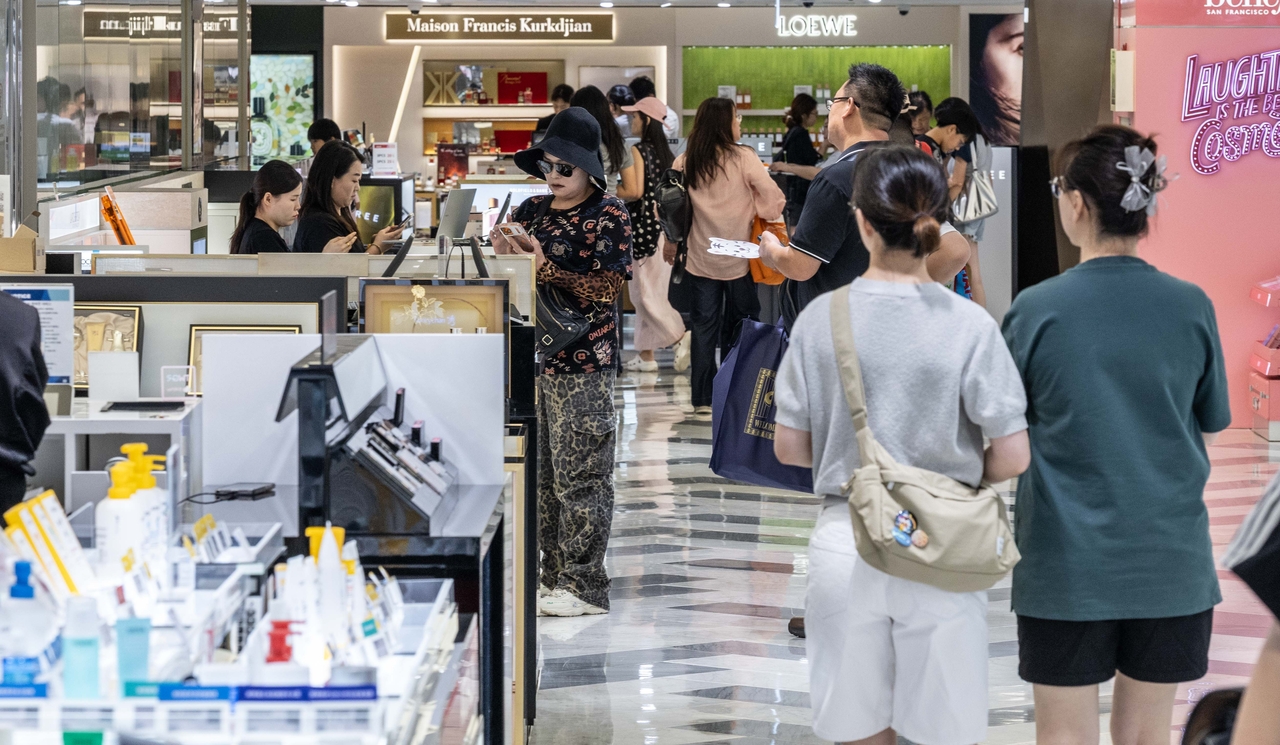
Hotel Shilla and Shinsegae also improved their results. Revenue fell as their airport footprint shrank, but both cleared their losses and returned to profit — an achievement made more notable given that the won-dollar exchange rate climbed as high as 1,500 won at one point.
Hotel Shilla's travel retail division, which runs its duty-free business, posted sales of 772.6 billion won, down 9.1 percent from a year earlier, but operating profit surged to 36.4 billion won from a loss of 11.3 billion won. Shinsegae DF, which operates Shinsegae's duty-free business, saw second-quarter sales fall 10.3 percent to 542.6 billion won, while operating profit swung to 33.3 billion won from a loss of 1.5 billion won.
The domestic duty-free industry appears to have entered a sustained recovery, driven by the growing number of foreign tourists visiting South Korea. "Growth is happening even at city duty-free stores as foreign tourist numbers rise," one industry official said. "Strategies are diversifying — away from price competition and toward strengthening premium product lines and introducing differentiated services."

soho0902@heraldcorp.com




