Japan may be on the verge of its first commercially developed gold mine in roughly half a century, as Canadian exploration companies have discovered high-grade ore far exceeding the economic threshold for mining in Kagoshima and Hokkaido. If follow-up exploration confirms sufficient reserves, the finds could reshape Japan's gold production landscape.
According to the Mainichi Shimbun on Thursday, Canadian exploration company Irving Resources discovered high-grade gold ore at multiple sites at the former Yamagano mine in Kagoshima Prefecture in March, with gold content ranging from 10.3 to 46.1 grams per metric ton.
That far surpasses the industry's general benchmark for commercial viability, which stands at roughly 3 grams per metric ton — the level at which mining costs are considered recoverable. The richest sample confirmed in this round of exploration exceeds that threshold by more than 15 times.
The Yamagano mine has a storied history dating to its discovery in 1640, when it was once Japan's largest gold producer. It closed in 1965, and the latest confirmation of high-grade ore at the site some 60 years later has renewed attention to the possibility of redevelopment.
Irving Resources has also made a string of high-grade discoveries in Hokkaido, at the northern tip of Japan. In 2019, the company confirmed ore containing 118.5 grams of gold per metric ton in Omu, Hokkaido. In October last year, it found ore with gold content of up to 24.22 grams per metric ton at the same location.
Another Canadian exploration firm, Japan Gold, has also entered the race to develop Japanese gold deposits. In July last year, the company discovered ore containing 24.1 grams of gold per metric ton near the Konomai mine in Monbetsu, Hokkaido.
The string of discoveries has drawn attention precisely because Japan had in effect gone decades without a new gold find capable of supporting commercial mining.
The country's most prominent operating gold mine is the Hishikari mine in Kagoshima Prefecture. Since a vein averaging roughly 20 grams of gold per metric ton was found there in 1981, no new gold mine of commercially viable scale has emerged in Japan. If the foreign-backed companies can translate their latest finds into actual production, it would mark Japan's first new gold mine development in roughly half a century.
However, the discovery of high-grade ore does not automatically mean a mine will open. Moving to commercial extraction requires additional drilling to determine the extent of the vein and total reserves. Even ore with high gold content cannot justify development costs if the overall deposit is too small.
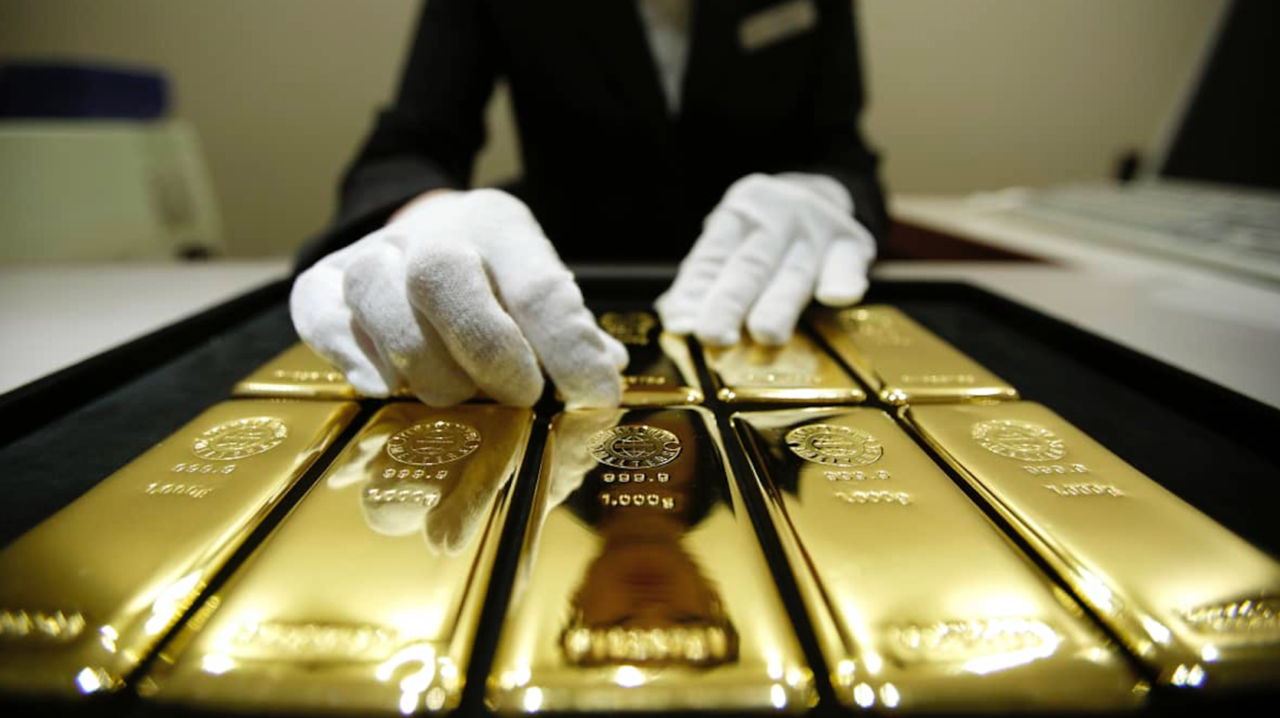
Growing recognition of gold's strategic value has also heightened interest in domestic mining. Estimated global gold reserves stand at roughly 66,000 metric tons. Beyond its role as a safe-haven asset, gold's superior electrical conductivity and corrosion resistance make it indispensable across advanced industries, from electronics to medical devices.
With international gold prices remaining elevated, previously shuttered Japanese mines could re-emerge as development candidates if sufficient reserves are confirmed.
sjy@heraldcorp.com