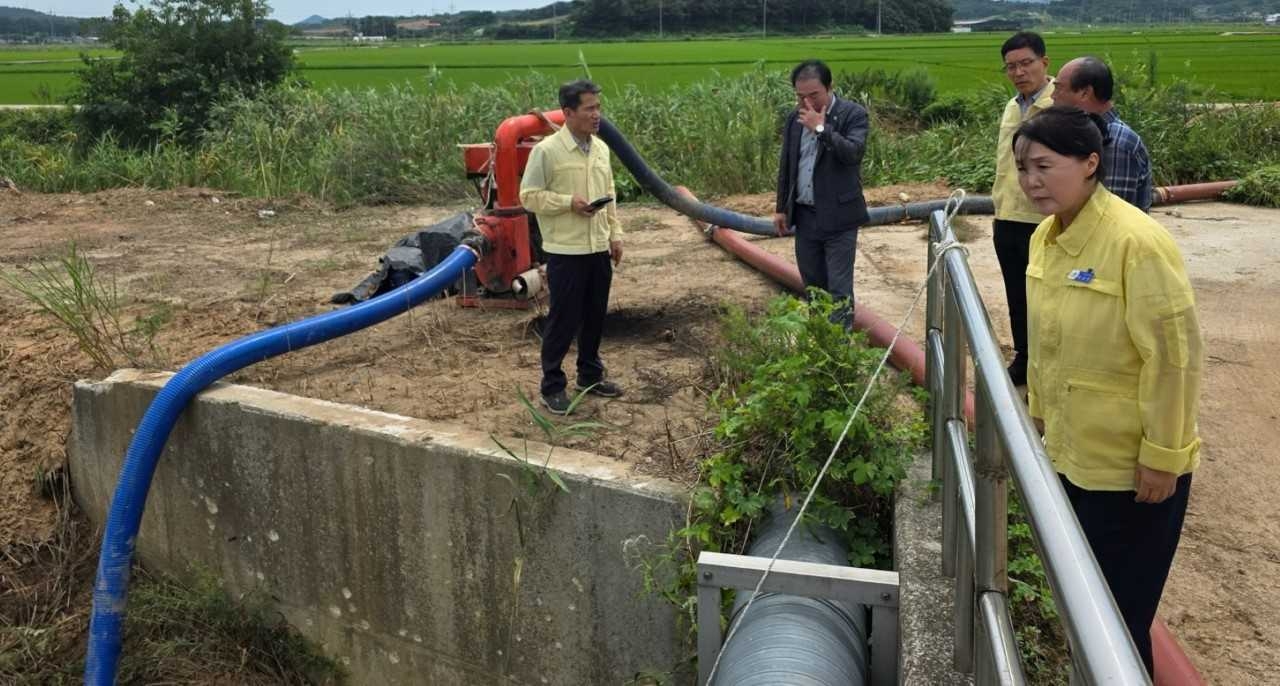
The Jeonnam-Gwangju Integrated Special City Waterworks Authority is taking preemptive steps to address a drought after the reservoir level at Dongbok Dam — the main water source for the Gwangju area — continued to fall due to a recent rainfall shortage, while urging residents to actively conserve water in their daily lives.
Cumulative rainfall in the Dongbok Dam basin stood at 548.5 millimeters as of Tuesday, just 42 percent of the figure recorded in the same period last year. The dam's reservoir level has dropped to 48.94 percent, placing it in the "caution" tier of the drought response framework. The current water volume is sufficient to supply residential water for about 150 days. The drought status was raised from "attention" to "caution" on Saturday.
In response, the Waterworks Authority has adjusted output at the Yongyeon and Deongnam water treatment plants and is continuously monitoring conditions at water sources and treatment facilities to stay ahead of the situation.
The authority also plans to closely review its tiered drought response plans and carry out the necessary measures at each stage without delay, preparing for the possibility of a prolonged drought in order to maintain a stable tap water supply.
Voluntary water conservation by residents is as important as the authority's own preemptive measures in overcoming the drought and sustaining a stable tap water supply.
The authority highlighted six easy water-saving habits residents can adopt in daily life: using a cup when brushing teeth, adjusting faucet flow rates, using the spray function on kitchen faucets, installing water-saving showerheads, doing laundry in full loads, and using a basin when washing dishes. It urged residents to take an active part in these practices.
"Residents voluntarily saving water makes a strong difference in overcoming the drought," said Kim Il-yung, head of the Waterworks Authority. "We will continue to monitor the drought situation closely and do our utmost to ensure a stable tap water supply."
sij@heraldcorp.com