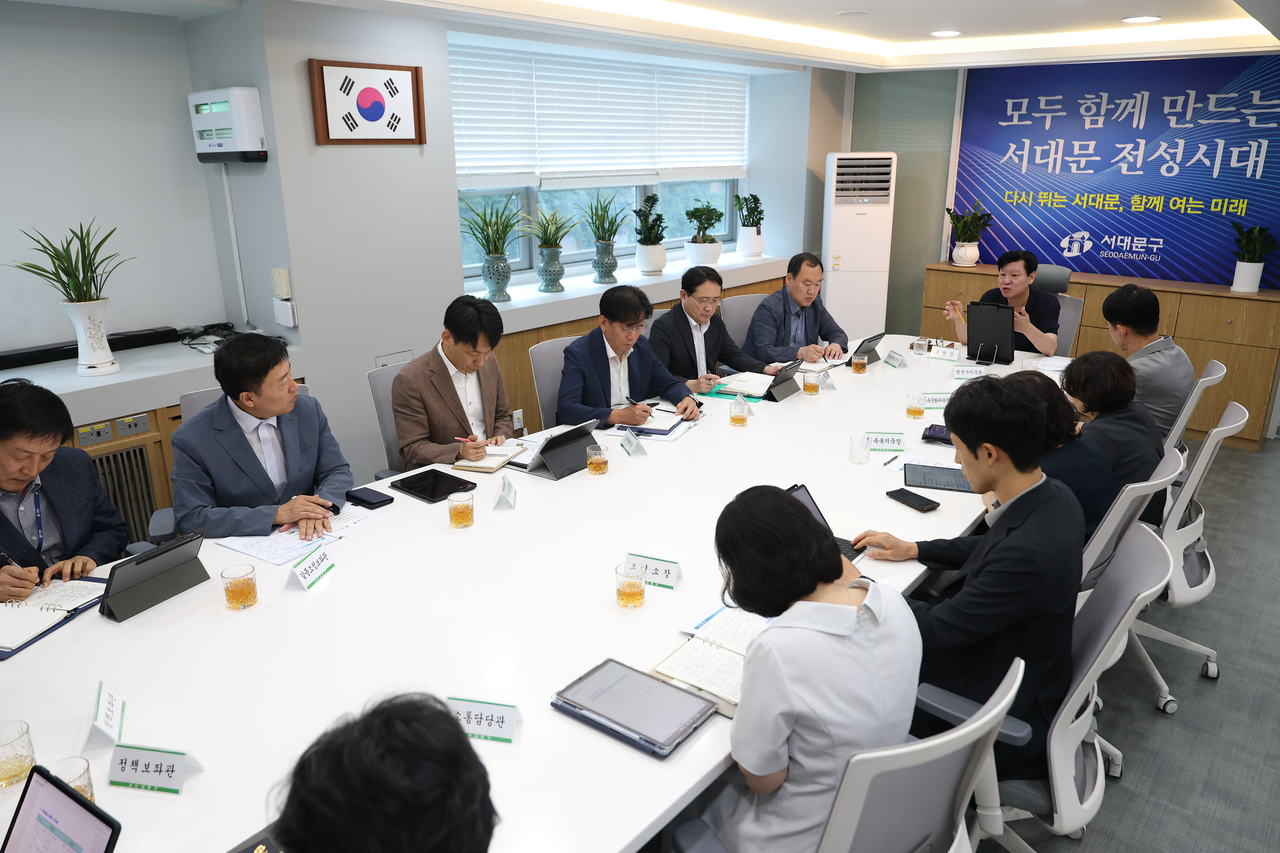
Seodaemun-gu is overhauling the way it makes policy decisions, moving away from a model in which the district administration decides first and explains later, toward one in which residents and stakeholders are consulted — and alternatives are weighed — before any decision is made.
The district, led by District Mayor Park Un-gi, held its first policy meeting of the ninth elected term Monday and resolved to embed "deliberative governance" across all district operations, making democracy, fairness and transparency the core principles guiding every policy decision — whether a new policy is being drawn up or an existing one changed or scrapped.
The central shift is from "decide first, explain later" to "listen first, decide later."
Under the old approach, the administration would settle on a policy direction through internal review and then seek public input or explain its reasoning to residents. Going forward, the district will solicit broad input from residents, related agencies and stakeholders from the very start of the decision-making process, and will give full consideration to differing views and alternative options.
Seodaemun-gu has also decided not to limit public deliberation to large-scale forums or elaborate procedures. Even for small policies that touch residents' daily lives, gathering input from residents and staff and comparing multiple options will be treated as the starting point of deliberative governance.
The approach to gathering opinions will also vary by the scale and nature of each policy. The district will weigh input from a range of parties — including relevant agencies and residents — based on how broadly a policy affects daily life and how many competing interests are involved. On contentious issues, the district will thoroughly examine each side's position and alternatives before settling on a direction.
The principle reflects a view that public trust in the decision-making process matters as much as administrative speed.
The same principles will apply to the major issues on the ninth elected term's agenda.
At Monday's inaugural policy meeting, three priorities were discussed: laying the policy groundwork in the areas of labor, the environment and the social solidarity economy; revitalizing the Sinchon and Ewha Womans University area; and mediating conflicts that arise during urban redevelopment projects.
For labor, environment and social solidarity economy policy, the district will set up a TF early to build a cross-departmental collaboration framework. The aim is to create a structure in which interconnected policy tasks are discussed together, rather than each department pursuing its own projects in isolation.
Revitalizing the Sinchon and Ewha area will likewise be treated as a district-wide challenge, not the responsibility of any single department. Because the issues there span commerce, youth, culture, transport, pedestrian access and urban space, relevant departments will work together to examine local problems and find solutions.
On conflicts between residents over redevelopment projects, the district will strengthen its role as a mediator — listening carefully to a wide range of views rather than imposing a unilateral conclusion.
Seodaemun-gu intends for this inaugural policy meeting to mark the start of a broader shift, making deliberation and active listening a district-wide way of working throughout the ninth elected term, not a procedure confined to specific projects.
"Good policy does not come from the administration deciding on the answer first and then persuading residents," District Mayor Park said. "Listening before deciding, and taking the time to examine differing views — that process itself is what I consider governance built together with residents."
seouldream01@heraldcorp.com