![A greenbelt area in the Greater Seoul metropolitan area. [Newsis]](https://wimg.heraldcorp.com/news/cms/2026/08/10/news-p.v1.20250122.4f0b9a56ea274986ab4bbf420b928e41_P1.jpg)
The government is reviewing a sweeping housing supply plan that would mobilize every available parcel of land in Seoul — from greenbelt zones in the Gangnam area to long-stalled public sites and semi-industrial districts. With large-scale developable land in Seoul effectively exhausted, authorities are putting back on the table plots previously blocked by environmental concerns or community opposition.
According to government and real estate industry sources Monday, the Ministry of Land, Infrastructure and Transport is considering designating greenbelt areas in Seoul and the Greater Seoul metropolitan area as public housing districts. Candidate sites in Seoul include a reserve forces training ground in Naegok-dong, Seocho-gu; the Segok and Jagok-dong areas of Gangnam-gu; land around the Suseo vehicle depot in Suseo-dong; and greenbelt areas near the Olympic Athletes' Village apartments in Bangi-dong, Songpa-gu.
Most candidate sites share a common feature: they border established large-scale residential communities in the Gangnam area. The Naegok-dong training ground sits close to Cheonggyesan Ipgu Station on the Sinbundang Line and adjoins the Naegok Bogeumjari housing district, developed after the greenbelt there was lifted during the Lee Myung-bak administration. The Segok and Jagok-dong areas of Gangnam-gu already host the Segok and Gangnam Bogeumjari housing districts. The Suseo vehicle depot is adjacent to Suseo Station and the SRT and GTX-A intercity rail networks, and plans for mixed-use development above the depot have been floated for years.
In Songpa-gu, the greenbelt land remaining to the east and south of the Olympic Athletes' Village apartments in Bangi-dong is among the sites under discussion. The complex itself is already the subject of a redevelopment plan that would expand it from 5,540 units to up to 9,218 units across buildings of up to 45 stories. If the adjacent greenbelt supply also moves forward, the volume of new housing in southeastern Songpa-gu could increase substantially.
There are also signs the government may pursue greenbelt development more aggressively than in the past, backed by a new regulatory framework. The Ministry of Land, Infrastructure and Transport revised its guidelines in February, allowing greenbelt areas released for public housing projects to be excluded from the overall release quota, subject to Cabinet deliberation. The five-year special provision means the government can secure additional housing land without drawing down the existing quota.
![The Olympic Athletes' Village apartment complex near the Bangi-dong site expected to be released from greenbelt restrictions. [The Herald Business DB]](https://wimg.heraldcorp.com/news/cms/2026/08/10/news-p.v1.20251105.df9c451d76e14b92b2c64fda5a4d5cff_P1.jpg)
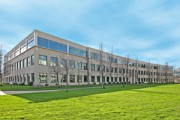
Urban public institution sites that could be developed immediately have also returned to the agenda. The Seoul regional headquarters of the Korea Land and Housing Corporation in Nonhyeon-dong, Gangnam-gu, was announced as a candidate to supply about 200 units under the Moon Jae-in administration's Aug. 4, 2020 housing package, but the project was later shelved. The agency recently announced plans to use the site as residential space for young people, reviving development efforts after a six-year hiatus.
The Seoul Regional Office of the Public Procurement Service in Banpo-dong, Seocho-gu, is also a strong candidate. Located across from Seoul St. Mary's Hospital and near Express Bus Terminal Station on subway lines 3, 7 and 9, it is a prime public site in the Gangnam area. The Aug. 4 package had earmarked it for about 1,000 units and included plans to relocate the procurement office to the Suseo transit-oriented area, but the housing supply never materialized.
A Korea Land and Housing Corporation site in Yeouido, Yeongdeungpo-gu, is also back under consideration. Situated along the Han River between Yeouido St. Mary's Hospital and the 63 Building, the site was slated for about 300 units under the Aug. 4 package. The government said in 2021 it would proceed with housing project approval after consulting relevant agencies, but the project remained stalled for years. It is now expected to be revived alongside the Seoul procurement office site in the new supply package.
Semi-industrial zones are the key card for securing larger supply volumes within the city. Seoul's semi-industrial zones cover about 19.97 square kilometers, concentrated mostly in the southwestern part of the city — Yeongdeungpo-gu at 5.02 square kilometers, Guro-gu at 4.19 square kilometers and Geumcheon-gu at 4.13 square kilometers. The plan is to redevelop areas such as Mullae and Yangpyeong-dong and the Guro and Geumcheon districts — where factories, warehouses and aging housing are intermixed — into high-density mixed residential and commercial zones.
The Seoul Metropolitan Government has already eased a significant portion of the regulations on semi-industrial zones. A 2024 ordinance revision allows floor-area ratios of up to 400 percent — up from the previous 250 percent — when a district unit plan for apartment construction is established. The city is pursuing a supply of about 24,000 units across 31 semi-industrial zone project sites. Unlike greenbelt land, these zones already sit within the urban fabric, with roads and subway lines in place.
Experts caution that lifting greenbelt restrictions alone will not produce results in the near term. Kwon Dae-jung, a chair professor in the real estate department at Hansung University, said "supplying housing by releasing greenbelt land is ultimately a story for the distant future," adding that "more than eight years have passed since the third-generation new town projects began, yet most have not even reached the pre-sale stage."
Kwon said "what the market needs right now is a short-term supply measure," stressing that private housing supply must be activated, not just public supply. He added that the government should ease financial conditions for construction companies — including project financing loans — and exclude small non-apartment units with an exclusive use area of 60 square meters or less from household count calculations, to stimulate supply of multi-family homes, row houses, urban-type housing and officetels.

quq@heraldcorp.com
smh@heraldcorp.com