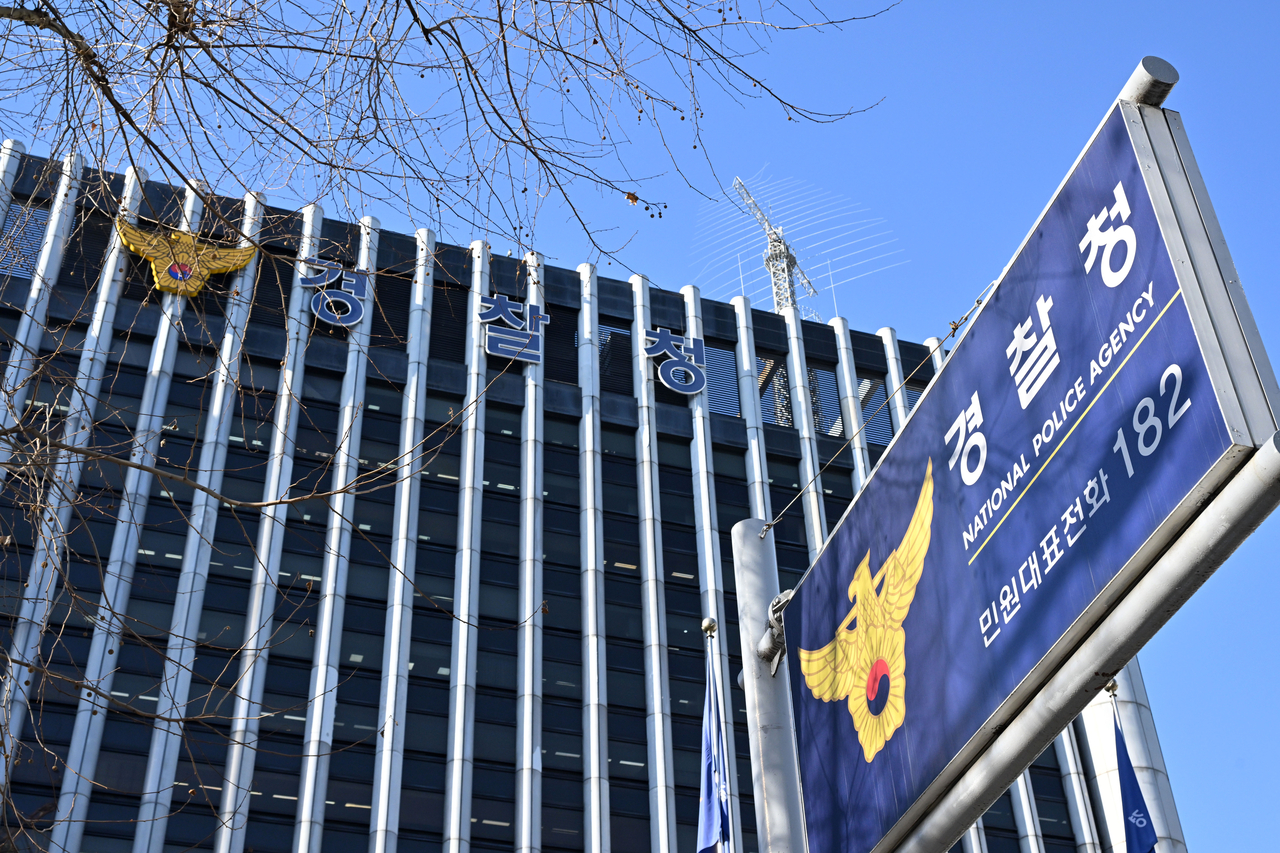
South Korean police will introduce a conflict-of-interest exclusion rule starting next month, barring officers from investigating cases involving their spouses or direct relatives. The measure aims to eliminate concerns over favoritism and strengthen investigative impartiality, and comes ahead of the revised Code of Criminal Procedure taking effect Oct. 2.
The Korean National Police Agency said it held a meeting of its Revised Code of Criminal Procedure Follow-up Measures TF on Friday to discuss the plan. Under the new rule, a "family case" is defined as one in which a person involved is the spouse or direct relative of an officer currently working — or who has worked within the past three years — at the agency handling the investigation, including pre-indictment inquiries.
The policy follows a comprehensive review conducted last month — the first of its kind — prompted by the case of Jang Yun-gi, convicted of murdering a high school girl. That review identified 117 such family cases, of which 44 have already been transferred to other provincial police agencies or police stations to ensure impartiality. The review also uncovered misconduct, including one officer booked on charges of destroying evidence in an illegal filming case involving his son.
Police plan to apply the exclusion rule on a priority basis from early next month and, in line with the second-half personnel reshuffle, will transfer the investigative oversight function currently handled by the National Investigation Headquarters to the human rights auditor's office. A new internal corruption investigation unit will also be launched to strengthen the independence and objectivity of investigations. The measures will initially take effect as internal guidelines, with plans to establish a legal basis later through revisions to police directives.
Police will also develop detailed plans to strengthen oversight of cases in which prosecutors have requested supplementary investigations or re-investigations, and to establish a subcommittee for socially vulnerable groups within the Police Investigation Review Committee. A lawyer-assisted anonymous reporting system will also be introduced to protect the identities of complainants.
Police said they will pursue an amendment to the Police Act within the year to make the National Police Commission more substantive — including measures to improve the effectiveness of the Police Investigation Review Committee and to establish a dedicated human rights and oversight body for police investigations.
The Friday meeting also addressed staffing needs arising from the revised Code of Criminal Procedure. Reflecting a decline in illegal and violent assemblies and demonstrations, police will reduce the size of riot police units and redeploy personnel to secure 881 additional investigators. Further staffing needs will continue to be reviewed through consultations with relevant ministries and internal adjustments.
"We will disclose the progress of measures under review to strengthen investigative impartiality as soon as discussions are concluded, and will work through the National Investigation Headquarters to improve relevant laws and investigative procedures," police said.
psj@heraldcorp.com