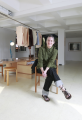
![Rep. Hwang Hee of the Democratic Party of Korea [provided by the lawmaker's office]](https://wimg.heraldcorp.com/news/cms/2026/08/07/news-p.v1.20260807.a97ee3227be14bda85d04c340cfc18f2_P2.jpg)
Rep. Hwang Hee of the Democratic Party of Korea, who represents Seoul's Yangcheon-gap district and sits on the National Assembly's Land and Transportation Committee, announced Friday that he had introduced a bill Wednesday to amend the Building Act — aiming to extend the lifespan of buildings, ease their maintenance, and thereby preserve residential asset value and stabilize the housing market.
Under current law, the Building Act sets standards for a structure's framework, utilities and permitted uses, but Hwang said it lacks a systematic legal basis to encourage long-term use and efficient upkeep of buildings.
A particular shortcoming of South Korea's dominant apartment construction model, he said, is that major utility systems — water supply and drainage, electricity and telecommunications — are embedded inside floors and walls, making inspection and replacement extremely difficult. The reinforced-concrete construction method also makes it harder to reconfigure interior spaces or carry out remodeling compared with steel-frame structures.
As a result, while an apartment's structural frame can last 70 to 100 years, pipes and key utility systems have a lifespan of only 20 to 30 years — forcing owners to pursue full reconstruction even when the skeleton of the building remains sound. Hwang described this mismatch as a structural problem that fuels uncertainty in the housing market and leads to wasteful use of construction resources.
The bill introduces a legal definition for "structure-utility separated buildings" — a construction model in which the structural frame and utility systems are kept independent of each other, maximizing spatial flexibility and ease of maintenance. It also establishes special provisions that would significantly relax building standards, including floor-area ratios, building coverage ratios and height limits, for projects built to this model.
By using those relaxed standards as incentives to encourage housing and adaptable buildings whose frames and utilities age at the same pace, the bill is expected to lay the groundwork for substantially extending building lifespans and raising the value of residential assets.
Hwang has introduced a series of housing proposals in recent months: an equity-accumulation housing model to ease the upfront burden on first-time and newlywed buyers while securing long-term residential stability; a block-development approach to prevent jeonse shortages, traffic disruption and damage to urban identity caused by simultaneous reconstruction and redevelopment projects; a school-integrated housing model combining residential and school facilities; and a shared-space housing model designed to lower contribution costs and improve project viability to boost housing supply in urban centers.
The latest bill continues Hwang's sustained push for innovation in housing — this time targeting the extension of building lifespans and a structural improvement of the housing market.
"Apartment frames last 70 to 100 years, yet pipes and utilities have a lifespan of only 20 to 30 years — a mismatch that has forced us to tear apart buildings whose bones are perfectly intact," Hwang said. "We need to boldly offer incentives for construction models that separate structure from utilities, making buildings easier to maintain and longer-lasting, so we can spread high-quality housing and actively drive long-term stability in the housing market."
bigroot@heraldcorp.com