The Seoul Metropolitan Government renewed its call Friday for the central government to ease regulations on redevelopment and reconstruction projects, saying they are "in effect the only means of large-scale housing supply in Seoul, where buildable land is in critically short supply." The city also rebuffed President Lee Jae Myung's suggestion that Seoul itself is responsible for the housing shortage, saying the deficit stems from the mass cancellation of redevelopment zones, the suppression of new designations, and the accumulation of successive project regulations in past years.
The city released its "Second Redevelopment and Reconstruction Report" on Friday, announcing it would focus its efforts on streamlining administrative procedures and improving regulatory systems to break ground on 310,000 units through such projects by 2031. The report had been delivered Wednesday when Seoul Mayor Oh Se-hoon met with Kim Yong-beom, the presidential chief of staff for policy.
The city had been preparing the report after President Lee directed Mayor Oh on July 14 to brief him on the current situation — why housing supply was said to be so severely lacking.
The report details the concrete supply expansion effect of redevelopment and reconstruction projects. According to the city, an analysis of 59 such projects completed over the past three years found that the number of housing units increased by 36.4 percent compared with before the projects. By project type, redevelopment yielded a 27.4 percent increase in units, while reconstruction produced a 44.2 percent increase.
The report also projected that the 253 redevelopment and reconstruction zones being managed toward the 310,000-unit ground-breaking target by 2031 would generate a net supply increase of 39.2 percent over the existing housing stock. Redevelopment sites are forecast to add 29.7 percent more units than currently exist, while reconstruction sites are expected to add 48.5 percent.
"These findings show that redevelopment and reconstruction projects are not simply about demolishing and rebuilding existing homes — they are the most realistic and effective tool for actually increasing the volume of housing supply within the city," the Seoul Metropolitan Government said.

In the report, the city diagnosed Seoul's housing supply shortage not as a problem caused by a short-term surge in demand, but as a structural supply gap that built up over years of mass cancellations of redevelopment zones, suppression of new designations, and repeated regulatory tightening. The city said the primary cause of the current shortage is the supply-suppression policies that ran from 2012 to 2020.
"As housing policy shifted toward urban regeneration, 389 existing redevelopment zones were dissolved en masse and the requirements for designating new zones became significantly stricter, severely undermining Seoul's medium- and long-term housing supply base," the city said, adding that from 2016 to 2020, not a single new residential redevelopment zone was designated.
The city added that a blanket height restriction capping residential buildings at 35 stories and various other development-curbing policies — including requirements to preserve historical and cultural traces — had further dampened conditions for pursuing redevelopment and reconstruction projects.
Regulatory tightening at the central government level was also cited as a factor. The successive introduction of speculative overheating district designations, stricter safety inspection standards for reconstruction, and the revival of the reconstruction excess profit recapture regime all eroded project viability and extended timelines, the city said. According to the city, 26 project sites have experienced construction cost disputes over the past two years as momentum has waned.
The city asked the central government to take four steps to accelerate private redevelopment and reconstruction projects: easing the ratio of rental housing required in redevelopment projects and raising the floor-area ratio for private projects by a factor of 1.2; suspending for three years the restrictions on transferring union membership status; easing relocation loan regulations by raising the loan-to-value ratio from 40 to 70 percent; and lowering the consent rate required to establish a redevelopment union from 75 to 70 percent.
The city also said it would introduce a "standard processing deadline system" to set clear administrative timelines for each stage of the process, and would expand the parallel handling of procedures that had previously been carried out sequentially, in order to bring forward supply timelines as much as possible.
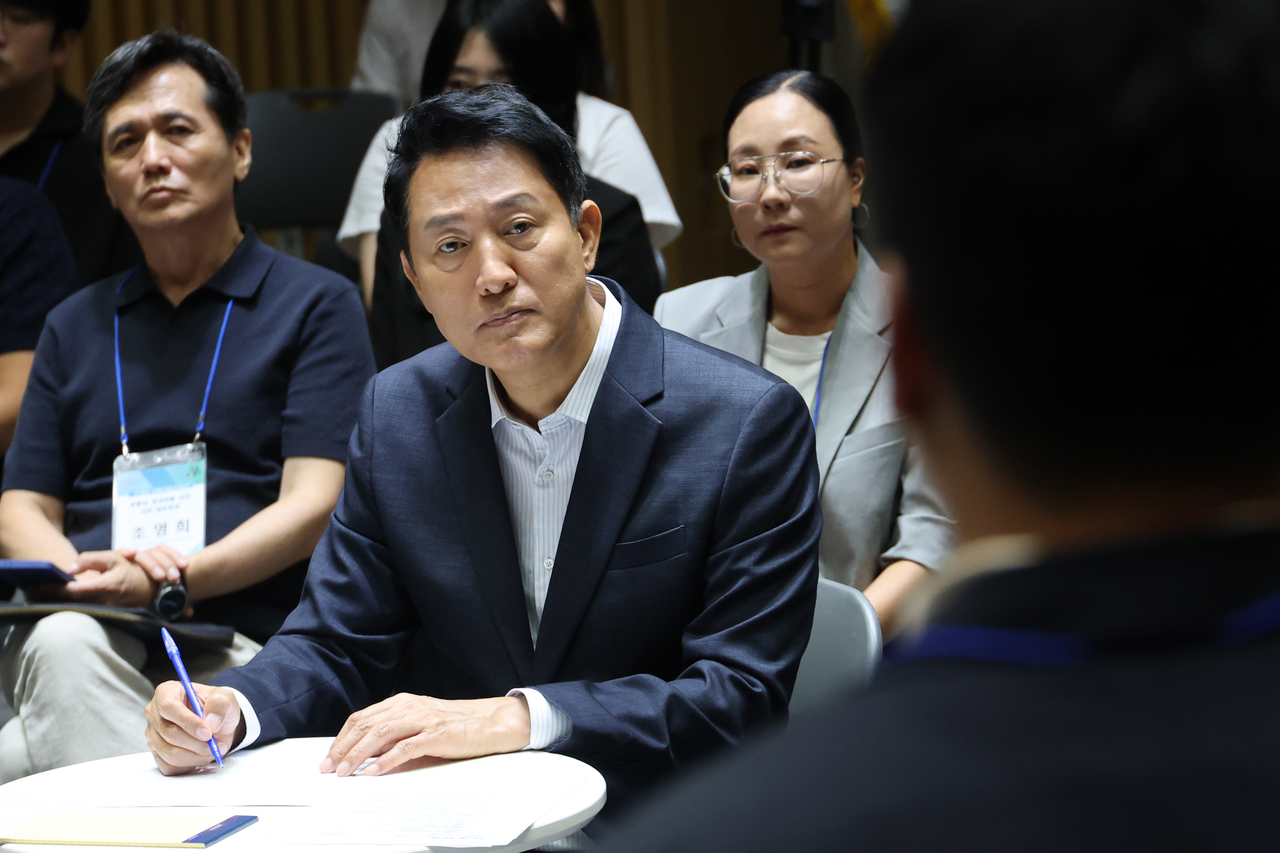
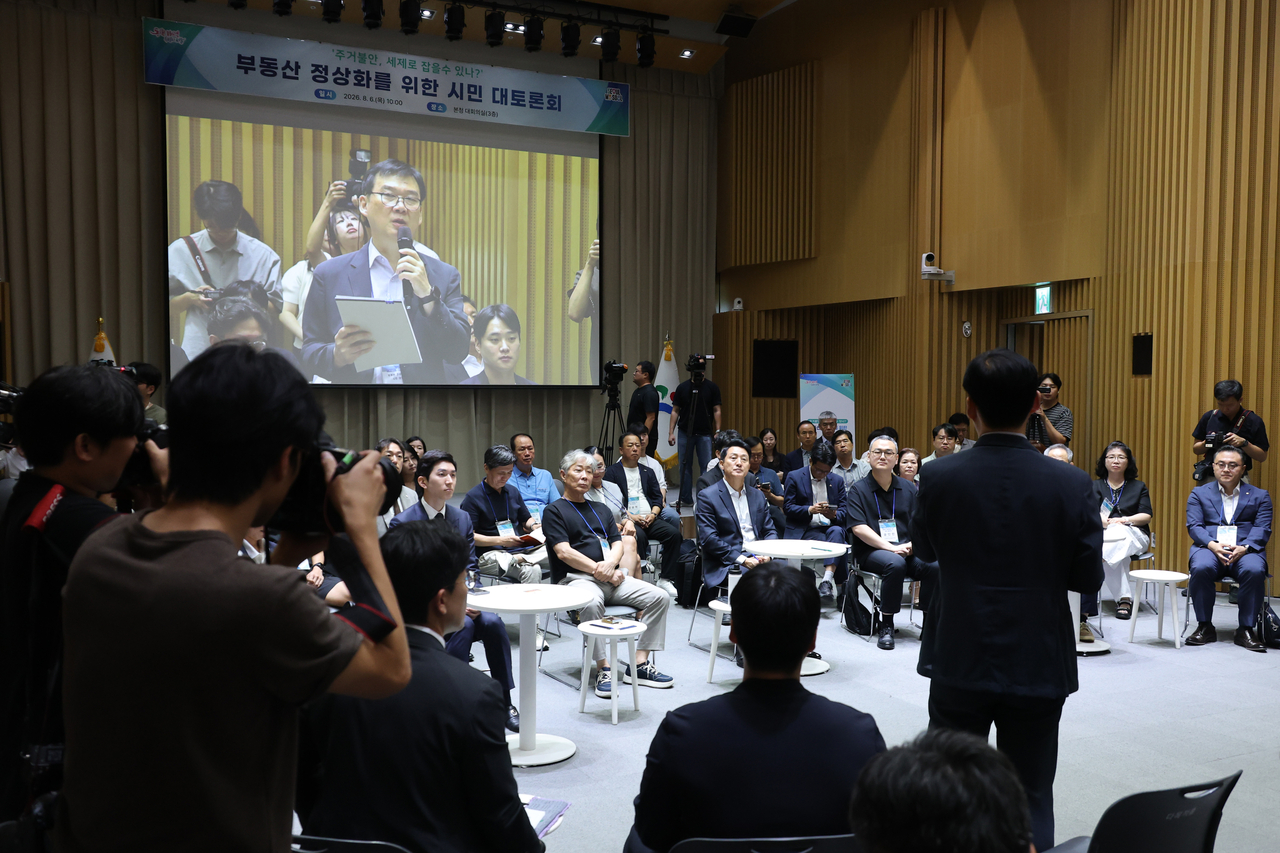
Meanwhile, at a public forum on real estate normalization chaired by Mayor Oh on Thursday, participants raised a range of concerns about housing market instability — including a decline in jeonse listings, rising monthly rent burdens, delays in redevelopment and reconstruction projects, and a contraction in private rental supply. The city said it plans to convey the opinions raised at the forum to the central government and incorporate them into effective measures to expand housing supply.
The Seoul Metropolitan Government said it will continue to push for regulatory reform at the central government level as it works to meet its 2031 housing supply targets.
hope@heraldcorp.com