Detention of high-risk relationship-crime suspects up 62% this year
Electronic monitoring of stalking offenders surges 661%
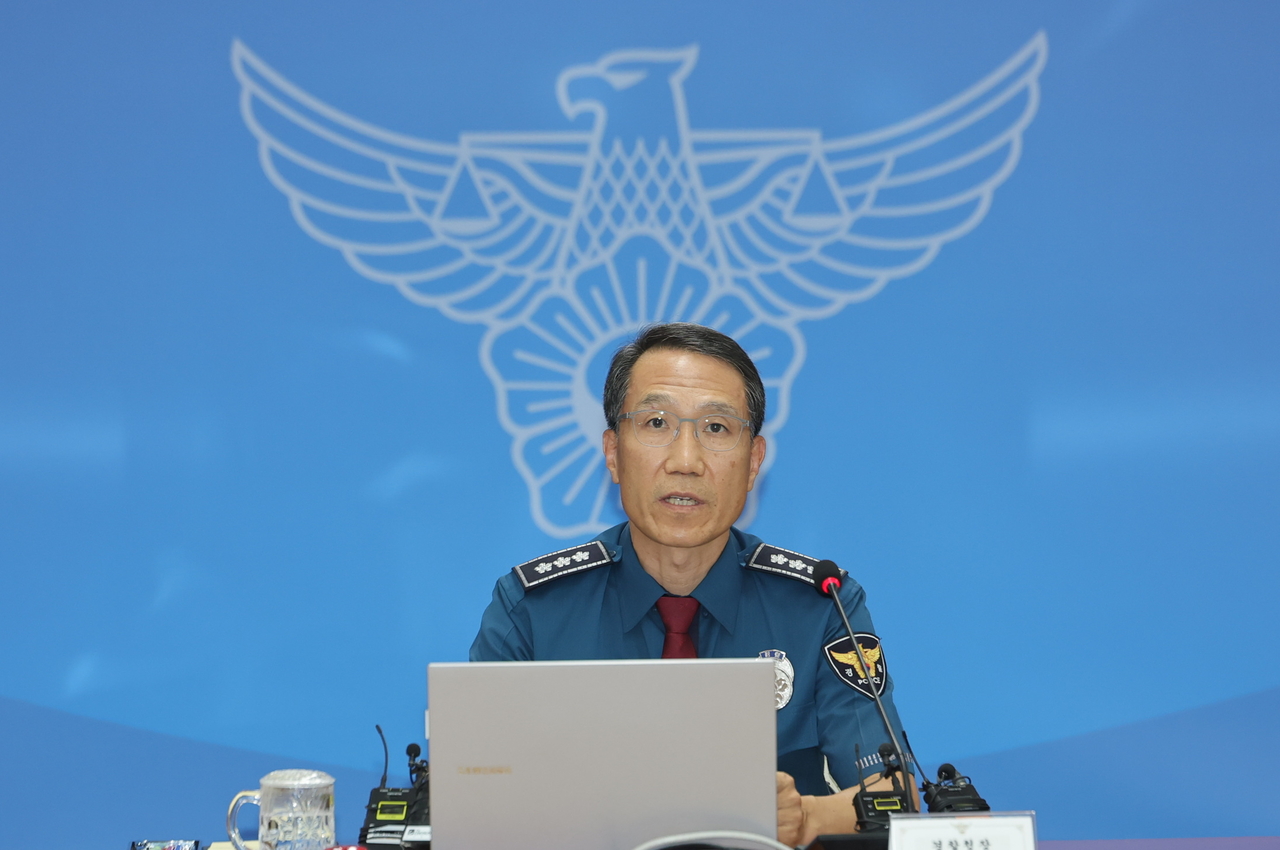
South Korean police said they will sharply strengthen their response to relationship-based crimes, introducing a "same-day investigation upon receipt" rule for all stalking cases.
Yoo Jae-seong, acting commissioner general of the Korean National Police Agency, announced the major public safety policy plans Wednesday at the government's second-half work report for 2026, held at Cheong Wa Dae's banquet hall. "We will focus police activities on protecting the lives of citizens in order to make South Korea the safest country in the world," he said.
"For stalking crimes, we will systematically manage the entire process — from receiving a report to protecting the victim and isolating the perpetrator — under the principle of same-day investigation upon receipt of every case," Yoo said. He added that police plan to share location data on high-risk offenders with the Ministry of Justice and other relevant agencies to prevent further violent crimes, including murder.
Police said they concentrated efforts on eradicating everyday crimes in the first half of this year. Applications for and executions of detention warrants against high-risk relationship-crime suspects rose 62% compared with normal levels, while the attachment of electronic location-tracking devices to stalking offenders surged 661%.
President Lee Jae Myung has repeatedly called for a firm response to relationship-based crimes such as stalking and dating violence. Following a case in March in which a woman in her 20s was stalked and killed by a man in his 40s in Namyangju, Gyeonggi Province, Lee said the incident showed that "our society's preventive measures against stalking crimes are inadequate" and ordered an audit of those responsible.
At Wednesday's work report, Yoo also unveiled a reform package that includes strengthening the Police Investigation Review Committee and establishing a new internal corruption investigation unit.
The plan calls for amending the Police Act within the year to give the review committee legal standing, ensuring its continuity, and restructuring it around outside experts to bolster impartiality. A dedicated internal corruption investigation unit will be set up directly under the head of the National Investigation Headquarters at the Korean National Police Agency to step up intelligence gathering and investigations into misconduct and corruption within the force.
"We plan to raise police investigative capabilities to meet public expectations and push hard for institutional reform so that public trust in police investigations can be restored," Yoo said.
Police will also conduct a comprehensive review of their investigative operations in preparation for the enforcement of the revised Criminal Procedure Act, which the Cabinet approved Tuesday following its passage by the Democratic Party of Korea. The revised act strips prosecutors of all investigative powers — including the authority to seek supplementary investigation of cases referred by police — leaving them only the ability to request that police conduct additional investigation.
"We will operate a standing internal monitoring system at the Korean National Police Agency to ensure that requests for supplementary investigation are carried out swiftly and reliably," Yoo said.
Yoo closed by saying the agency would "make every effort to build the world's safest South Korea by placing the lives of citizens as our top priority, and to reform police investigations so that the public can trust them."
arin@heraldcorp.com