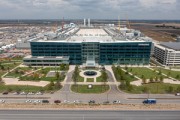
![An aerial view of Krakatau Posco in Cilegon, Indonesia. [Krakatau Posco]](https://wimg.heraldcorp.com/news/cms/2026/07/31/news-p.v1.20260731.74e31059e3e942ca9ae640ba990c5b35_P1.jpg)
Posco plans to pour 6.7 trillion won ($4.65 billion) into its overseas steel operations over the next two years. The steelmaker aims to double its overseas crude steel capacity from roughly 5 million tons today to 10 million tons by 2031, and to build Southeast Asia's first fully integrated production system in Indonesia — running from molten iron all the way to finished automotive steel sheet.
Posco Holdings disclosed the plan through a corporate value enhancement strategy published June 30, announcing it would strengthen the competitiveness of its domestic steel business while expanding growth investments overseas, centered on the United States, India and Indonesia. The company intends to double its overseas crude steel capacity — where high growth and strong returns are expected — from roughly 5 million tons to 10 million tons by 2031.
To that end, the Posco Group will invest a total of 29.1 trillion won from this year through 2028, with 6.7 trillion won — the single largest line item — allocated to overseas steel. That represents about 23 percent of total investment and is more than seven times the 900 billion won earmarked for domestic steel growth over the same period. The company aims to create a virtuous cycle by reinvesting overseas profits into research and development for high-value domestic products and into low-carbon process conversion.
According to Bloomberg, operating profit margins at leading steelmakers by region over the past three years have ranged from 12 to 18 percent in the United States, 10 to 14 percent in India and 7 to 15 percent in Indonesia. South Korea's margins have stayed at just 4 to 5 percent. The strategy is to offset stagnant domestic demand by tapping high-growth overseas markets.
From molten iron to auto sheet in Indonesia
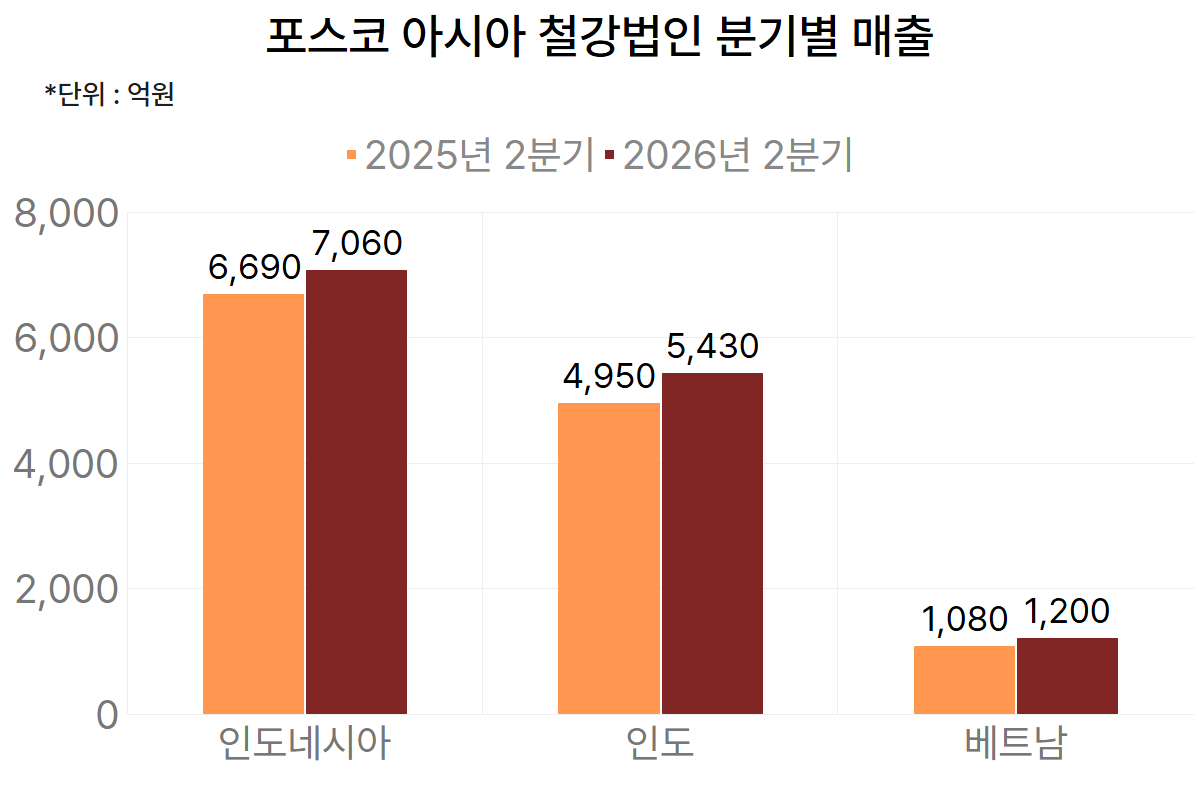
Indonesia is one of the key anchors of Posco's overseas expansion. The company plans to scale up production at Krakatau Posco — its joint venture with state-owned steelmaker Krakatau Steel — and build an integrated production system capable of turning out automotive steel sheet from locally produced molten iron.
Krakatau Posco, completed in Cilegon, Indonesia in 2013, was Southeast Asia's first integrated steel mill. Equipped with a blast furnace with annual capacity of 3 million tons, it produces slabs, heavy plates and hot-rolled coils, and was the first overseas site where Posco directly produced molten iron.
The second phase of investment centers on expanding the product mix beyond slabs, heavy plates and hot-rolled products into higher-value cold-rolled and coated steel. Adding cold-rolling and coating facilities would allow the company to design steel composition — adjusting carbon, manganese and nickel content — to meet the strength and formability requirements of automakers, then produce finished automotive sheet locally.
Posco also plans to expand the upstream stainless steel production base — which melts and refines raw materials into slabs and hot-rolled coils — to shift the business toward higher-value products.
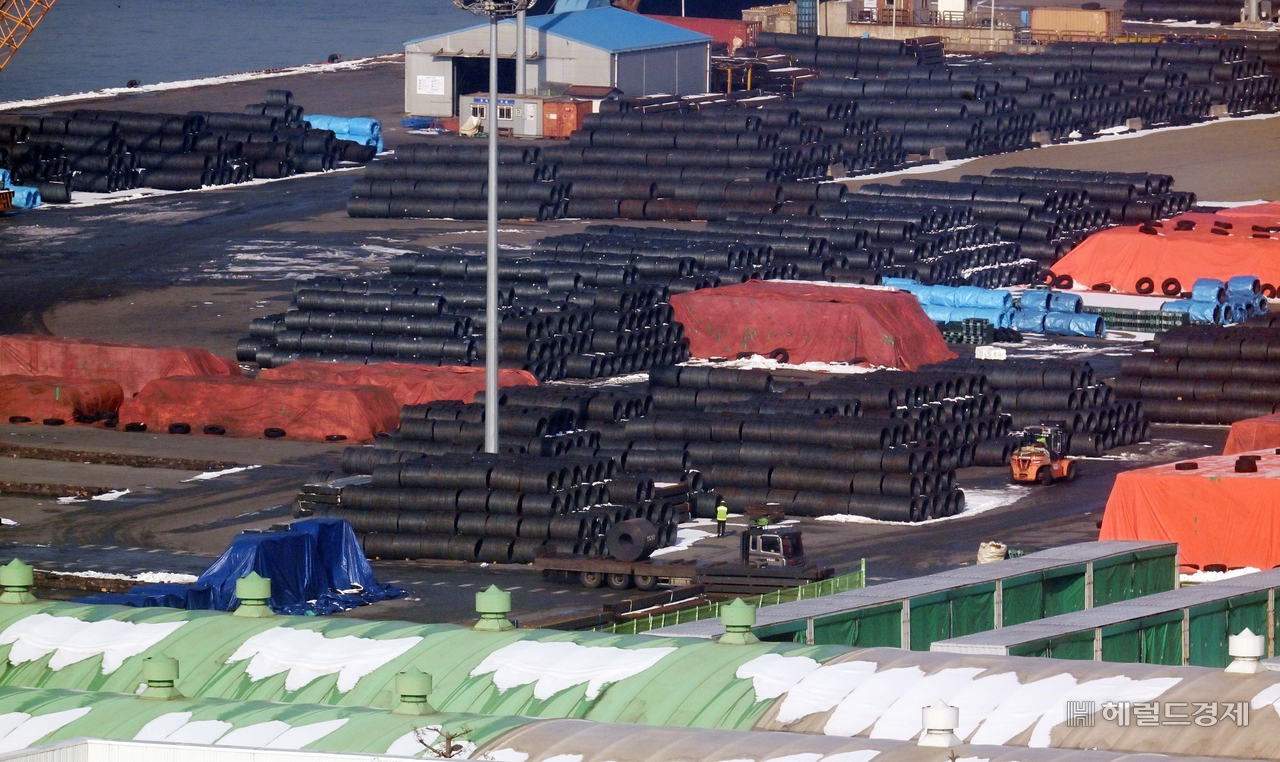
Companies already operating in Indonesia process imported steel sheet through cold-rolling and coating to make automotive steel. What Posco calls "Southeast Asia's first" refers not to that kind of downstream processing, but to a fully integrated system running from blast-furnace molten iron through to finished automotive sheet.
Hong Yun-sik, head of Posco Holdings' steel business management division, said at the second-quarter conference call that Krakatau Posco had posted operating profit every year for the past five years, with average annual EBITDA of $400 million. "On a cumulative EBITDA basis, we have recovered about 90 percent of total investment," he said.
Hong said the company had laid the groundwork for a capacity expansion from the time the first phase began operating. "Krakatau Posco's situation has improved recently, and the Indonesian government has been actively engaged, which has made the expansion plan considerably more concrete," he said.
He added that the second phase, unlike the first, targets production of automotive steel sheet — a Southeast Asian first — and aims for significantly higher profitability than the current operation. A specific groundbreaking date has not yet been set.
![The main gate of Posco Maharashtra in Maharashtra state, southwestern India. The cold-rolling mill serves as Posco's beachhead into the Indian market. [Posco]](https://wimg.heraldcorp.com/news/cms/2026/07/31/news-p.v1.20260420.529a57fa4cdd43c2b7b3dd1b65588d31_P1.jpg)
Blast furnace in India, electric arc furnace in the US
Posco is also expanding its local production base in India and the United States. In India, the company is pursuing construction of an integrated steel mill with annual capacity of 6 million tons in Odisha state through a 50-50 joint venture with JSW Steel, India's top steelmaker.
The new mill will be built around a blast furnace and cover the full production chain from ironmaking and steelmaking through hot-rolling, cold-rolling and coating. The target is to complete construction 48 months after groundbreaking, with a 2031 completion date. The facility will initially supply steel for construction and infrastructure, then gradually shift toward higher-value products such as automotive sheet and coated steel.
In the United States, Posco is taking an equity stake in an integrated electric arc furnace steel mill that Hyundai Steel is developing in Louisiana. The mill requires a total investment of $5.8 billion, is designed to produce 2.7 million tons of hot-rolled and cold-rolled steel per year and is scheduled to begin operation in 2029. Through the investment, Posco aims to establish a foothold in the North American steel market and expand local production and sales cooperation.
Posco is also pursuing an equity investment in Cleveland-Cliffs, the second-largest steelmaker in the United States, as a way to further expand its American production base.
Posco Holdings is combining these investments with the Krakatau Posco expansion to build a 10-million-ton overseas crude steel capacity. By country, the strategy targets India's high-growth domestic market, the United States for automotive sheet demand and trade-barrier mitigation, and Indonesia for the broader Southeast Asian steel and automotive market.
Three overseas units post 8% sales gain in Q2
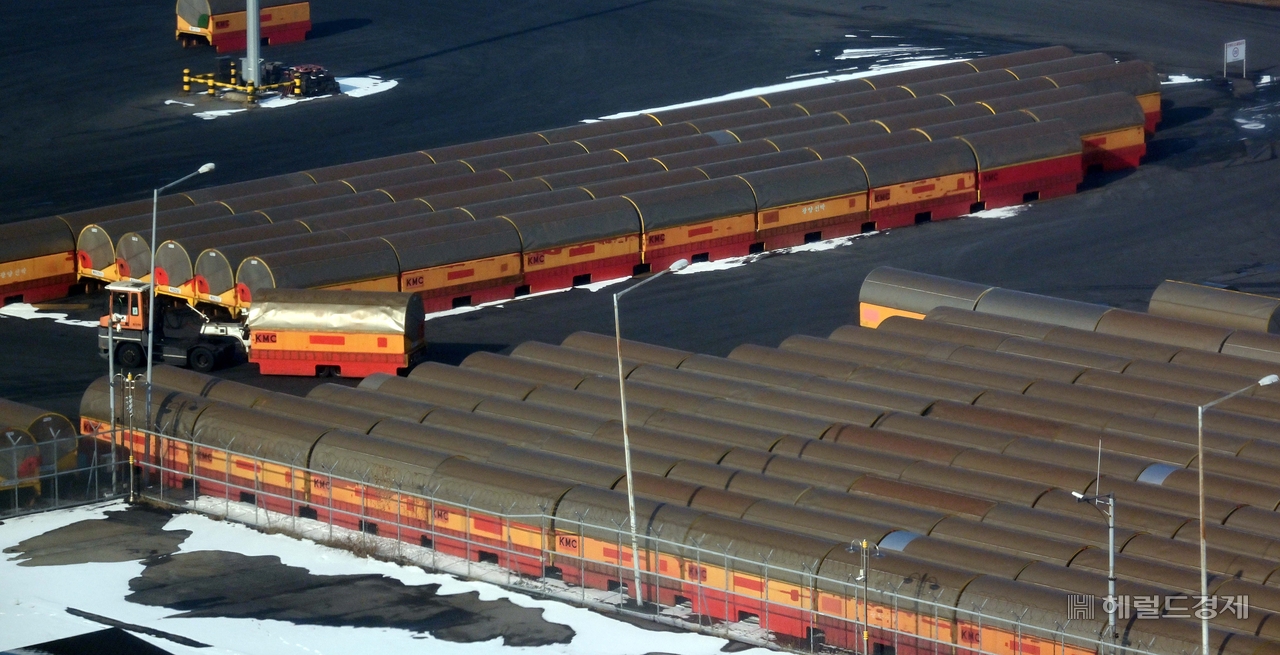
Posco's overseas steel subsidiaries showed top-line growth in recent results. Combined second-quarter sales at three units — Krakatau Posco, Posco Maharashtra in India and Yamato Vina in Vietnam — reached 1.37 trillion won, up 7.6 percent from the same period last year. Combined operating profit, however, fell 33.8 percent to 47 billion won, as rising raw material costs, exchange rate headwinds and a deteriorating export environment continued to weigh on margins.
Posco's domestic steel business also grew in revenue while profitability declined. Second-quarter standalone sales came in at 9.41 trillion won, up 5.2 percent year on year, while operating profit fell 46.6 percent to 274 billion won. The operating profit margin narrowed by 2.8 percentage points, from 5.7 percent to 2.9 percent.
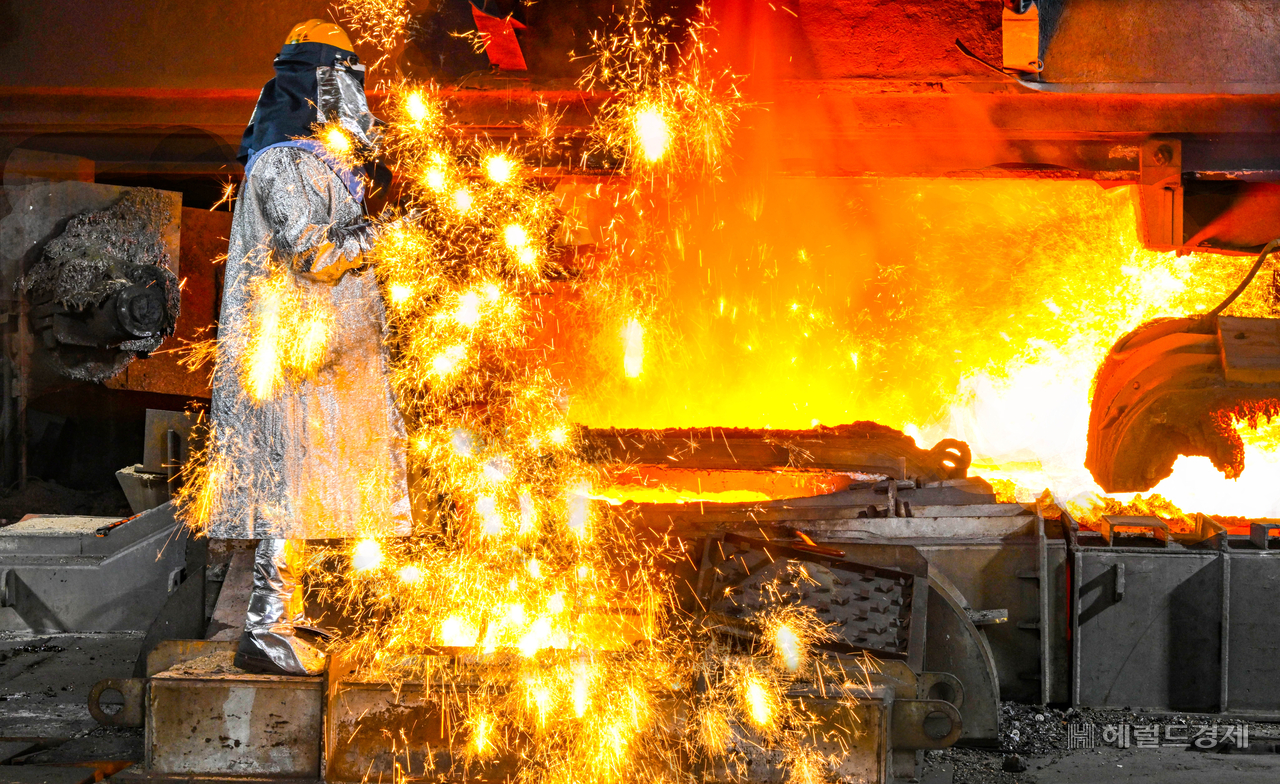
At home, Posco is focusing on high-value products and cost competitiveness rather than aggressive capacity expansion. The company plans to develop Pohang Steelworks into a hub for energy-grade steel and Gwangyang Steelworks into a dedicated production base for future mobility steel, streamlining facilities in line with market shifts. A gradual, economics-driven transition to low-carbon production is also under way, including expanded high-grade steel output using electric arc furnaces and the operation of a hydrogen-reduction ironmaking pilot facility.

kwater@heraldcorp.com