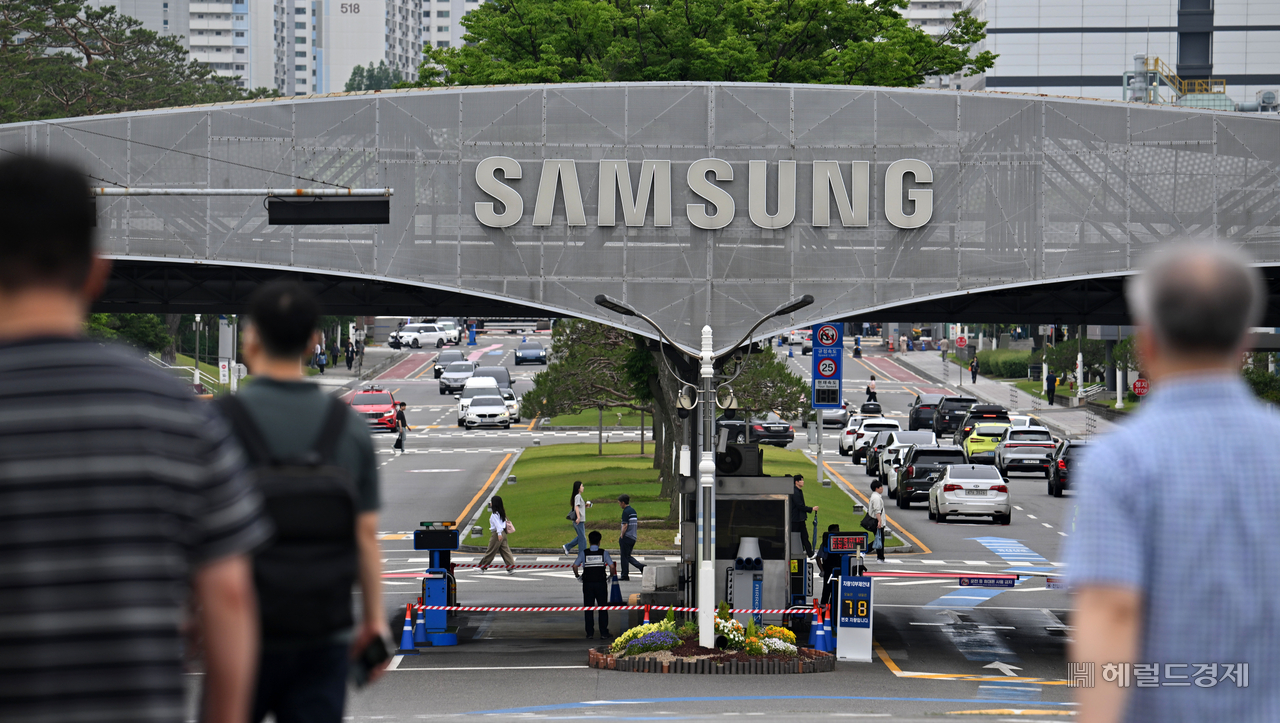
Samsung Electronics shrugged off market speculation about a potential American depositary receipt listing, saying stable cash generation from its existing business makes such a move unnecessary for now — though it left the door open for longer-term consideration.
Park Soon-cheol, Samsung Electronics' chief financial officer and executive vice president, said during a conference call Thursday accompanying the company's second-quarter earnings release that "based on our diverse business portfolio, we have secured stable cash-generating capacity, so the need for an ADR for new fundraising purposes is not high."
He added that the company "is not currently reviewing an ADR issuance," but said it views the option as "something that can be kept open and reviewed as one of various measures from the perspective of enhancing shareholder value over the medium to long term."
Samsung Electronics rode the memory chip boom in the first half of this year, with its semiconductor business alone posting 143 trillion won ($98.6 billion) in operating profit. That figure represented 97 percent of the company's total operating profit of 147 trillion won for the period, meaning semiconductors effectively carried the entire company even as its finished-product businesses — mobile devices, home appliances and TVs — struggled.
The semiconductor boom is expected to sustain operating profit above 100 trillion won per quarter in the second half as well, driven by strong demand from the spread of agentic AI. Securities industry analysts project Samsung Electronics' full-year operating profit to reach around 380 trillion won.
Analysts say the memory price rally, which has entered what many describe as a "super cycle," is expected to continue for the time being, with long-term supply agreements with memory customers set to further stabilize earnings.
Q2 capex hits 16.8 trillion won, up 5.5 trillion won from Q1
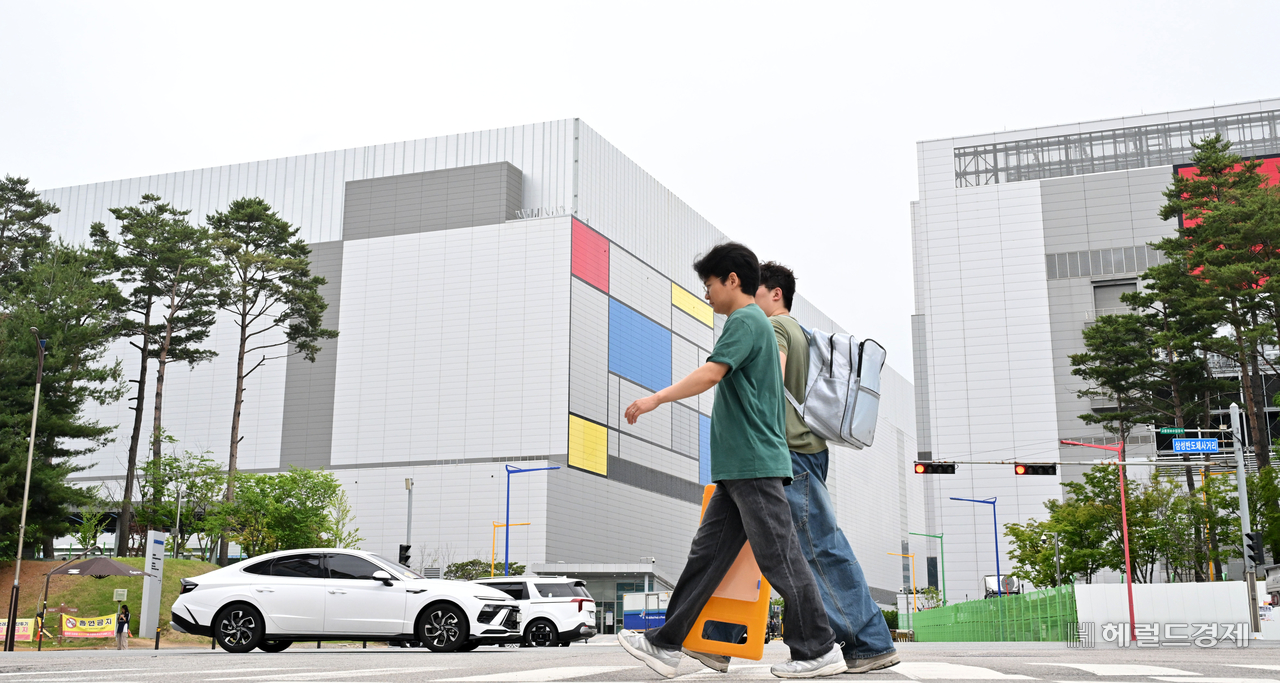
While the DS division continues to benefit from rising memory prices, the Device Experience (DX) division — which handles finished-product businesses — posted its first-ever quarterly operating loss of 800 billion won in the second quarter, deepening the earnings divide between the two units. The DX division's difficulties are expected to persist in the second half.
Park said Thursday that "despite new product launches, the DX division faces a difficult operating environment due to global economic uncertainty and rising cost pressures from raw materials and component prices," adding that "managing profitability will be a key challenge going forward."
Semiconductors are expected to continue driving Samsung Electronics' overall earnings on their own in the second half. With demand buoyed by the spread of agentic AI, the DS division's operating profit is widely expected to surpass 100 trillion won starting in the third quarter.
Samsung Electronics has been ramping up capital expenditure to keep pace with big tech companies' AI infrastructure investment. Total capex in the second quarter reached 16.8 trillion won, up 5.5 trillion won from the first quarter. By segment, the company allocated 15.4 trillion won to semiconductors and 700 billion won to displays.
Daniel Oh, vice president of Samsung Electronics' investor relations team, said infrastructure investment — including a new fab in Pyeongtaek — expanded to meet medium- to long-term memory demand, pushing spending higher than in the first quarter. He added that foundry capex also rose quarter-on-quarter as investment to bring the Taylor fab in the United States online on schedule moved into full swing.
Samsung vows HBM market share on par with DRAM share in H2, setting up full rivalry with SK Hynix
Kim Jae-jun, vice president of the memory strategy and marketing division, said Thursday that "despite efforts to increase production, memory demand growth is outpacing supply," and projected that DRAM output growth in the third quarter would come in at the mid-single-digit percentage range, with NAND in the high single digits.
He also signaled a direct challenge to SK Hynix for the top spot in the HBM market, forecasting that Samsung's HBM market share in the second half of this year would reach a level on par with its overall DRAM market share.
Kim said "HBM4 revenue in the third quarter will expand more than threefold quarter-on-quarter," and that "HBM4 revenue will comfortably exceed 60 percent of our total HBM revenue for the second half of this year."
The foundry business, which has seen utilization rates rise on the back of increased orders from big tech companies, expressed confidence in achieving double-digit revenue growth this year compared with last year, adding momentum to the earnings rally.
The foundry division plans to begin mass production of the Exynos 2700 mobile application processor in the second half, based on an upgraded second-generation 2-nanometer process, targeting inclusion in the next-generation premium Galaxy S27 series set to launch early next year.
Kang Seok-chae, vice president of the foundry division, said the company "plans to ramp up mass production of Nvidia's LPU products on a 4-nanometer process in the second half, and projects double-digit-plus revenue growth year-on-year, driven by increased sales to major US and Chinese customers across all nodes."
He also projected that advanced-node revenue would account for more than half of total foundry revenue, raising expectations that the pace of earnings improvement would accelerate.
Kang said the share of advanced-node revenue is expected to expand significantly, from the high-teen percentage range in 2025 to more than 30 percent in 2026, and that a full-scale improvement in profitability through a restructuring of the business around high-growth segments will take hold."
'Memory shock' hits DX division — Samsung to defend with sales efficiency and premium products
The DX division, buoyed by expanded sales of premium products, posted a record first-half revenue of 100.7 trillion won, and the company believes that as structural improvements take hold, profitability will follow.
In the second half, the division plans to focus on streamlining sales and operations across the board to sharpen cost competitiveness and prevent further margin erosion.
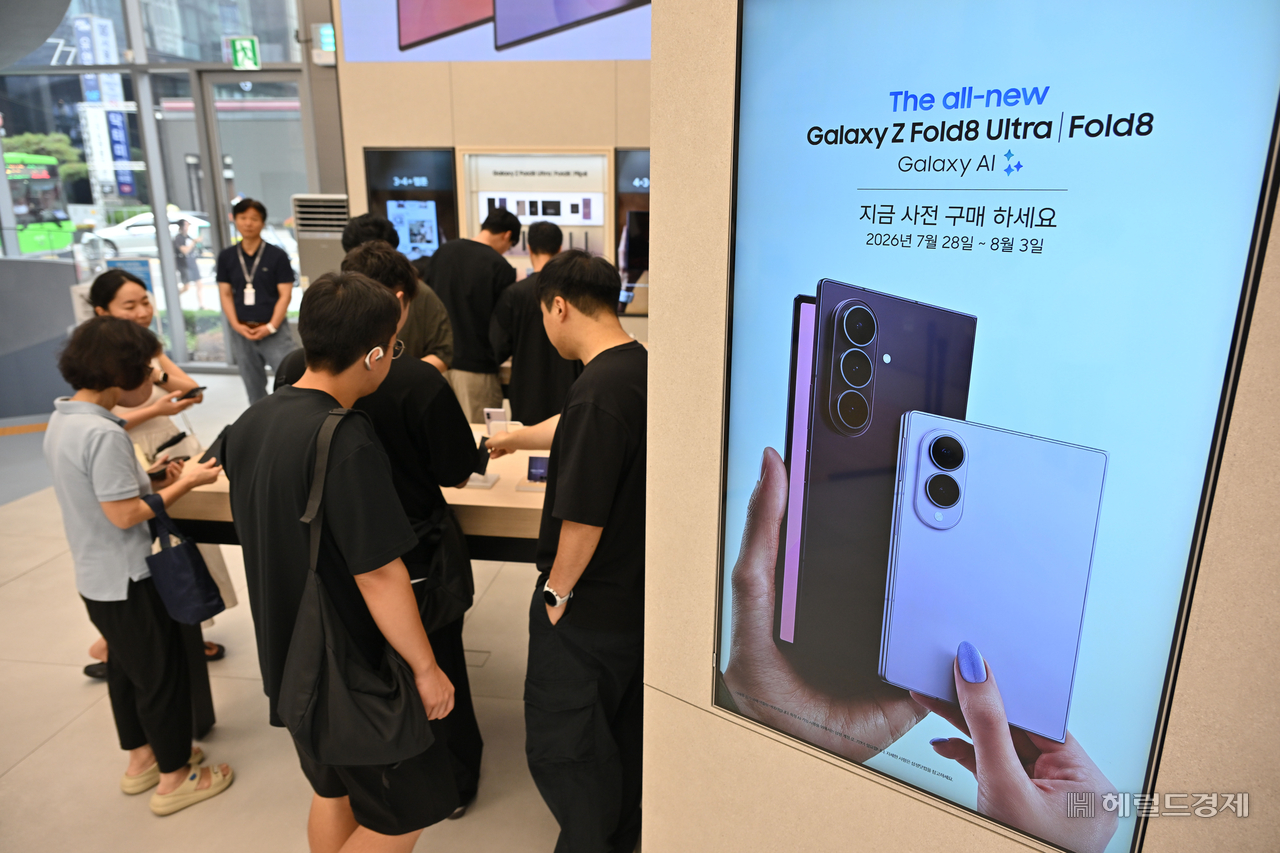
The Mobile Experience (MX) division is pinning its hopes on strong sales of the new Galaxy Z8 series foldable phones unveiled Tuesday. The division plans to grow its share of the smartphone market by increasing the proportion of high-value products, including the top-tier Ultra model and the new Z8 foldable lineup.
The Visual Display (VD) division is looking to capture year-end peak-season demand by expanding sales of AI-based new products and deepening strategic partnerships with distributors. The Digital Appliances (DA) division likewise plans to strengthen market leadership by expanding AI product sales, diversify channels around high-margin businesses, and improve overall profitability.
joze@heraldcorp.com
go@heraldcorp.com