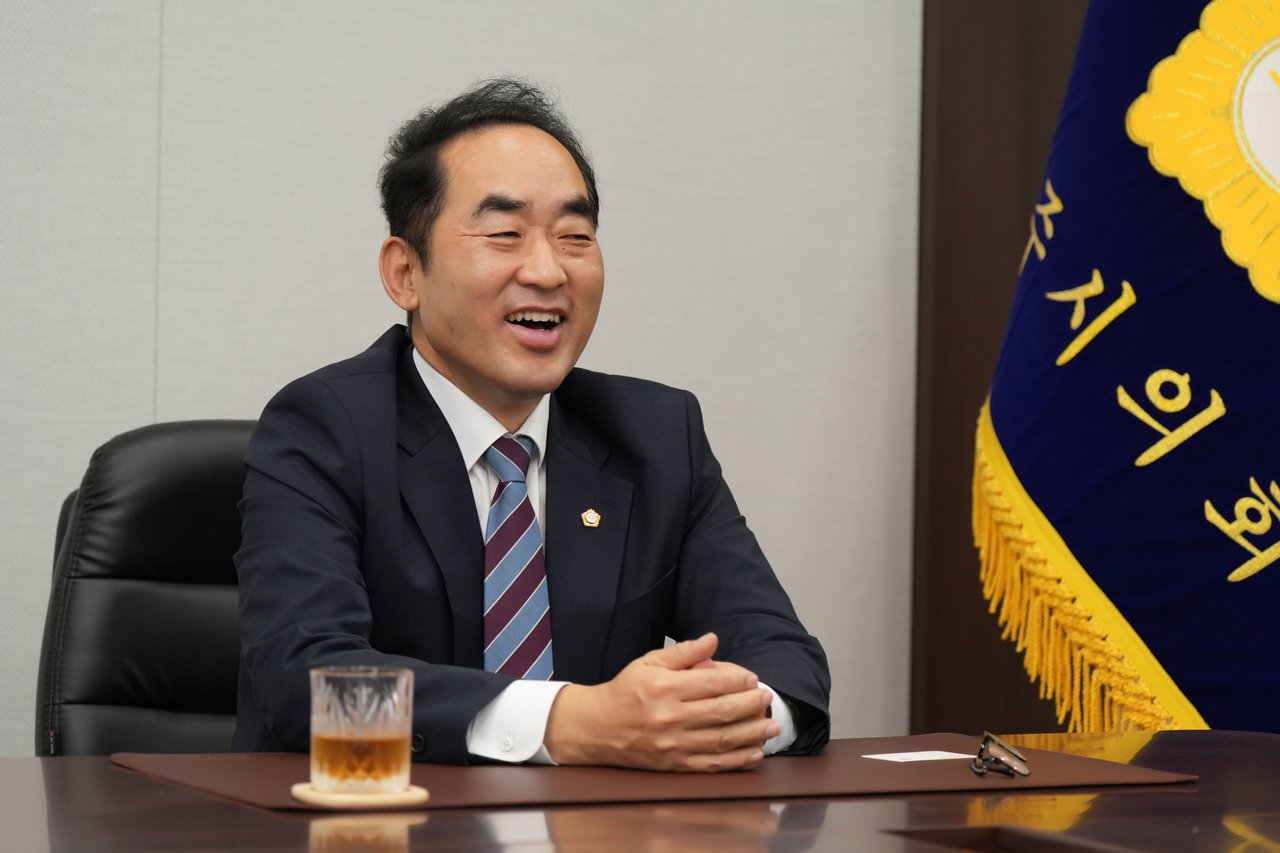
Choi Yu-gak, speaker of the Paju City Council, said the ruling and opposition parties must set aside political squabbling and work together on the key issues that will shape Paju's future. He said the council would faithfully fulfill its core role of checking and overseeing the city administration while actively cooperating on policies that improve residents' lives.
"The most important role for a council speaker is to be a voice for citizens and a constructive mediator," Choi said in an interview Tuesday. "That means striking a balance between oversight and cooperation with the administration, and channeling the diverse voices within the council into policies that serve the public."
He said the speaker's role should go beyond simply chairing meetings and representing the council. Listening broadly to citizens, coordinating views among lawmakers and translating that process into tangible policy outcomes — that, he said, is the speaker's core responsibility.
On the council's relationship with the city administration, Choi said neither unconditional confrontation nor unconditional cooperation was appropriate. The administration's shortcomings must be thoroughly identified and corrected, he said, but the council must also actively support policies and projects that citizens genuinely need.
'A future city where jobs and culture coexist'
Paju currently faces a set of major challenges that will define its future: expanding the Greater Seoul metropolitan transit network including the GTX rapid rail line, pursuing designation as a special economic zone, attracting advanced industries, and revitalizing culture and tourism.
Choi said these issues must not be swayed by the interests of any particular party or political faction. Expanding the city's transport, industrial, employment and tourism foundations is a matter of long-term growth and quality of life for residents, he said, and that requires bipartisan cooperation.
He said Paju must develop beyond being a simple residential city in the greater metropolitan area and grow into a self-sufficient city where jobs, industry, culture and tourism advance together. Expanding the metropolitan transit network, he said, must be leveraged to attract businesses and energize the local economy.
The GTX and broader metropolitan transit expansion should do more than improve residents' commutes — they must serve as a foundation for raising Paju's industrial competitiveness, Choi said. Without a strong base for working and spending within the city, he warned, the benefits of improved transport links could simply flow outward.
Choi said securing designation as a special economic zone and attracting advanced industries are also critical tasks for building future growth engines. Creating an environment where companies invest and local talent can build stable careers in Paju is essential to strengthening the city's self-sufficiency, he said.
He also identified cultural and tourism development as a key pillar in broadening that self-sufficient foundation. Paju's unique position as a border region, its well-preserved natural environment, and its historical and security-related assets should be connected to the tourism industry to open new avenues for the local economy, he said.
Choi said tourism must evolve from day-trip visits into extended stays that generate local spending. He outlined plans to develop walking and wellness tourism programs and to link local food, attractions and accommodation to keep tourists in the city longer.
Restoring the local economy: a core council priority
Choi also said the city must move beyond government-led promotion and expand collaboration with the private sector. Paju's tourism resources must be effectively publicized and connected to the accommodation, restaurant and traditional market sectors to revitalize local commerce, he said.
Alongside large-scale development projects, he identified restoring the everyday economy as a core council priority. With high prices and an economic slowdown deepening hardship for small business owners, the self-employed and vulnerable groups, tangible support that citizens can feel in their daily lives is urgently needed, he said.
Choi said the council would also pay close attention to revitalizing local commerce, creating jobs, and tailoring welfare policies to different generations. Young people need stable employment and a foundation for settling in Paju, he said, while middle-aged and older residents need welfare and social participation opportunities suited to their stage of life.
Support for small business owners must go beyond short-term fiscal assistance and lead to broader local spending and stronger competitiveness for neighborhood commercial districts, he said. The council will carefully scrutinize policies aimed at reviving traditional markets and neighborhood commerce and building a virtuous cycle of local consumption, he added.
In coordinating the diverse views of council members, he said citizens' lives would be the foremost standard.
"The only criterion I will use is not party or factional interest, but which choice actually helps the lives of Paju's citizens," Choi said. "I will build a unified council that reduces wasteful confrontation through dialogue, compromise and mutual respect, and keeps its eyes fixed solely on the public."
He said the existence of differing perspectives and opinions among lawmakers is a natural part of democracy. Political confrontation must not, however, be allowed to delay projects directly tied to residents' lives or erode public trust in the council, he said.
To strengthen public trust, the council also plans to improve transparency in its operations and enhance lawmakers' policy capabilities. The goal, he said, is to build an open council that goes beyond reviewing ordinances and approving budgets — one where citizens can easily understand and participate in the policy-making process.
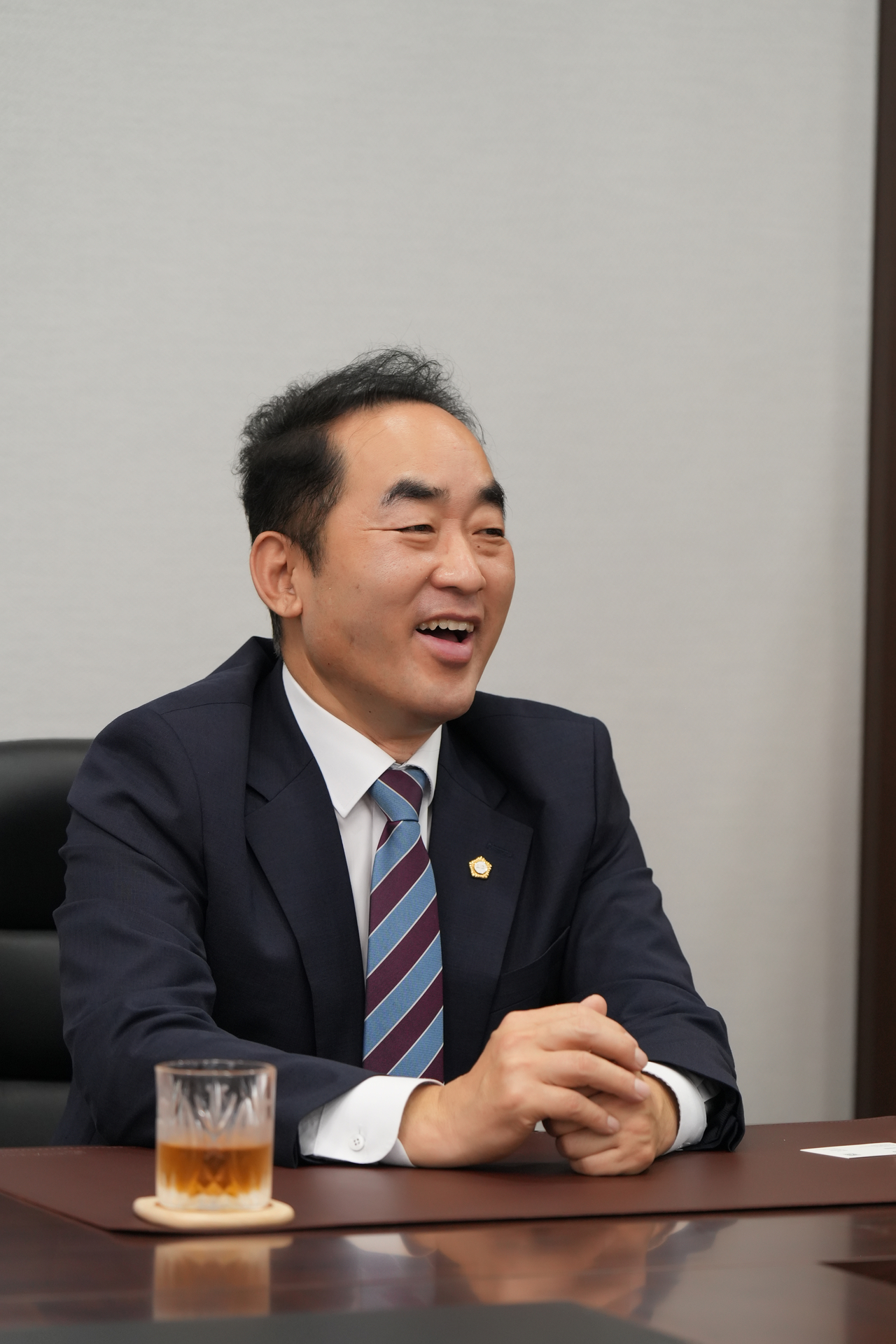
'Listening and communicating to carry citizens' voices'
Choi said monitoring the transparency of budget execution and the fairness of city administration is also an important council responsibility. He said the council would faithfully carry out its budget review and administrative audit functions to ensure that taxpayer money is not wasted on unnecessary or low-impact projects.
He also emphasized field-based council work to expand communication with citizens. The plan is to strengthen a system in which lawmakers visit communities across the city to hear residents' concerns and policy needs firsthand, and reflect those findings in ordinances and the budget.
"Policy must not be about numbers — it must be about changing people's lives, and the answers are always found in the field," Choi said. "I will carefully listen to voices from areas closely tied to daily life, including education, welfare, transport and the environment."
The council also plans to expand both online and offline channels for public communication. Complaints received will not simply be handled as individual cases, he said, but will be developed into ordinances and policies that can be applied broadly to citizens facing similar problems.
Choi described the Paju City Council's guiding direction as "listening and communicating." He said his goal is to build a structure in which no citizen's voice goes unheard, and in which the council, the administration and the public discuss the city's future together.
"I will build a dynamic council that prepares for Paju's future 10 and 20 years from now, rather than getting caught up in today's political battles, and that stays in step with its citizens," he said. "I will repay that trust with a council where citizens feel real change, and with responsible governance that prepares for Paju's future."
7toy7@heraldcorp.com