Gov. Park meets National Assembly climate committee, then minister, to make case for South Chungcheong Province as national power supply hub for just energy transition
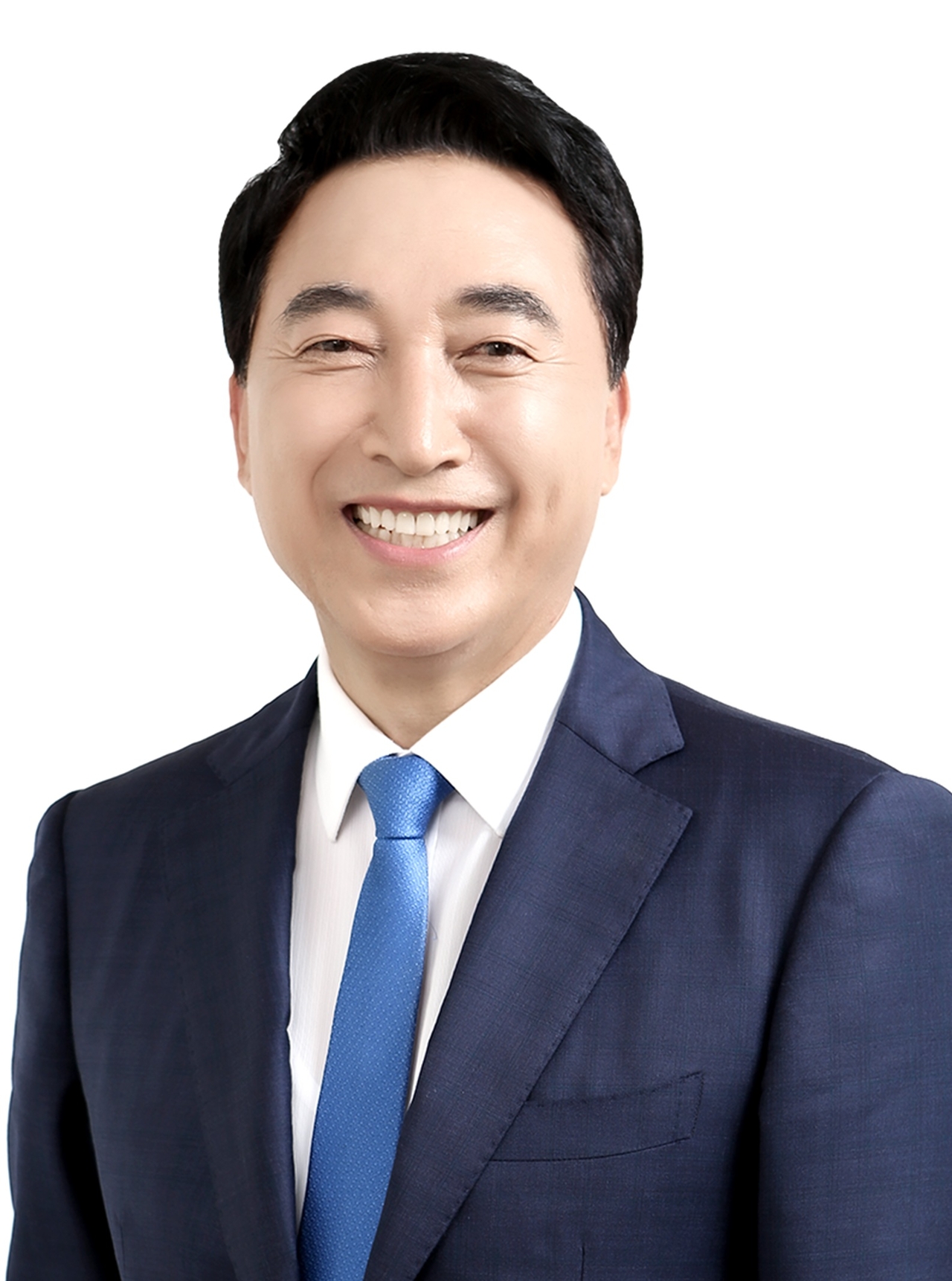
South Chungcheong Province is throwing its full weight behind a bid to attract the integrated headquarters of state-run power generation companies, while also pressing for a blanket relocation of Ministry of Climate, Environment and Energy public institutions and an extension of the scheduled decommissioning of Taean Thermal Power Plant Unit 2.
Gov. Park Soo-hyun met with Rep. Kim Jeong-ho, chairman of the National Assembly's Climate, Energy and Environment Committee, and the ruling party's floor leader on the panel on July 20 — and then, just over a week later, sat down with the minister overseeing the matter to formally request that the headquarters be placed in South Chungcheong Province.
Park met with Minister of Climate, Environment and Energy Kim Sung-hwan at the Han River Flood Control Office on Tuesday to propose three measures: establishing the integrated headquarters of state-run power generation companies in South Chungcheong Province, relocating all public institutions under the Ministry of Climate, Environment and Energy to the South Chungcheong Innovation City, and temporarily extending the decommissioning schedule for Taean Thermal Power Plant Unit 2.
Park argued that the integrated headquarters should be placed in South Chungcheong Province, which hosts three of the five national coal-fired power generation companies and nearly half of all coal-fired power plants in the country, has endured environmental and property damage for 40 years, and ranks among the most economically underdeveloped regions in the nation.
Two of the five national thermal power companies — Korea Midland Power and Korea Western Power — already have their headquarters in the province, in Boryeong and Taean-gun respectively, while Korea East-West Power operates its flagship plant in Dangjin.
Of the 52 generating units operated by the five power companies, 28 (53.8 percent) are located and in operation within the province, accounting for 19,096 megawatts — or 36.7 percent — of the national total capacity of 51,985 megawatts.
The province notes that the retirement of three units — Boryeong Thermal Units 1 and 2 and Taean Thermal Unit 1 — has already dealt a heavy blow to the local economy and accelerated population decline. With 21 additional units set to be decommissioned by 2038, the province warns the damage will snowball further.
"Cities and counties hosting coal-fired power plants — Boryeong, Dangjin, Taean-gun and Seocheon — have long suffered environmental and property damage from marine and air pollution and transmission line infrastructure, all in service of the national interest of electricity production," Park told Kim. "For the just energy transition to succeed, the headquarters must be established in South Chungcheong Province, the nation's power supply hub."
Meanwhile, ruling and opposition party lawmakers from the region issued a joint statement Monday calling for the integrated headquarters to be established in South Chungcheong Province, lending political backing to the province's campaign.
The province maintains that relocating public institutions under the Ministry of Climate, Environment and Energy to the South Chungcheong Innovation City is an obligation that must be fulfilled, given the region's geographic and industrial character as it works to cultivate a future energy industry in the wake of coal plant closures.
In making the case for a temporary extension of the Taean Thermal Power Plant Unit 2 decommissioning schedule, the province cited three factors: an ongoing crude oil and gas supply crisis stemming from the prolonged war in the Middle East, delays in constructing transmission lines for the replacement power plant (the Gongju combined-cycle plant), and requests from Taean-gun, local residents and the Korea Western Power labor union.
Park also urged Kim to take a close interest and offer support, arguing that a one-year extension of Taean Thermal Unit 2's operation was needed to minimize power supply risk and local economic stagnation, to align the timeline with the enforcement of a special law supporting coal power workers and decommissioned communities, and to ensure parity with Boryeong Unit 5 and Hadong Unit 1, whose operating periods have already been extended.
kwonhl@heraldcorp.com