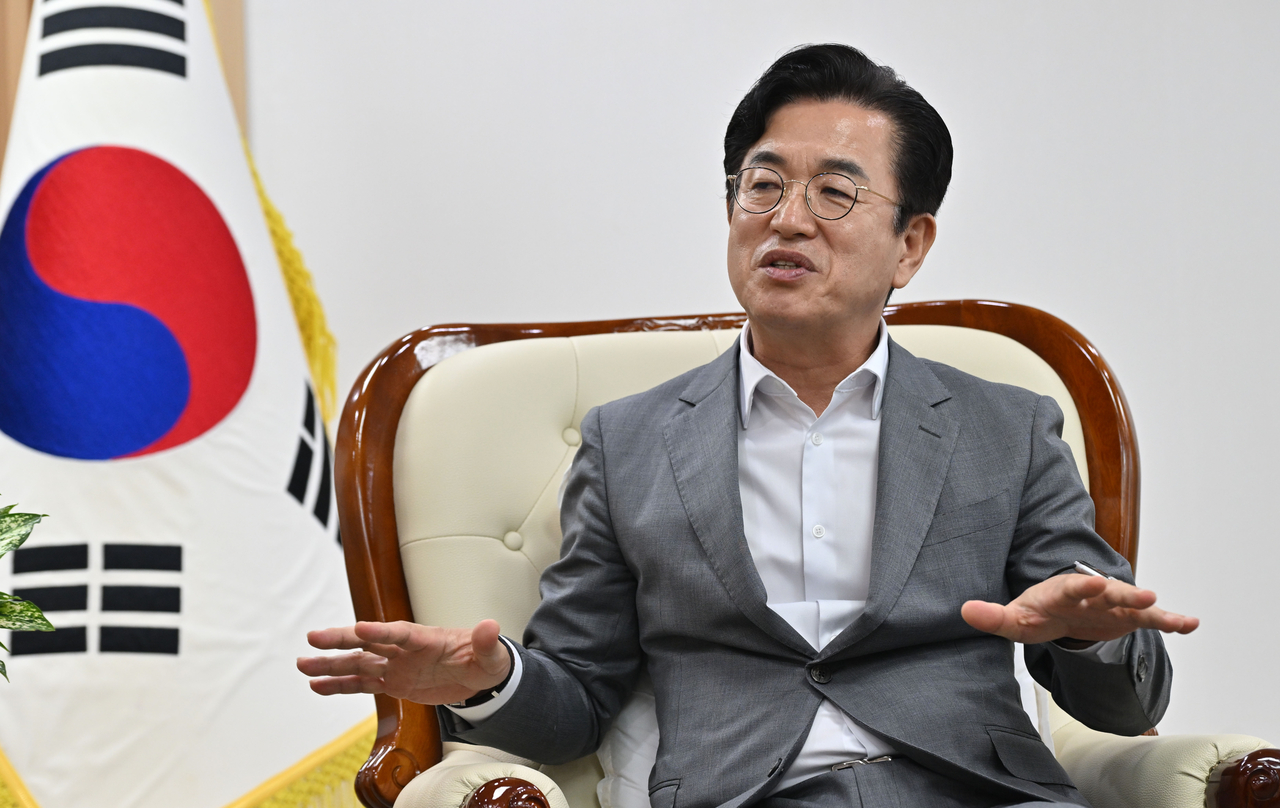
On his first day in office, June 1, Daejeon Mayor Heo Tae-jeong signed off on a "100-day project" as his first official act.
The approval signaled Heo's determination — drawing on his earlier experience leading the city's seventh elected administration — to quickly establish the direction of his ninth-term mayoralty and translate his promises to citizens into actionable policy without delay.
Speaking with The Herald Business on June 13, Heo said "the core of the 100-day project is to pursue two things simultaneously: tasks that let citizens feel change in their daily lives, and strategic tasks that prepare Daejeon for the future." He described it as "a two-track strategy — a sprint that combines citizen-felt results with strategic execution."
Heo first outlined the project's short-term priorities. "We will move quickly on tasks directly tied to residents' daily lives," he said, citing the rollout of "Ontong Daejeon 2.0," a comprehensive survey of fire-risk areas, improvements to the emergency medical system, and expansion of a youth employment platform.
At the same time, Heo said he plans to build a systematic implementation roadmap for the ninth term's core visions — establishing Daejeon as an AI-leading city, creating a "Youth Special City," and advancing a citizen-sovereignty city model — while also reviewing fiscal management and organizational operations to strengthen the administration's execution capacity.
"The first 100 days are the time to complete the foundation for delivering on my campaign pledges," he said. "I will connect every policy I promised citizens to a concrete project, and ensure each one has a clear timeline, funding source and responsible structure so it moves forward without wavering."
On the proposed administrative merger with South Chungcheong Province — which fell through in March — Heo said he supports it "in principle," but called for a measured pace and broader public deliberation.
"The most important thing in an administrative merger is that citizens genuinely agree with it. One reason the March merger stalled was that the process lacked sufficient public consent and opinion-gathering," he said. He added that thorough public deliberation must come before any rush driven by bureaucrats or politicians, and pledged to expand resident participation and communication throughout the process, grounded in citizen sovereignty.
Heo also said the timing and scope of any merger — including whether North Chungcheong Province should be included — need to be revisited. "We will first form and activate a consultative body of local government heads to coordinate key agenda items such as the merger model and timeline, and will also run a public-private deliberative governance structure to gather community input," he said.
ken@heraldcorp.com