
Gangwon Special Self-Governing Province, home to vast limestone deposits, is the heart of South Korea's cement industry. Four of the country's eight cement manufacturers — Hanjil Cement, KGM, Sampyo Cement and Halla Cement — are based there.
Those companies have long served as a key pillar supporting the nation's construction industry. KGM has also given back to local communities by helping transform former quarry sites into public attractions, most notably Mureungbyeoryucheonji in Donghae.
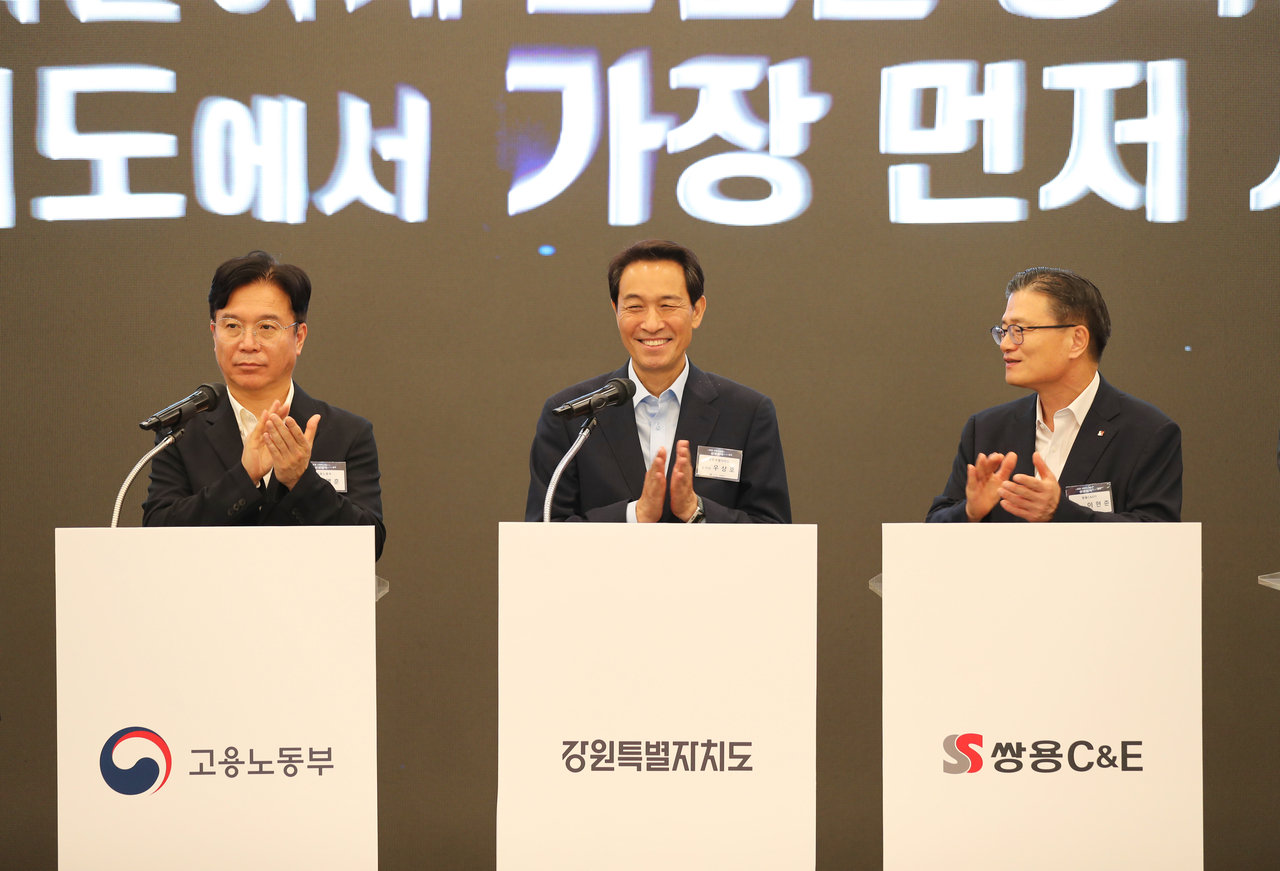
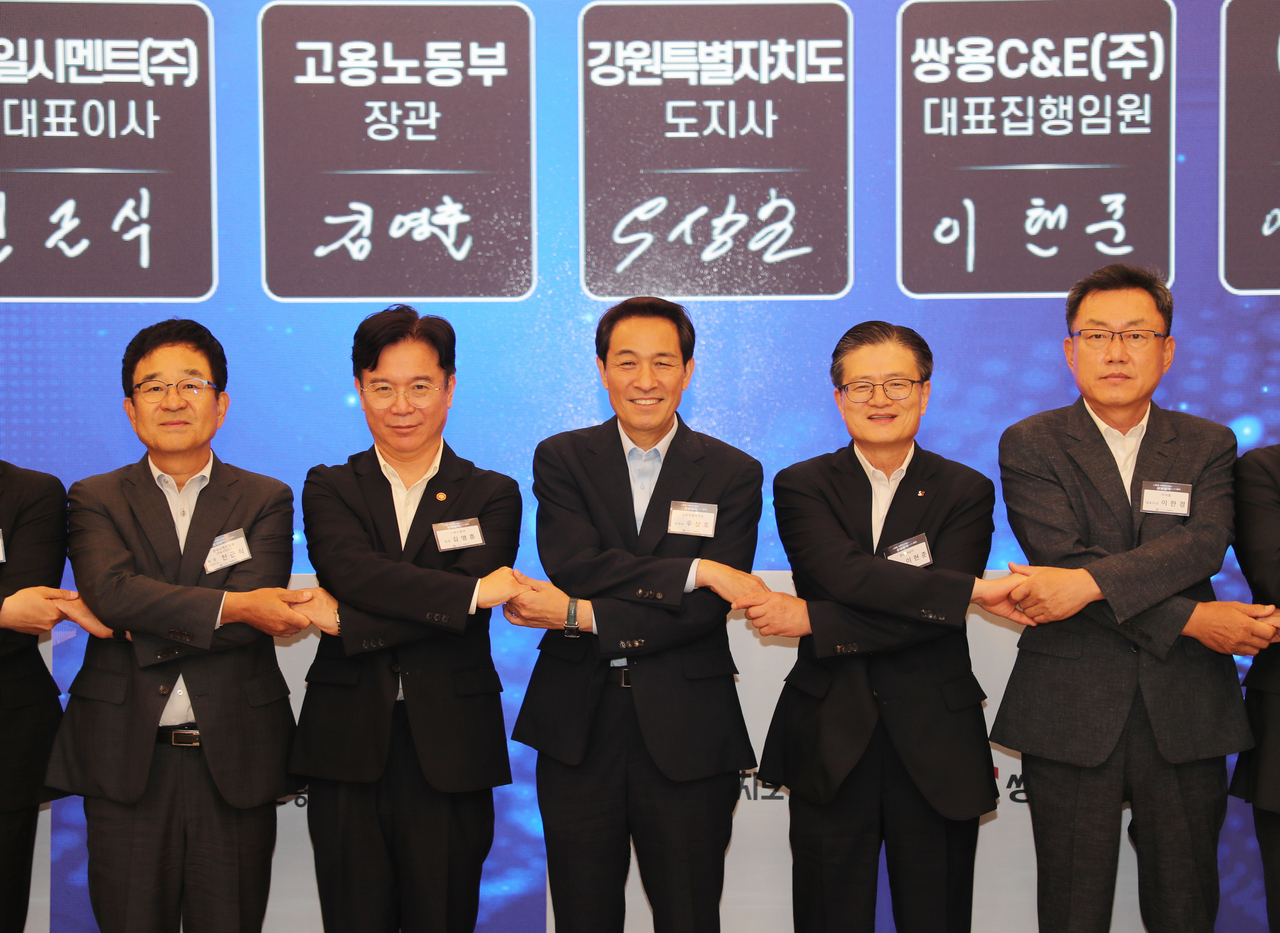
To promote the sustainable development of the cement industry, Gangwon Special Self-Governing Province held the "Gangwon Cement Industry Mutual-Growth Agreement" ceremony Thursday at Sejong Hotel in Chuncheon, together with the Ministry of Employment and Labor, the Korea Cement Association, and primary contractors and subcontractors operating in the province.
The agreement calls for building an industrial ecosystem in which primary contractors and subcontractors grow together, while improving working conditions for subcontractor employees.
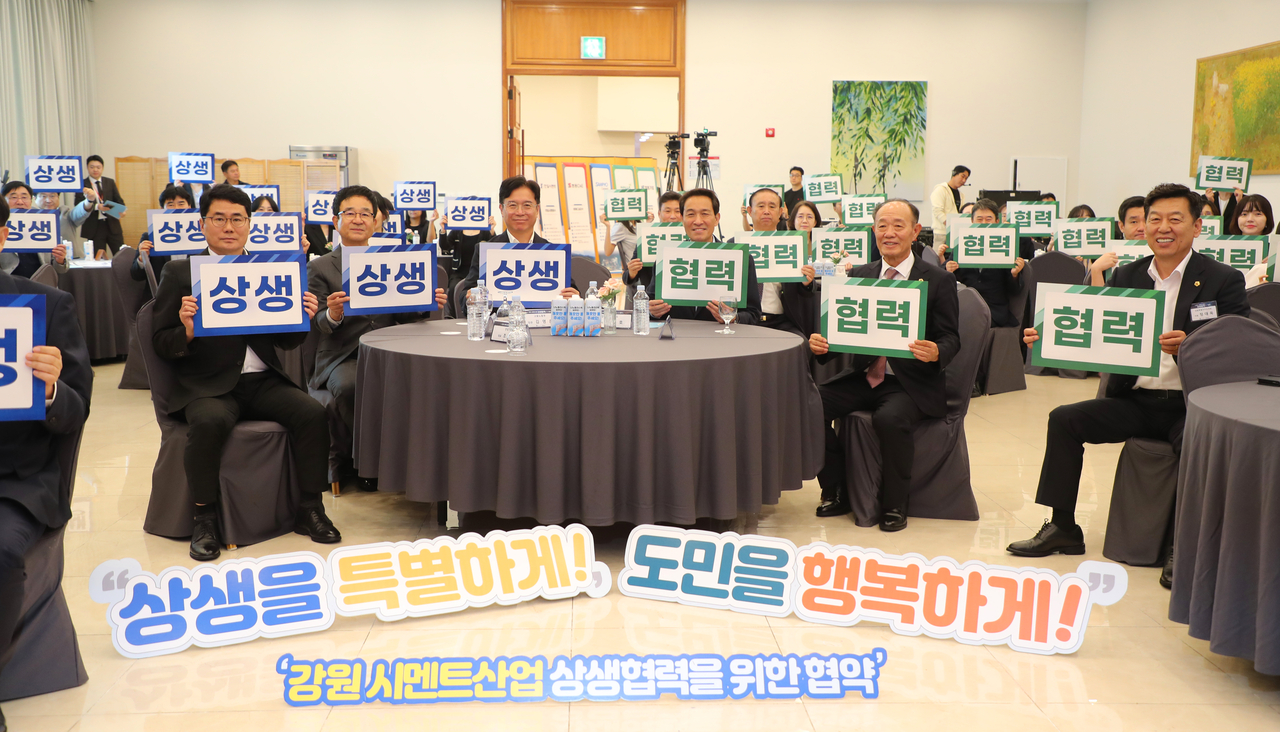
The agreement is the first to be signed among eight projects across six cities and provinces selected under the Ministry of Employment and Labor's regional mutual-growth gap-reduction support program.
As in many other industries, cement subcontractors have long struggled with relatively poor working conditions, limited welfare benefits and difficulty securing workers, making sustained support and a cooperative framework with primary contractors a persistent need. The agreement, backed by both the central and provincial governments, lays the groundwork for shared growth.
Under the pact, primary contractors, subcontractors, the Ministry of Employment and Labor and Gangwon Special Self-Governing Province committed to fulfilling their respective roles across five areas: safety and health, employment stability, working environment, employee benefits, and implementation and dissemination of the agreement's outcomes.
In addition, the parties plan to work closely together to embed a culture of mutual cooperation and build a sustainable industrial ecosystem.
Through the program, Gangwon Special Self-Governing Province is rolling out a range of worker-centered initiatives for subcontractor employees, covering health screenings and vaccination cost support, long-service incentives, vacation allowances, and support for obtaining safety-related certifications. The response has far exceeded expectations: 2,922 people applied, well above the target of 1,820.
In March, the province launched a mutual-growth consultative body bringing together primary contractors, subcontractors, the Ministry of Employment and Labor and outside experts, and ran a working-level committee to gather input from industry sites in drafting the agreement. Going forward, participating organizations plan to use the consultative body as a hub to monitor implementation continuously, identify additional areas for cooperation and ensure the agreement translates into real change on the ground.
"Gangwon Special Self-Governing Province is the center of South Korea's cement industry, and the cement industry is a national backbone industry that has built the foundation enabling the future of advanced sectors such as AI and semiconductors," said Gangwon Governor Woo Sang-ho. "People are always at the heart of any industry. I hope this agreement becomes a new starting point — one where the efforts of workers who quietly toil on the ground are better respected, and where every worker can work in a safer and better environment."

Woo added that he would pursue the agreement "with a sense of responsibility so that it does not remain a declaration but leads to real change on the ground," and pledged to work closely with the Ministry of Employment and Labor "so that the spirit of mutual growth that started in Gangwon spreads nationwide and becomes a model case of regions and industries growing together."
abc@heraldcorp.com