
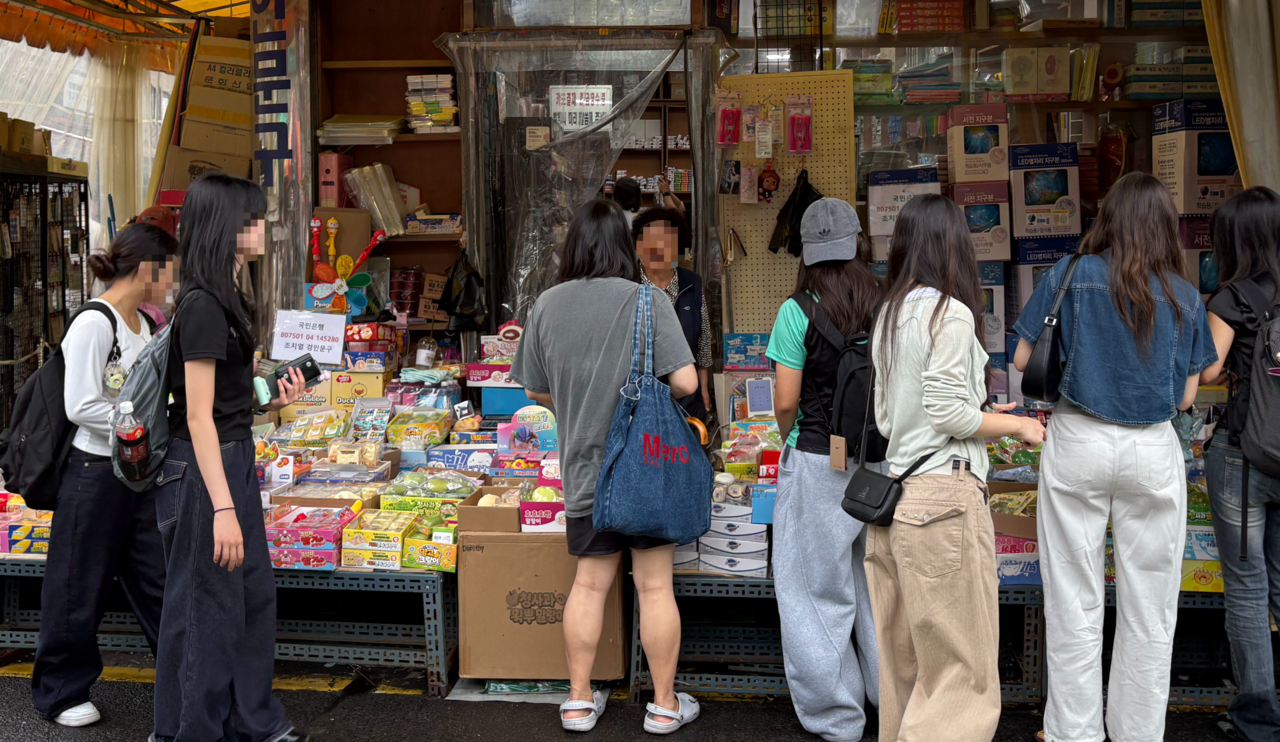
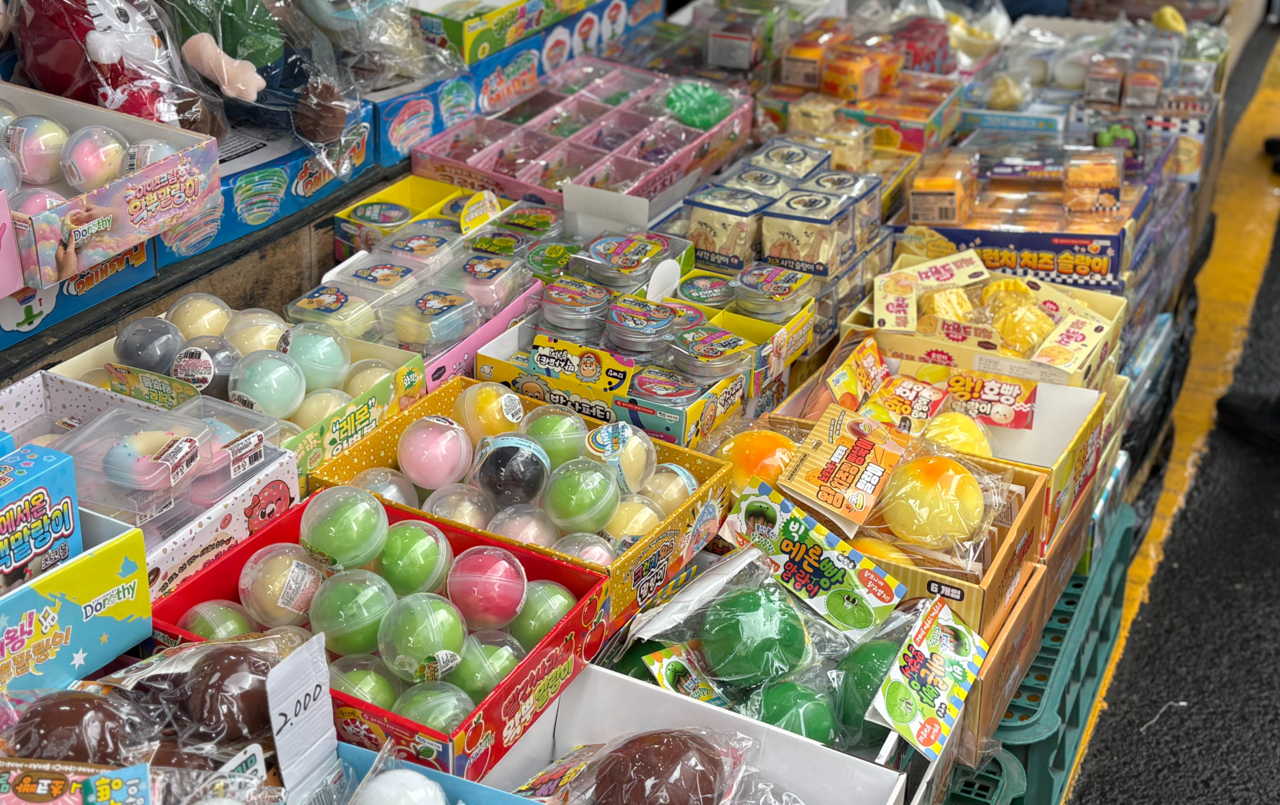
On Wednesday afternoon, the stationery and toy street in Changsin-dong, Jongno-gu, Seoul, was awash in "malgrangi" — soft, squishy tactile toys piled high on display tables outside every shop. Shoppers crowded the lane, squeezing samples and haggling over prices in groups of friends, couples and families. Foreign tourists were also out in force, with Japanese, Chinese and even Mongolian drifting through the air.
The malgrangi craze has brought a rare buzz back to the street. But the mood inside the shops is more guarded. Store owners worry that the social-media-driven toy fads — malgrangi, "wakppu balls," keycap toys and the like — could prove short-lived, leaving foot traffic to dry up once the trend passes.
Jeong Hyeon-ju, 63, who has run a stationery store in Changsin-dong for nearly 30 years, said the influx of younger shoppers and the spending they bring are welcome, but the underlying picture is bleak. "Malgrangi and Pokémon cards are moving, but actual stationery isn't selling," she said. "Customers are flocking to Daiso, and schools now supply students with what they need — there's less and less room for us."
The neighborhood stationery shop, once a fixture of childhood memories near every school gate, is steadily disappearing. According to the National Tax Service's national tax statistics portal, the number of registered stationery store operators stood at 9,898 as of last May, down 301 from 10,199 a year earlier. The count had already dipped below 10,000 in 2017 as online shopping became mainstream, then rebounded as unmanned stores proliferated during the COVID-19 pandemic. It recovered to above 10,000 in 2022 and held that level through the end of last year.
The deeper blows came from a 2011 government program providing free school supplies to students and a shrinking school-age population driven by the low birth rate. Combined enrollment of elementary, middle and high school students fell 14.6 percent over a decade, from about 5.88 million in 2016 to about 5.02 million in 2025. Competition has also intensified as hypermarkets, e-commerce platforms such as Coupang Inc, and ultra-low-price lifestyle retailer Daiso all moved into stationery.
Stationery stores have responded by expanding into toys and snacks, but keeping pace with fast-shifting trends is a heavy lift for small operators. "With schools supplying materials, toys and snacks have become more important products than school supplies," said one industry official. "But you have to stay on top of what elementary and middle school students — your core customers — are into, and snacks come with expiry dates to manage. It's hard to make the numbers work."
An official at the Korea Stationery Distribution Industry Cooperative said traditional stationery shops simply cannot compete with Coupang Inc and Daiso, and the school supply program has made life even harder for small operators. The cooperative's membership has shrunk from about 300 companies a decade ago to 100, the official said. The cooperative is calling for wider adoption of a "local stationery store certification" system that would allow neighborhood shops with physical storefronts to participate in school supply procurement bids.

spa@heraldcorp.com