767 cases, 1,007 kg seized at border in first half — cannabis, methamphetamine, ketamine top list
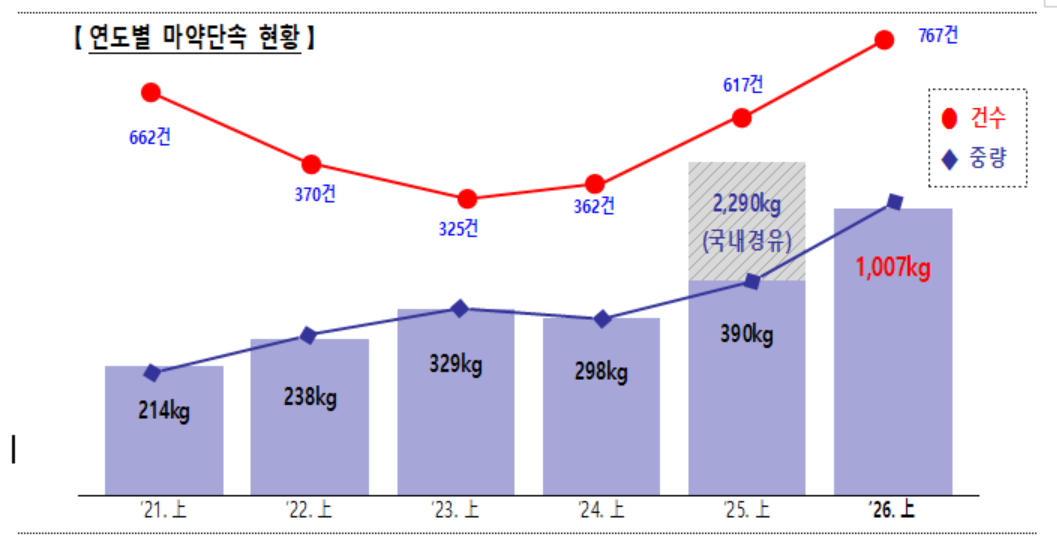
Customs authorities intercepted 767 cases and 1,007 kilograms of illegal drugs at the border in the first half of this year, the largest amount ever recorded.
The Korea Customs Service held a meeting of its Drug Smuggling Eradication Response Headquarters at Incheon Airport Customs on Wednesday, chaired by Commissioner Lee Jong-wook, and released its first-half 2026 drug smuggling enforcement trends.
The amount seized in the first half is enough to supply roughly 33.58 million people simultaneously and marks the highest figure on record in terms of drugs destined for domestic use.
By smuggling route, the number of cases was highest for travelers, followed by international mail, express cargo and other channels. By weight, general imports ranked first, followed by travelers, express cargo and international mail.
Both the number of cases and the weight seized from travelers increased, while both figures for international mail fell sharply. For express cargo, the number of cases declined but the weight remained similar to the previous year.
The sharp drop in international mail seizures is attributed to smugglers avoiding the channel after a second-tier inspection line — which began at the East Seoul Mail Center last December and has since expanded to five mail centers — went into full operation.
General import cargo recorded the highest share by weight for the second consecutive year, driven by the detection of a large-scale smuggling case involving container freight at Incheon Port.
By drug type, both case count and weight ranked in the order of cannabis, methamphetamine, ketamine and cocaine. Cannabis saw a sharp increase in weight following the seizure of 636 kilograms from container cargo at Incheon Port in March. The number of methamphetamine cases fell while its weight increased. Cocaine, which had ranked first by share following a series of large seizures the previous year, saw both its case count and weight drop significantly.
By continent of origin, Asia ranked first, followed by North America, Europe, Africa and Latin America. By country, Thailand topped the list, followed by the United Kingdom, Canada and Vietnam.
Asia had ranked second the previous year due to large-scale smuggling cases originating from Latin America, but reclaimed the top spot this year, driven in part by increased seizures of drugs from Thailand. Thailand has consistently ranked as the top source country since 2023.
The United Kingdom jumped to second place after 42 kilograms of ketamine were seized from an air traveler in May. Vietnam overtook the United States to rank fourth, following the seizure of 24 kilograms of yaba from express cargo in January and February.
The Korea Customs Service plans to rapidly build a multi-layered drug surveillance network with no blind spots across all five major smuggling routes. Having already established multi-tier inspection lines for international mail and general imports, the agency will move quickly to extend the same system to the remaining channels.
At Wednesday's meeting, Commissioner Lee said drug smuggling is "a serious crime that threatens public health and social safety" and called it the agency's top priority. He urged officials to "swiftly establish multi-tier interception lines across all smuggling routes, including the traveler channel" and to "instill a firm awareness that any attempt to smuggle drugs will be caught at the border without fail."
Lee also warned the public that carrying bags or items on behalf of acquaintances or strangers while abroad — or bringing such items into the country — could constitute drug smuggling even if unintentional, and urged citizens to "remain especially vigilant and actively cooperate in eradicating drug smuggling."
kwonhl@heraldcorp.com