
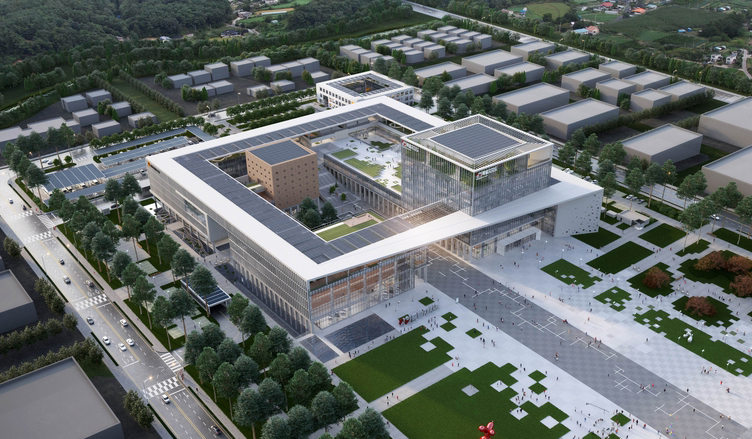
The new headquarters building for Gangwon Special Self-Governing Province, a project launched under the previous governor, will proceed at a smaller scale than originally planned.
Gov. Woo Sang-ho said in a recent interview that the province intends to continue building the new headquarters but will reduce its size from the original plan "to maintain fiscal soundness, ease the burden on residents and improve efficiency."
The previous governor pushed ahead with a ground-breaking ceremony for the access road to the new building on March 30, even as civic groups threatened legal action demanding broader public consultation.
Woo, who was a preliminary candidate at the time, was asked about the ground-breaking that afternoon before a meeting with the Gangwon Association for the Visually Impaired. He said "the core issue is whether there is a clear position on whether to pursue or abandon the administrative complex project at a cost of nearly 900 billion won ($610 million)," adding that "it is right to state that position clearly before holding a ground-breaking ceremony."
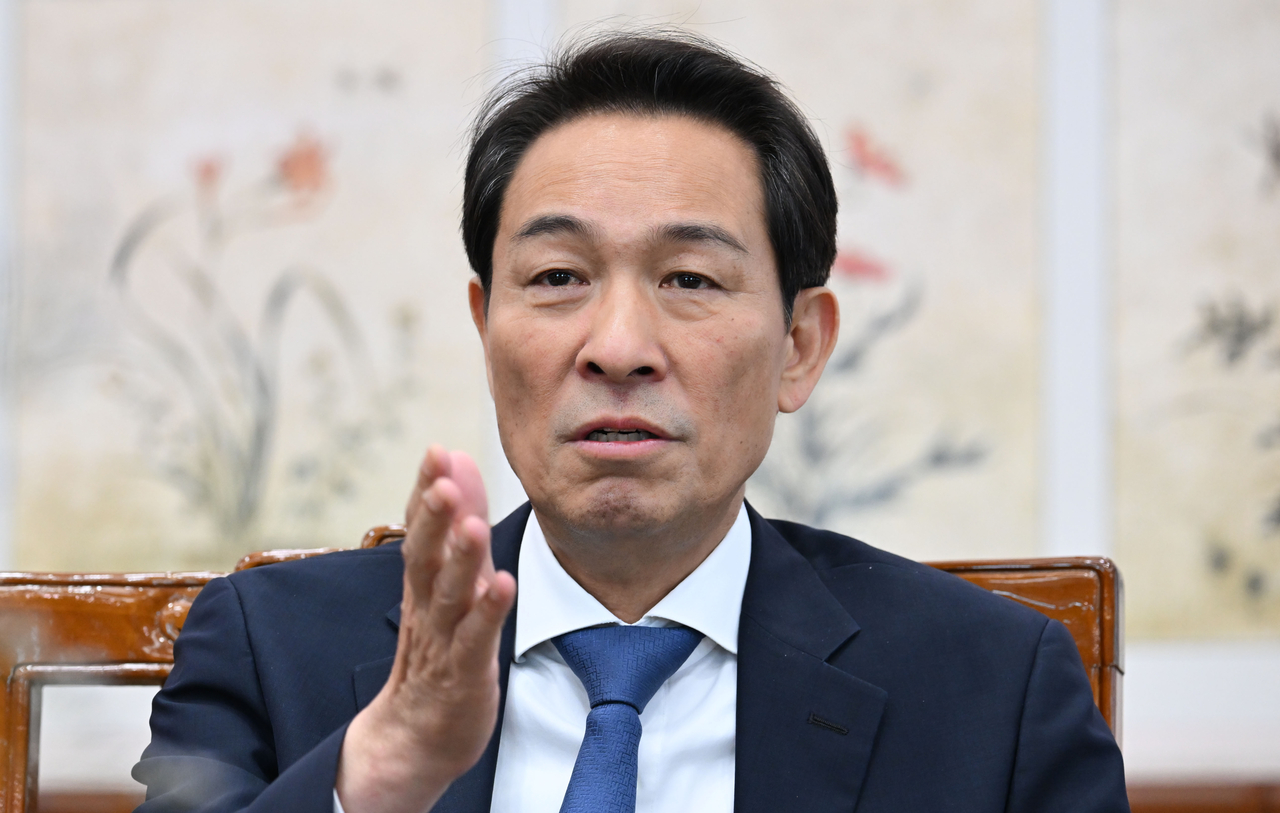
Woo also said at the time that "residents are concerned about whether a standalone provincial office building even needs to be built if the broader administrative complex project is being abandoned," and that "proceeding with a ground-breaking ceremony without any explanation of these issues is an act that disregards the people of Gangwon Province."
Rumors subsequently circulated that Woo opposed the new headquarters project altogether. His transition committee clarified, however, that "Gov.-elect Woo's position of maintaining the plan to build the new headquarters, in the interest of administrative continuity and stability, remains unchanged." It added that "as the governor-elect has stated on multiple occasions through the media, he is carefully reviewing the pace of the project, taking into comprehensive consideration the province's fiscal situation and the impact on residents' livelihoods."
The transition committee said the intent was never to restart discussions from scratch or halt the project, but rather — given the scale of public funds involved — to pursue a more rational and responsible approach that secures fiscal soundness and minimizes the burden on residents.
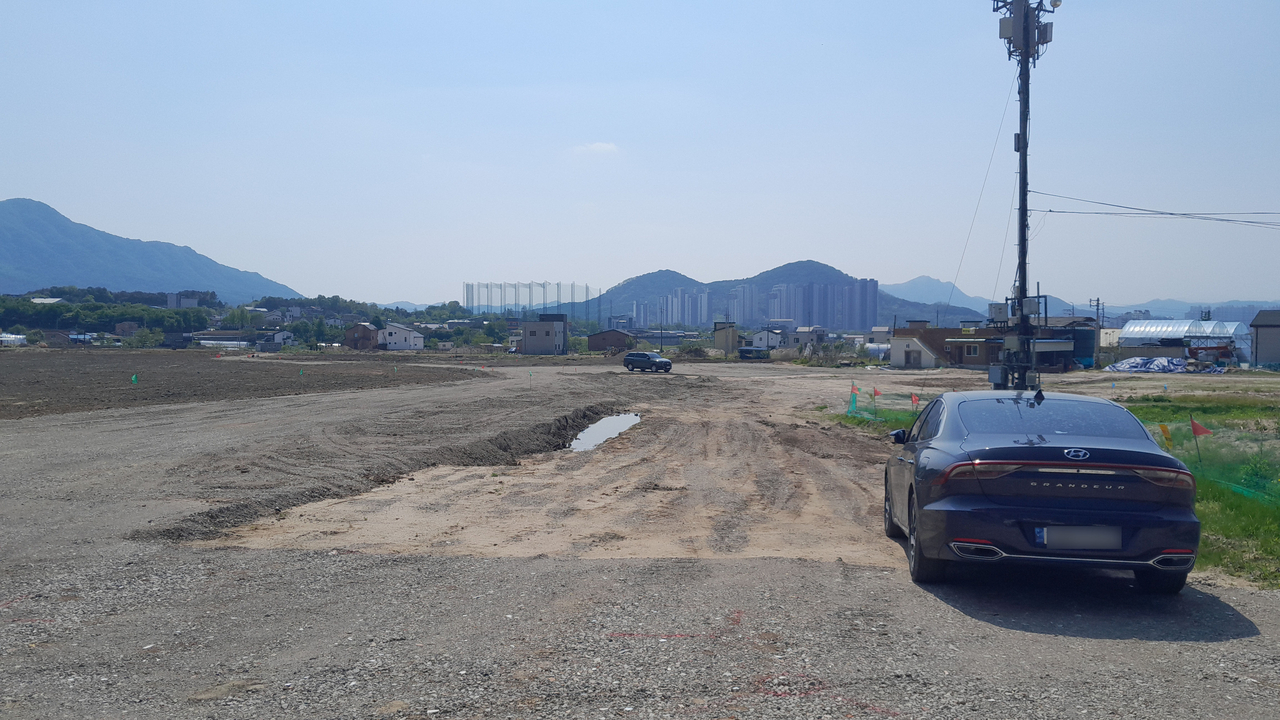
The previous governor's office announced on the day of the ground-breaking that the new headquarters project would require about 500 billion won in construction costs and would create a resident-centered complex for administration and culture. The building was to rise on a site of approximately 100,000 square meters, with two below-ground floors and nine above-ground floors, and would include a multipurpose auditorium, a front plaza and a rooftop garden. The plan called for parking for more than 1,600 vehicles, with completion targeted for 2029.
Some civic groups filed a lawsuit at Chuncheon District Court (case no. 2026구합21) seeking to cancel the provincial office relocation, arguing that public opinion had not been adequately gathered and that the province had failed to provide accurate cost comparisons for the various candidate sites.
Based on Woo's interview remarks, the province is expected to proceed with the new headquarters at a somewhat reduced scale — following a partial redesign aimed at cutting costs, preserving fiscal health, easing the burden on residents and improving spatial efficiency — while taking a more measured pace.
abc@heraldcorp.com




