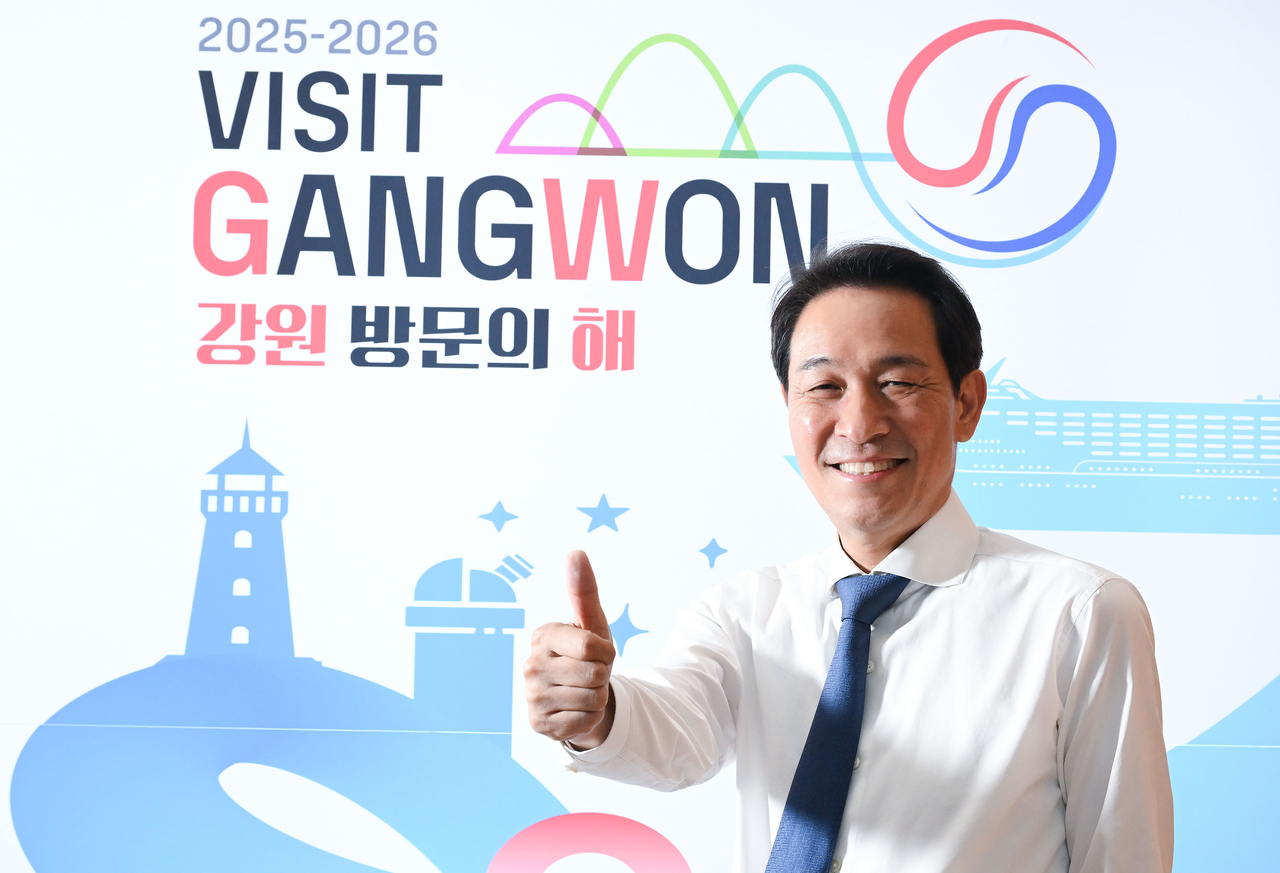
Gangwon Province residents have historically leaned center-right at the ballot box. Last month's local elections produced a different result: voters chose Woo Sang-ho as governor and handed the Democratic Party of Korea 11 of the province's 18 mayoral and county chief seats, a shift widely read as Gangwon taking on a center-left identity. At the same time, they gave the opposition a majority in the Gangwon Provincial Assembly, leaving the newly inaugurated governor with the immediate challenge of governing across party lines.
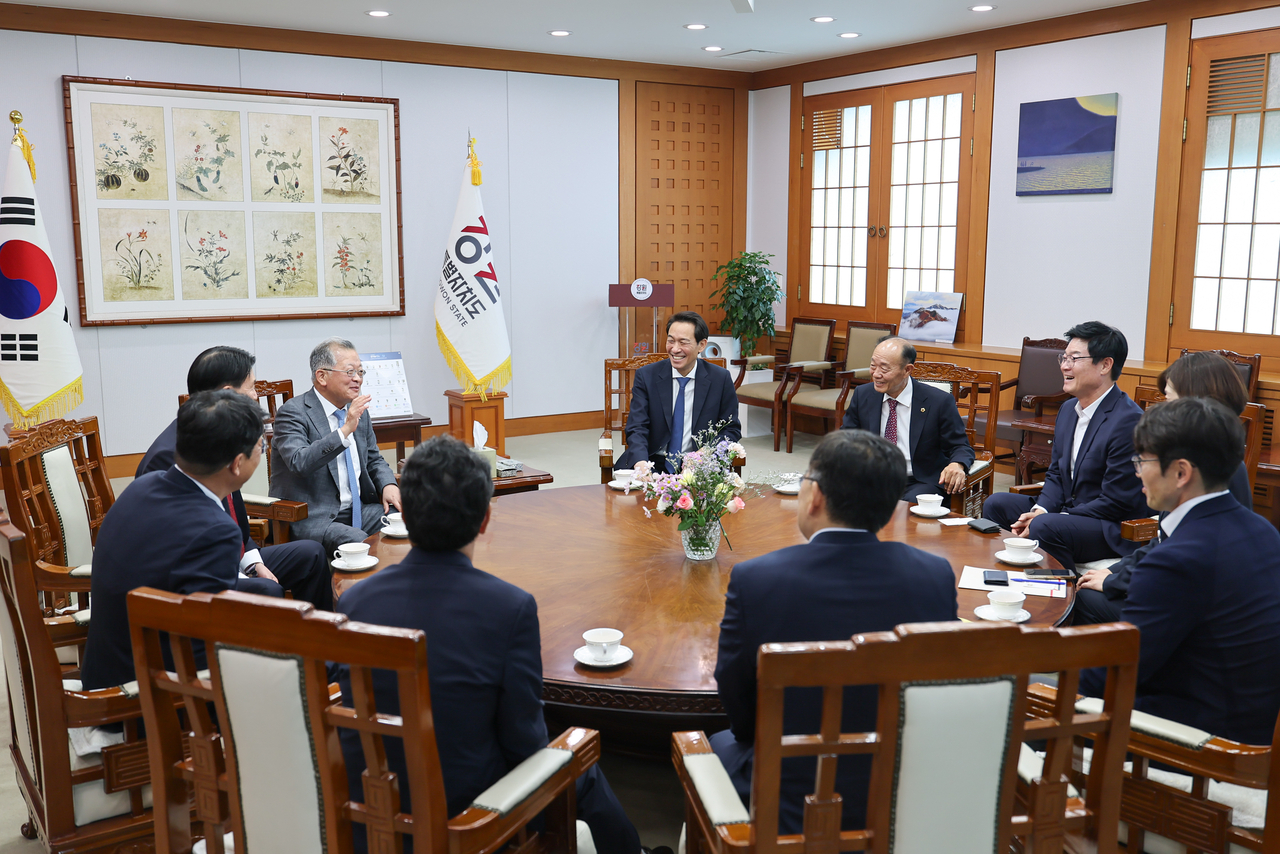
Woo repeatedly pledged, both before and after taking office, to make "harmony" the foundation of his administration. The sentiment was echoed at a gathering of newly elected local leaders, where Taebaek Mayor Lee Sang-ho quipped, "Sang-ho will work with Sang-ho" — a play on the shared given name — as seven opposition-party mayors and county chiefs signaled their willingness to cooperate.
Woo, who has said he learned statecraft up close from the late President Kim Dae-jung and from President Lee Jae Myung, sat down for an interview at the Gangwon Provincial Government building in Chuncheon on July 13 and declared that "the transformation of Gangwon Province has begun." He laid out in detail his plans to reverse the population drain driven by youth outmigration.
Woo placed particular emphasis on advanced and future industries, citing four priorities: building a clean-energy highway along the Demilitarized Zone, attracting large-company AI data centers, upgrading the biotech and medical AI transformation sector and a national antibody cluster, and improving settlement conditions for young workers. On tourism — an area where Gangwon is widely seen as having a comparative advantage — he said he would "make Gangwon the Switzerland of Asia" by developing nature-friendly forest lodges, stargazing travel experiences and "hot-and-hip places" that appeal to young people. The following is an edited transcript of the interview.
— What is your plan for cross-party cooperation?
▶ Harmony is the core foundation for a successful provincial administration. There are limits to what a governor can achieve through personnel appointments alone. The real message of unity is helping all 18 mayors and county chiefs without bias, regardless of party affiliation. What matters more than party label is which areas need development most urgently. If residents in districts led by opposition mayors start saying, "We didn't even vote for Governor Woo, but he's still delivering for us" — that will be the true fruit of unity.
— For decades there has been a saying that Honam was mistreated and Gangwon was ignored. Yet Gangwon residents seem to have built enough self-reliance to push per-capita regional income toward the middle of the national range.
▶ The indicators may look that way, but the situation is serious. If Gangwon continues on its current trajectory for just a few more years, it will collapse. We face a structural crisis — population outflow and a weakening industrial base. With only about 1.5 million residents, the province lost 20,000 people over the past four years. That is why attracting companies and reviving industry is so critical. Around the time President Lee announced his mega project, we succeeded in bringing GS Group's AI data center investment to Donghae. More recently, Wonju-based medical device company Sinheung MST committed 100 billion won ($67.5 million) in investment and jointly announced with me a plan to invest 1 trillion won over the next 15 years. The transformation of Gangwon Province has already begun. As large companies continue to invest in Gangwon and local companies launch new investments within the province, employment will grow, factory construction will follow, and positive ripple effects will spread to other industries.
— Building a settlement ecosystem for young people requires more than companies and housing — it also takes marriage support and education.
▶ There are quite a few models worth drawing on right here in Gangwon. My own fundraising committee chair established a rural village, and about 20 young people moved in. While living in public housing built by the local government and throwing themselves into productive work, a couple among them recently got married. When young people have jobs in Gangwon, enjoy a comfortable living environment and interact with one another, marriage follows naturally. For military families stationed in the border area, housing and education are the main hardships. I am considering building public housing and middle and high schools so these families can put down roots as Gangwon residents. Young people are drawn to what is hot and hip. Chuncheon city officials noticed that young people from Seoul used to come to Gangchon to have fun, but that Gangwon university students now go to Seoul instead — and have been working hard to create places young people love, including improving the lakeside scenery. Beyond housing, education and transportation, I plan to sit down with mayors and county chiefs to improve settlement conditions by developing hot-and-hip places and building distinctive villages. Gangwon is going to become a lot more exciting.
— How are you mapping out Gangwon's industrial landscape?
▶ Wonju is already specialized in medical devices. Companies such as Sinheung MST, which pledged 1 trillion won in long-term investment, continue to grow. Export channels are opening up to the point where reinvestment is almost inevitable. For Gangneung, SK Group's AI data center investment — something I began preparing before becoming governor — is already committed, and a natural-substance-based research complex has been established there. Along the East Sea coast, a seafood processing cluster is also being developed. Chuncheon is advancing into biotech drug development, a market with very strong growth potential. Specialized industrial clusters amplify synergies within their sectors. I intend to create the conditions that lead companies to conclude that Gangwon is a great place to do business, and then bring them in. The most important sector is the future clean-energy industry. The day is coming when only products manufactured using clean energy can be exported. Our province has more clean energy than any other region in the country. No other region matches Gangwon in total power generation, including hydropower. We supply enormous amounts of electricity to the greater Seoul area — now it is time to use that power for the industries we need. Our province is large, which makes solar power generation advantageous as well. Along a 100-kilometer stretch of the civilian control line — an ecosystem preserved for more than 70 years — we will install two to three rows of solar-panel fencing in place of barbed wire. That is our "clean-energy highway." I have already concluded discussions with the minister of national defense. The energy revenue generated there will be distributed to local residents like a monthly salary. Wind power requires mountains, and Gangwon, which sits at the heart of the Baekdudaegan mountain range, has the highest wind-power productivity in the country. Residents near the Taebaek wind farm already receive 270,000 won a month. Hydrogen energy will be the finishing touch. We are developing a liquefied hydrogen storage and transport cluster in the Donghae-Samcheok area and expanding related infrastructure, including a hydrogen specialized zone and an electrolysis-based hydrogen production base. Building a diverse clean-energy network will create an unrivaled foundation for large companies' future operations. I will turn Gangwon into a paradise of future-oriented clean energy — a place companies cannot afford to overlook. You could call it freedom from oil shocks. I have a grand vision for Gangwon, and for South Korea as a whole, to enjoy that freedom.
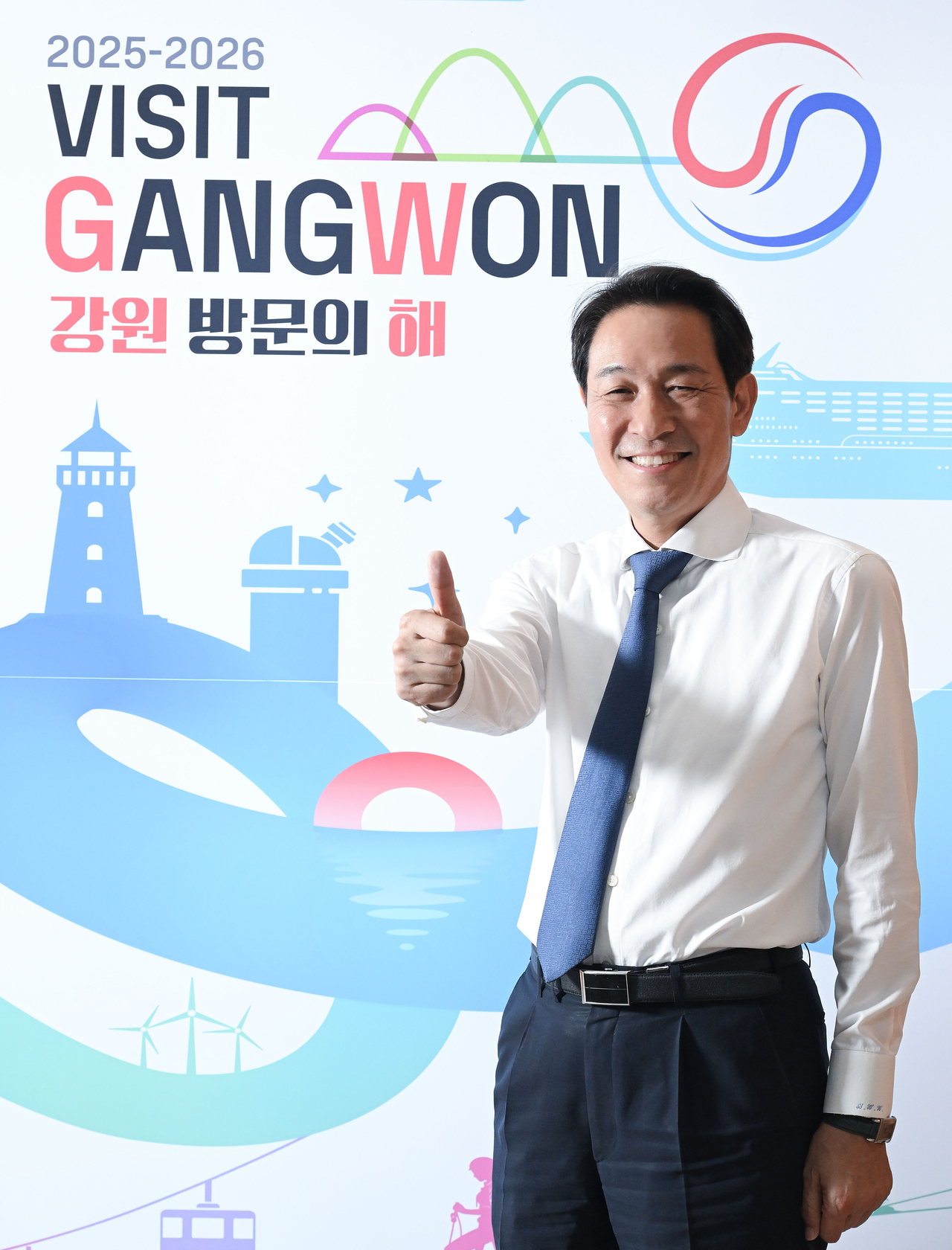
— You have said you want to make Gangwon the Switzerland of Asia. What does that mean in practice?
▶ Gangwon shares Switzerland's beautiful natural environment, but in terms of accessibility and how well that nature is utilized, we still fall far short. The first tourism offering I have in mind to fill that gap is forest lodging — something like the treehouses you see abroad. Most of Gangwon's tourist accommodations are concentrated along the coast, which limits variety. You see small lodge clusters in the Swiss mountains, and I want to try something similar in areas like Inje and Yanggu — small-scale lodging nestled in nature without damaging it. I will have concrete discussions with the county chiefs. Taebaek has the potential to become a world-class destination for stargazing and viewing the Milky Way. Stargazing lodges have a real emotional appeal. I sincerely hope all Koreans will one day experience the highland travel unique to Taebaek and Jeongseon. Second, I want to create destinations that draw crowds through word of mouth. The Mureung Byeolyu Cheonji area in Donghae has been selected four consecutive years for the "Korea's Top 100 Tourist Spots" list. An industrial heritage site was regenerated into a tourist attraction, and domestic and international visitors now line up to see it. There are countless places in the province with the potential to become new bucket-list destinations. Between 30 million and 40 million people visit Gangwon each year. I want to build the infrastructure that gives them an even more memorable experience and encourages them to spend freely on compelling content. Romantic lodging, emotionally resonant experiences — these are all part of the vision to make Gangwon the Switzerland of Asia.
— The reality is that road infrastructure within Gangwon Province is inadequate.
▶ I recently met with the minister of land, infrastructure and transport to request road expansion and have also briefed the president on the matter. I am pressing hard to secure the social overhead capital that Gangwon needs and should already have. The province is penalized in preliminary feasibility studies because of its small population, but I trust the central government will take into account actual utility and balanced national development. Many roads in other regions that passed feasibility reviews turned out to carry very little traffic once completed. The Seoul–Yangyang Expressway, by contrast, carries far more vehicles than originally projected. Gangwon's roads will see more traffic than expected as well, driven not only by tourism but also by advanced industries and clean-energy cooperation. As is well known, not a single east-west rail or road corridor connecting Seoul, Gyeonggi Province and the Chungcheong provinces to Gangwon has ever failed.
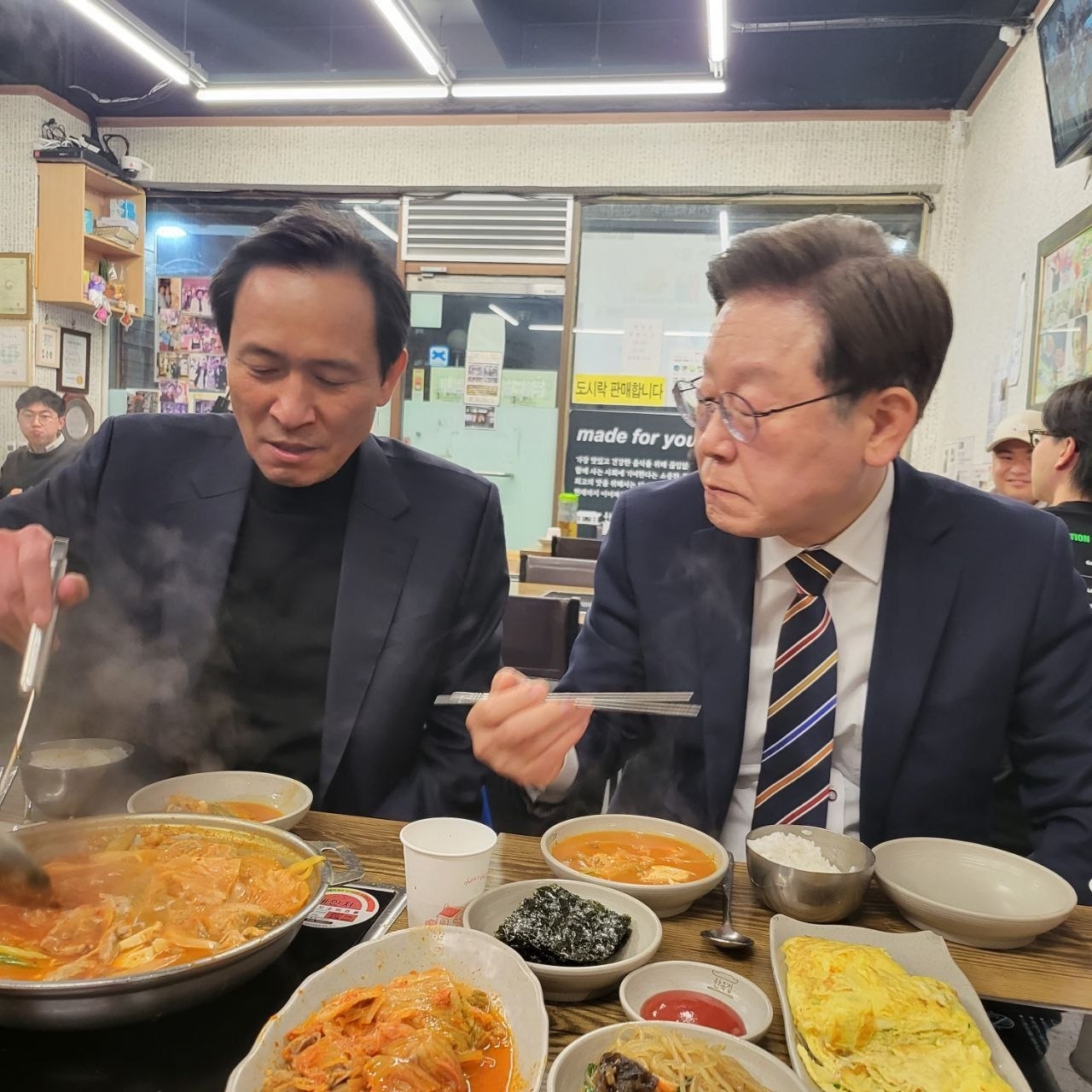
— You studied Korean literature at Yonsei University and have spent 30 years in politics, including time as a pro-democracy activist. What have those years taught you?
▶ I went to the Korean literature department wanting to become a poet. Han Kang, who won the Nobel Prize in Literature, is a junior alumna from the same department. I admired poets and won a few literary awards along the way, but after learning the truth about the 1987 Gwangju pro-democracy movement, I joined the student movement. I met the late President Kim Dae-jung and his wife at the funeral of martyr Lee Han-yeol, and that encounter led Kim to bring me into politics. He left a pioneering legacy — overcoming the IMF crisis, nurturing the IT industry, building an advanced welfare system. He is my teacher. I learned how to actually get things done from President Lee, when I served as his senior presidential secretary for political affairs at Cheong Wa Dae. His capacity for focus, execution and results-oriented work is remarkable. His goal of raising the quality of public service was also clear. After the mega project announcement, the public-private agreement for the Donghae AI data center came together faster than anywhere else. That kind of agility and follow-through is something I learned from President Lee. If I can combine former President Kim's vision with President Lee's execution, Gangwon Province will change rapidly.
■ Profile: Governor Woo Sang-ho
▷ Born 1962, Cheorwon, Gangwon Province
▷ 1981: Graduated from Yongmun High School, Seoul
▷ 1987: Student body president, Yonsei University
▷ 1989: Graduated, Department of Korean Language and Literature, Yonsei University
▷ 2006: Master's degree in public administration, Yonsei University Graduate School of Public Administration
▷ 2012: Supreme council member, Democratic United Party (now Democratic Party of Korea)
▷ 2016: Floor leader, Democratic Party
▷ 2022: Emergency committee chair, Democratic Party
▷ 2024: Chairman, Lee Han-yeol Memorial Foundation
▷ 2025: Senior presidential secretary for political affairs, Cheong Wa Dae
▷ National Assembly member, 17th, 19th, 20th and 21st terms (Seodaemun-gap, Seoul)
▷ 40th governor, Gangwon Special Self-Governing Province
abc@heraldcorp.com