
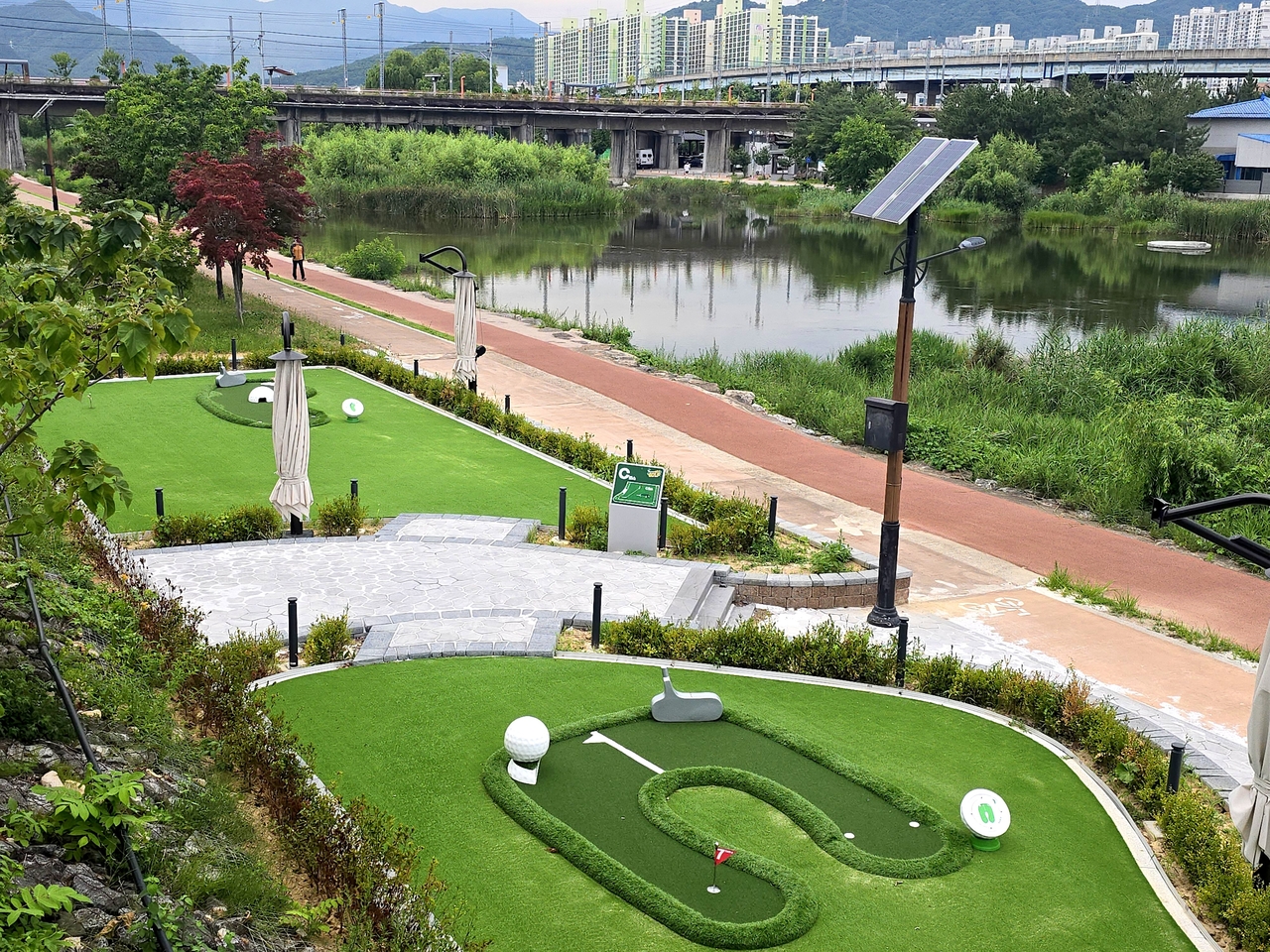
An abandoned railway bridge that sat unused over the Jeoncheon stream in Donghae for more than 40 years — even after a new bridge was built to carry Donghae and Yeongdong line trains — has been reborn as a rest and leisure space for residents and visitors.
The city of Donghae said Monday it had transformed the long-idle Jeoncheon rail bridge into a themed garden walkway called the Jeoncheon Floating Bridge Garden, choosing restoration over demolition. The city has continued to improve the landscaping and nighttime lighting since the project was completed, with the aim of maintaining the space as a year-round retreat for residents.
The bridge lost its railway function after the Yeongdong Line's Jeoncheon rail bridge was rebuilt in the 1990s and had been left idle ever since. Because the Jeoncheon riverside is one of the city's most popular waterfront areas for walking and exercise, calls to restore the bridge and return it to public use had been raised consistently over the years.
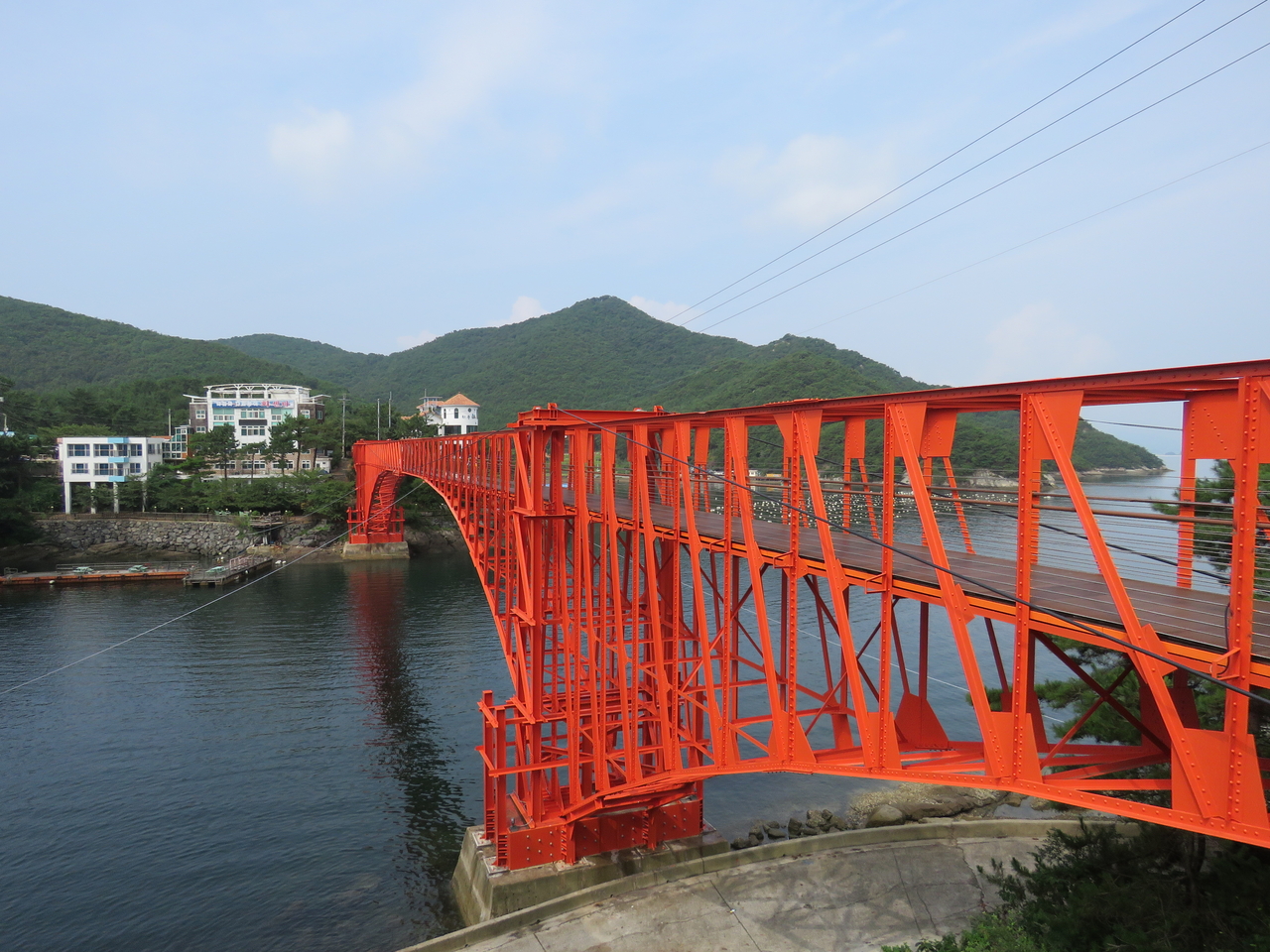
A comparable transformation took place in Masan, South Gyeongsang Province, where an old bridge running parallel to a new crossing to Jeodo island was converted into a pedestrian walkway. Its distinctive appearance earned it the nickname "Bridge on the River Kwai," which brought it considerable fame.
Donghae chose a different identity for its bridge. Since it no longer functions as a crossing in the traditional sense, the city named it a "garden" — the Jeoncheon Floating Bridge Garden.
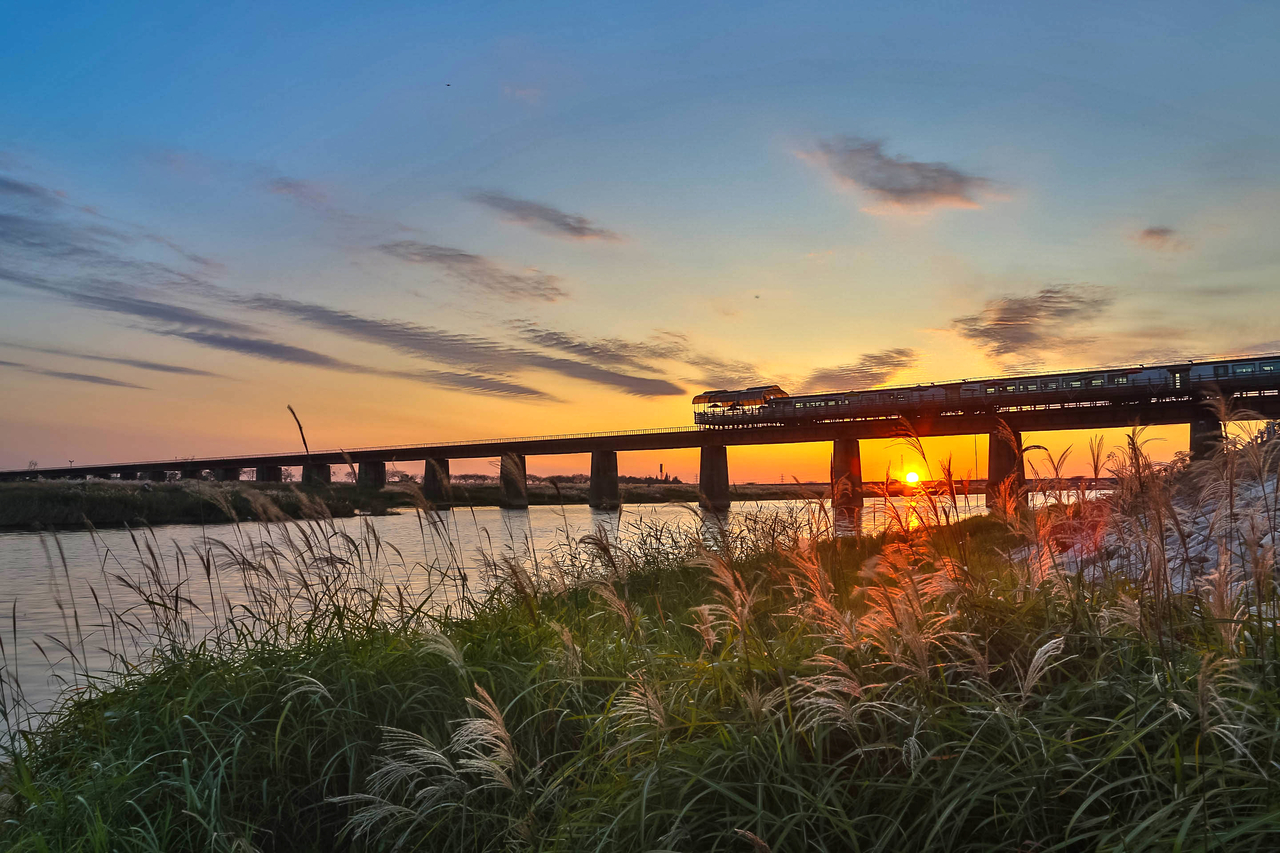
The project echoes a similar heritage revival in Wanju, North Jeolla Province, where a disused railway bridge over the Mangyeong River was repurposed into a train-themed cafe and other attractions.
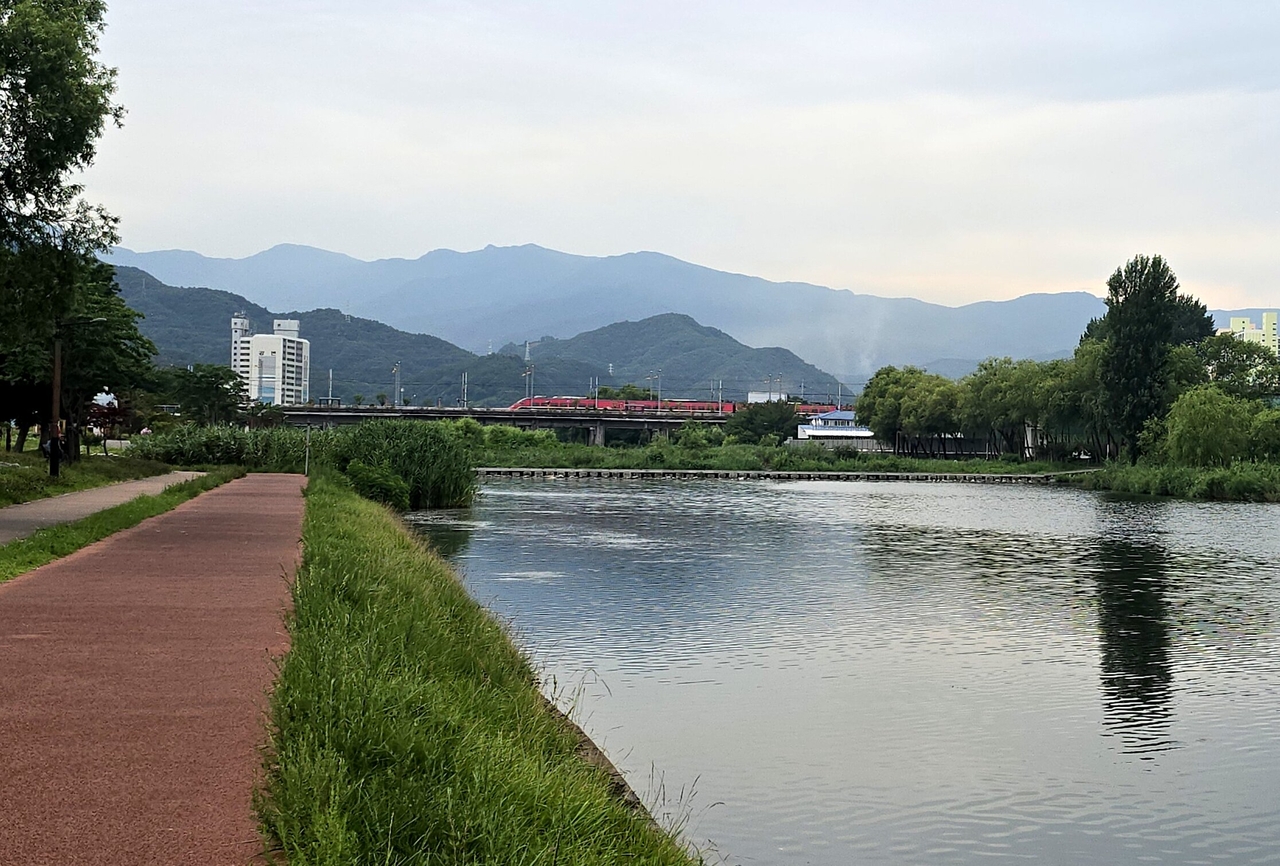
Donghae secured the opportunity to revive the bridge by winning a competitive selection process under Korea National Railway's idle railway site utilization project, which opened the door to converting the structure into a public space.
The 265-meter-long, 5-meter-wide bridge was repaired and reinforced, then developed into a themed rest area featuring a walking path, rest shelters, a rose tunnel, an observation deck and landscape lighting.
Foundation work began in July 2023, with the main construction wrapping up in April 2024, after which the city added amenities and landscaping. A 66-meter rose tunnel anchors the daytime experience, complemented by pergolas, rest facilities and remotely operated shade structures that let visitors relax while taking in the natural scenery along the Jeoncheon. For the evening, the city installed varied landscape lighting along the railings, decking and trellises, and added tree firefly lights and a rainbow tunnel light display to create a distinct nighttime atmosphere, city officials said.
Since completion, the city has managed the space not as a one-and-done project but as a living garden woven into residents' daily lives. From 2025, it has maintained the landscaping through regular watering, fertilizing and removal of dead trees, while rotating seasonal light installations — snowflake, tree and barley motifs among them — to give visitors something new to see in every season.
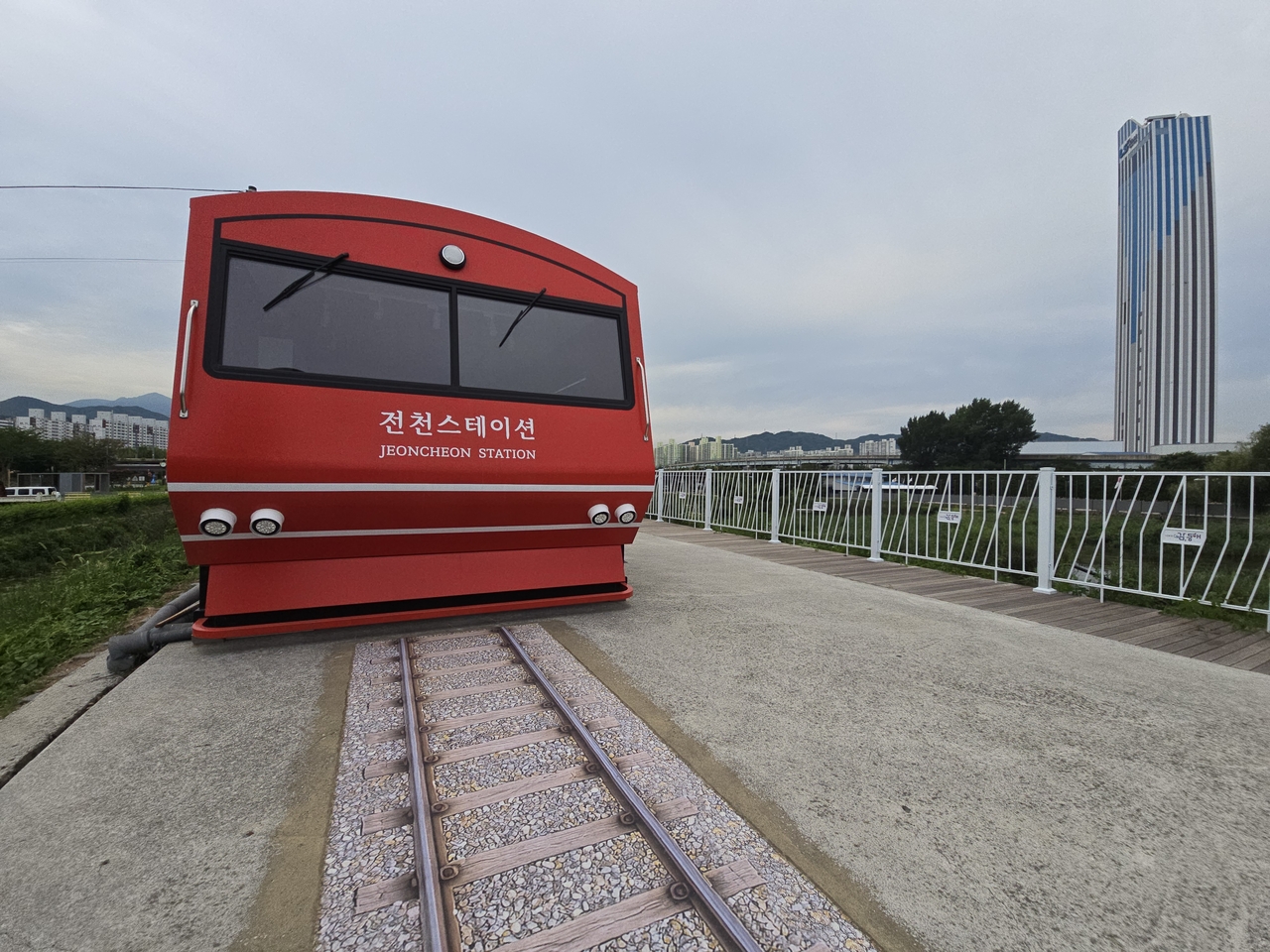
Beyond its role as a leisure destination, the Floating Bridge Garden also serves as a pedestrian link connecting the north and south banks of the Jeoncheon. When heavy rainfall makes the stream's stepping stones impassable, the bridge gives residents a safe way to cross — combining public space renewal with improved walkability.
Hong Seong-pyo, head of Donghae city's construction division, said the project's greatest significance lies in giving the bridge new value rather than tearing it down. "The Jeoncheon Floating Bridge Garden is most meaningful because we took a structure that had been abandoned for more than 40 years and, instead of demolishing it, gave it new value and returned it to our residents," he said. "We will continue to manage the seasonal scenery and amenities so that people can walk and rest along the Jeoncheon and enjoy a little breathing room in their daily lives."
abc@heraldcorp.com




