![A patient with severe paraplegia receives brain-computer interface (BCI)-assisted neurorehabilitation treatment at a hospital in Lhasa, the Tibet Autonomous Region of southwestern China, on Thursday. [Xinhua]](https://wimg.heraldcorp.com/news/cms/2026/07/16/rcv.YNA.20260709.PXI20260709035601009_P1.jpg)
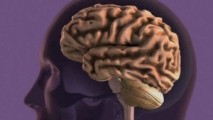
China has become the first country to successfully implant a commercially approved brain-computer interface device in a patient.
The South China Morning Post reported that surgeons at Huashan Hospital affiliated with Fudan University in Shanghai implanted an invasive BCI system called NEO on Monday. The patient suffered a spinal cord injury in a traffic accident 10 years ago that left him with limited hand movement.
The surgical team implanted a coin-sized BCI chip inside the patient's skull and said they captured stable, high-quality epidural brain signals after the procedure. The patient's recovery and vital signs were stable.
NEO was developed by Shanghai-based startup Neuracle. The device sits on the surface of the brain rather than penetrating brain tissue directly, reading neural signals and converting them into hand movements.
China's National Medical Products Administration granted approval on March 13, making NEO the world's first commercially approved BCI product available by prescription outside a laboratory setting, the Post said.
In roughly four months following regulatory approval, the company completed production, secured hospital adoption and carried out patient screening. The device has also been included in commercial health insurance coverage in some parts of China.
The Post described the surgery as evidence that China is accelerating its push to commercialize BCI technology, an industry Beijing has designated as a future growth sector.
In a BCI industry development plan announced in July last year, the Chinese government set a target to establish an advanced technology and industrial framework by 2027 and to cultivate two to three globally competitive leading companies by 2030.
Neuracle has also begun the listing process on the Shanghai Stock Exchange's STAR Market — often called China's NASDAQ — to expand its research, development and production capacity. The company initiated the procedure in February.
Neuralink, the BCI company founded by Tesla CEO Elon Musk, is also pushing ahead with its own technology development in the field.
Neuralink has enrolled more than 20 patients in clinical trials of its first product, Telepathy, but has yet to receive formal commercial approval from the US Food and Drug Administration, the Post said.
woo@heraldcorp.com