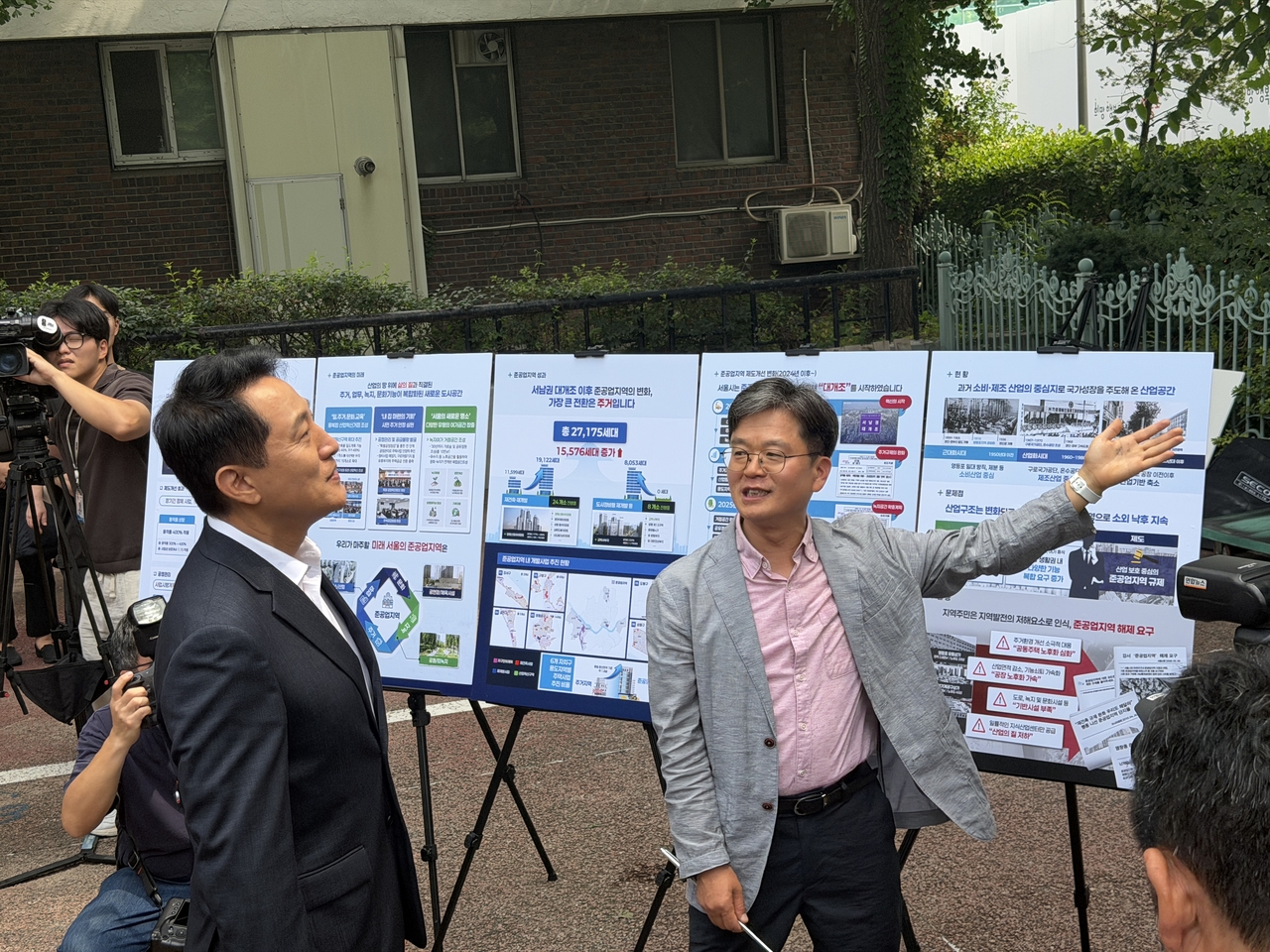
Seoul Mayor Oh Se-hoon on Thursday criticized the central government for raising the need for housing supply in the city's semi-industrial zones without adequately understanding what the Seoul Metropolitan Government has already been doing.
Oh made the remarks after visiting the Yangpyeong Sindonga Apartment reconstruction site in Yeongdeungpo-gu to review the project's progress and hear requests from heads of redevelopment associations in the southwest semi-industrial zone.
Oh directed his criticism at Cheong Wa Dae policy chief Kim Yong-beom, who last month raised the need to use the southwest semi-industrial zone for housing supply. "I'm not sure whether those comments were made with a full understanding of what Seoul has already been doing," Oh said. "If he had known the current state of progress, he would not have simply said we need to supply housing in the southwest."
Oh went on to say that the city has been pursuing a plan since 2024 to transform the area — once dominated by factories — into a mixed-use space combining jobs, housing and leisure through the Southwest Overhaul project. "We are now preparing Southwest Overhaul 2.0, which will also improve transportation conditions," he said.
According to the Seoul Metropolitan Government, about 27,000 housing units are being pursued across 32 redevelopment project sites in the semi-industrial zone. Of those, 19,122 units are planned across 24 reconstruction and redevelopment zones — including the Yangpyeong Sindonga Apartment, Mullae Gukwha Apartment, Seongdong Donga Apartment and Samhwan Dobong Apartment projects. An additional 8,053 units are planned through eight urban renewal redevelopment and district unit planning projects, covering Yangpyeong District 13, Mullae-dong 4-ga, and the former Bangnim and Gyohaksa sites.
Between 20 and 30 percent of the existing semi-industrial zone is already used for residential purposes, and apartment complexes built roughly 40 years ago are now entering the reconstruction phase in succession, making supply results increasingly visible, the city said.
The Yangpyeong Sindonga Apartment, which Oh visited Thursday, formed a preparatory committee in 2009 but saw the project stall for years due to internal disputes within the association and low business viability. The project gained momentum after Seoul eased the floor-area ratio for apartment buildings in semi-industrial zones to a maximum of 400 percent, and it cleared an integrated review in March.
Oh met with officials involved in redevelopment projects in Yeongdeungpo-gu to hear their concerns. Jung Geun-hye, head of the Yangpyeong Sindonga Apartment reconstruction association, said the association had been able to move forward after Seoul revised its ordinance. She asked the city to consider lowering the ratio of rental housing units to reduce the financial burden on association members, noting that rising construction costs were weighing heavily on residents.
Son Bo-hyung, chair of the preparatory committee for the Dangsan Hyundai 3rd Apartment reconstruction project, requested that the city allow preliminary consultations with Seoul before a trust-based project operator is officially designated. "If we can consult with the city from the early stages, we could cut the project timeline by more than six months," he said.
Nam Bo-u, chair of the Mullae Gukwha Apartment reconstruction committee, said the committee was preparing for an upcoming Seoul advisory meeting and suggested that expanding the number of review sessions alongside specialist staffing could reduce wait times, given that more than 100 redevelopment projects are under way in Yeongdeungpo-gu alone.
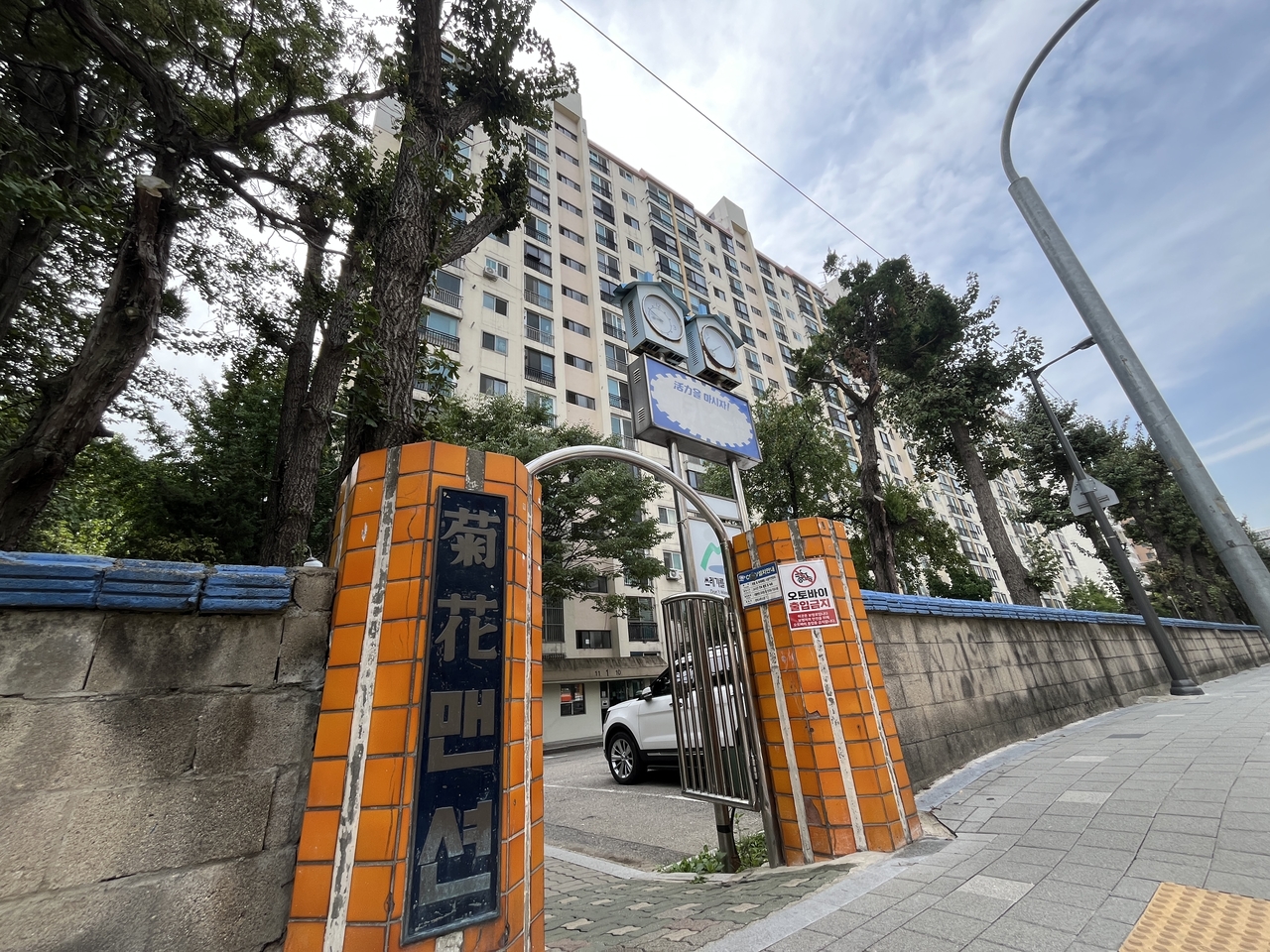
Oh said requests to raise the floor-area ratio and reduce the share of rental housing to lower member contributions were common across redevelopment sites. "However, we cannot adjust the floor-area ratio and rental housing ratio like a rubber band — we have to consider ordinances, equity and public purpose together," he said.
He added that he was well aware of the growing burden on association members due to recent construction cost increases. "I feel a sense of obligation to ease that burden by rationally adjusting the rental housing ratio and other factors within what is possible," he said.
On expanding review staffing and the number of sessions to speed up projects, Oh acknowledged practical limits but pledged to find ways to process more agenda items with the same staff and create more opportunities to consult with associations. "In the past, there was a perception that Seoul was putting the brakes on associations and delaying projects, but now the direction is changing — the administration and associations are moving forward together quickly," he said.
Oh also outlined his vision to transform the southwest semi-industrial zone into a space where industry, housing and culture coexist, rather than treating it simply as a housing supply site. "Knowledge industry centers and office spaces have already taken root in the southwest, and now the key question is how to fill in comfortable residential spaces and cultural, arts and green functions," he said. "While preserving the existing industrial base, I intend to make it a model live-work-play district where jobs, housing and leisure all come together."
quq@heraldcorp.com