"I just don't want to get that ajeossi in the tank top again … "
On Wednesday afternoon, the two-floor Pop Mart store in Jongno-gu, Seoul, was packed despite it being a weekday. Shoppers shook boxes, compared weights and tried to guess which character might be inside. Some tore open their purchases right at the counter the moment they finished paying.
The practice — known as "random unboxing," or "random-kkang" in Korean — of buying sealed products without knowing what is inside has taken hold as a new pastime among consumers in their 20s and 30s. As the range of items expands to include figures, plush toys and convenience-store capsule machines, spending is rising fast. According to the Korea Creative Content Agency, the domestic character intellectual property market is projected to reach 21 trillion won this year, up from 16.2 trillion won ($10.9 billion) last year.
On SNS, "unboxing" videos capturing the moment of opening have racked up millions of views. The random-unboxing hashtag has surpassed 24,000 posts, while the Pop Mart tag has reached 58,000.
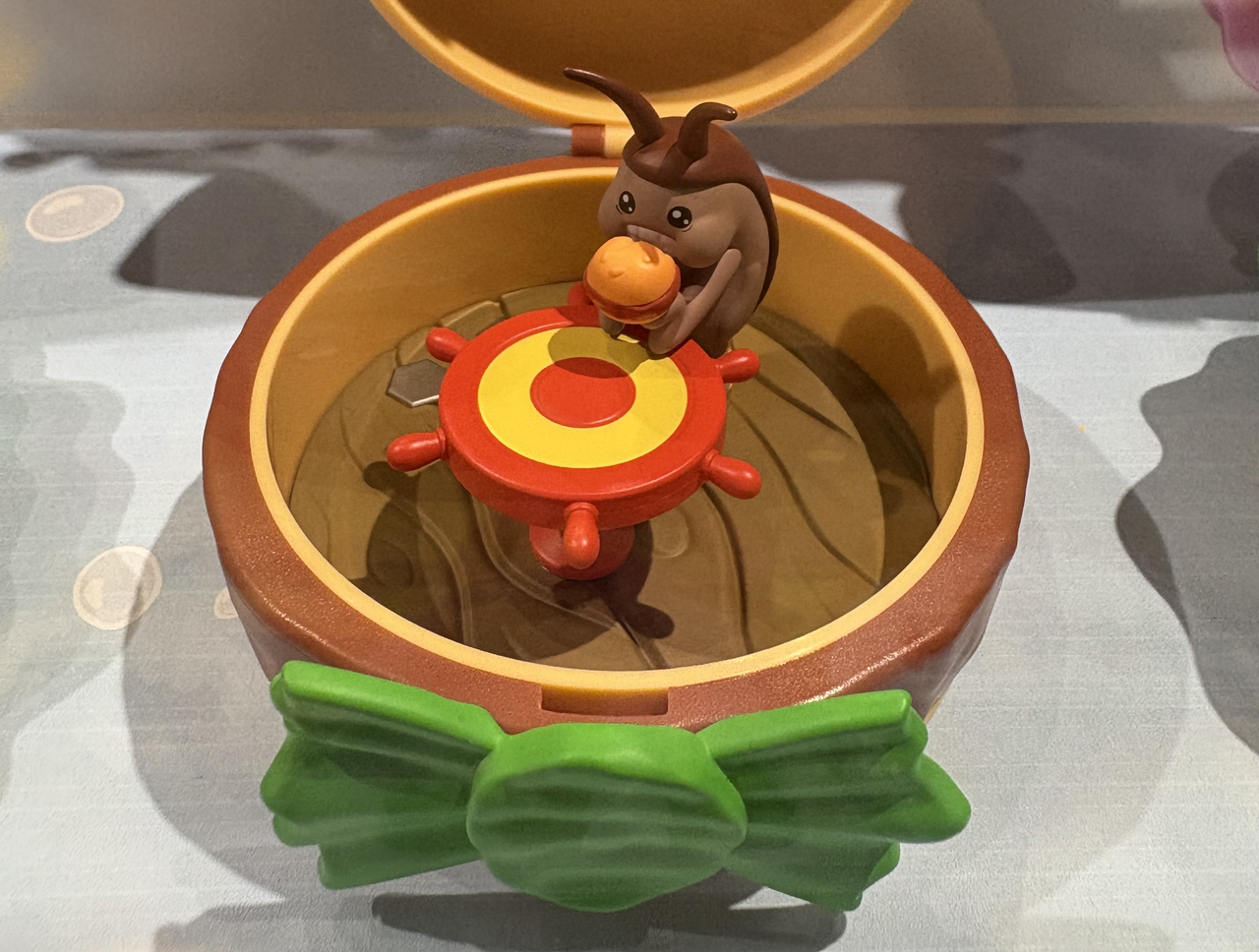
The biggest draw at the Pop Mart store that day was the SpongeBob plush and figure display. Shoppers were particularly hunting for a figure — which went viral on SNS — depicting a cockroach eating a hamburger. At 16,000 won a box, the price was not cheap, yet many customers bought multiple units in hopes of pulling the character they wanted.
"I saw it on SNS and really wanted one, but the figure I'm after just won't come out," said a 29-year-old office worker who gave only her surname. "The process of trying to get the character you want is fun in itself, and filming the unboxing to share with friends has become its own kind of game."
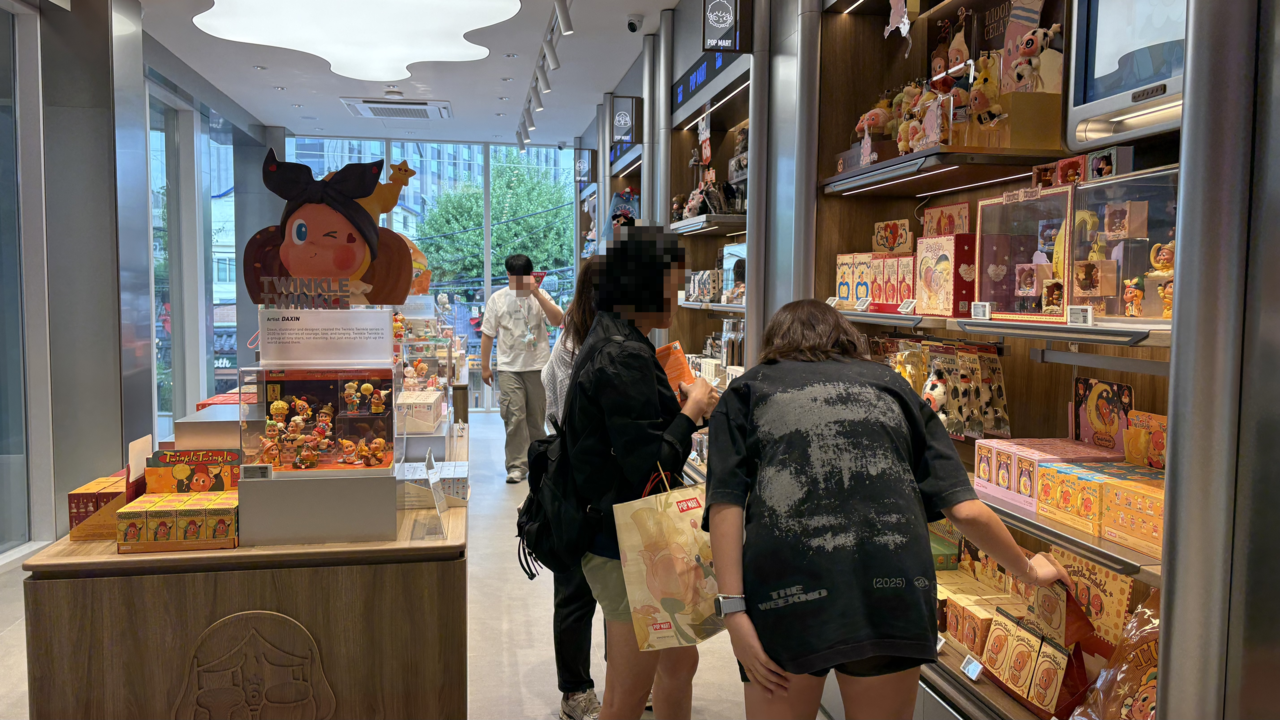
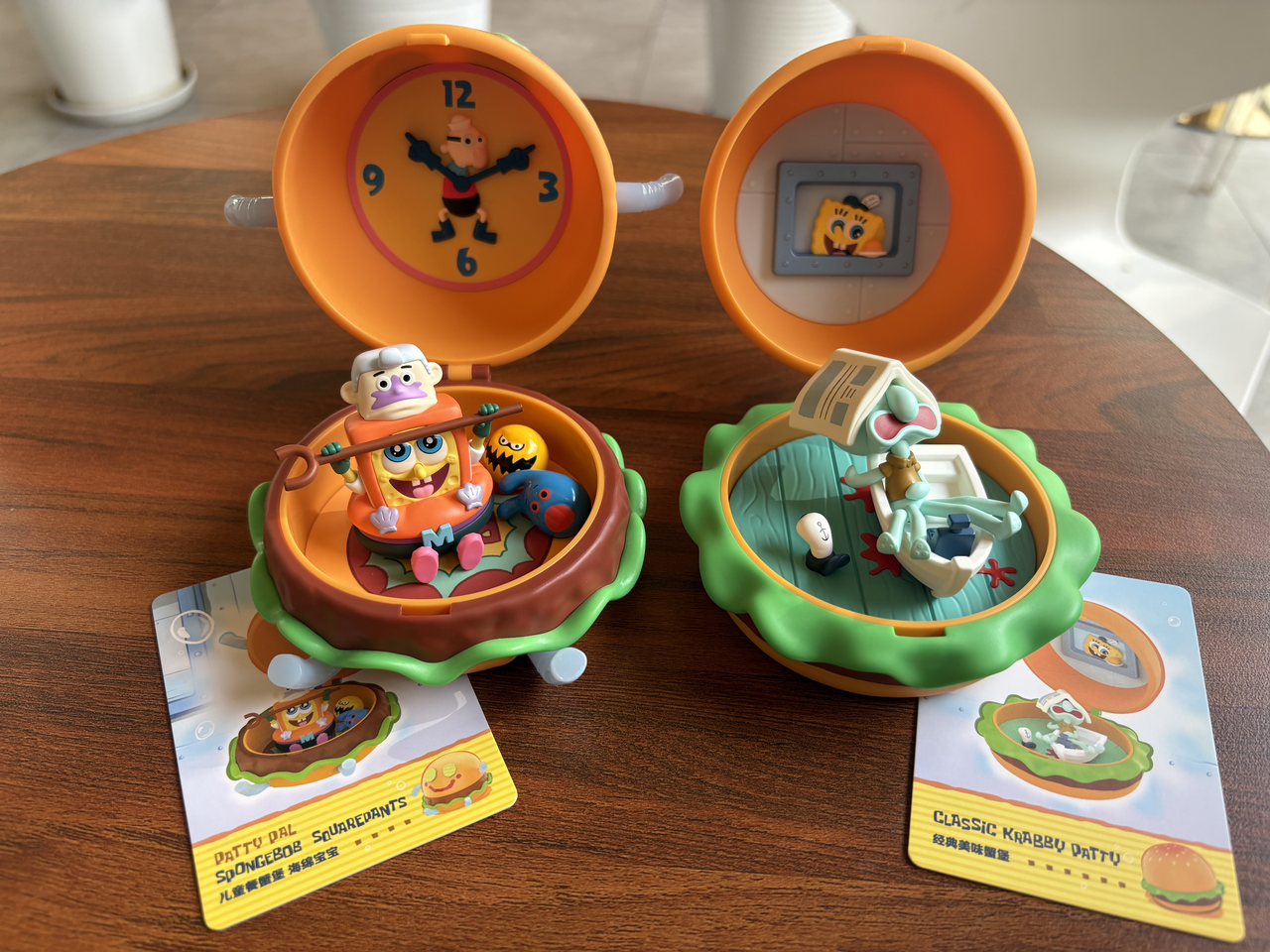
The trend has translated directly into earnings. Riding the Labubu craze, Pop Mart Korea's sales jumped 261.2 percent last year to 125.5 billion won, from 34.4 billion won the year before, while operating profit rose 186.0 percent to 10.3 billion won. The company has moved to broaden its customer base, rolling out a string of global intellectual property collaborations — including Twinkle Twinkle, Toy Story, Demon Slayer and SpongeBob — and opening offline stores at The Hyundai Yeouido, Myeong-dong and iPark Mall Yongsan.
Competition is intensifying. Chinese art-toy brand HERE opened a pop-up store at iPark Mall in Yongsan, Seoul, on July 3, selling its signature character WAKUKU in blind-box format to attract shoppers.
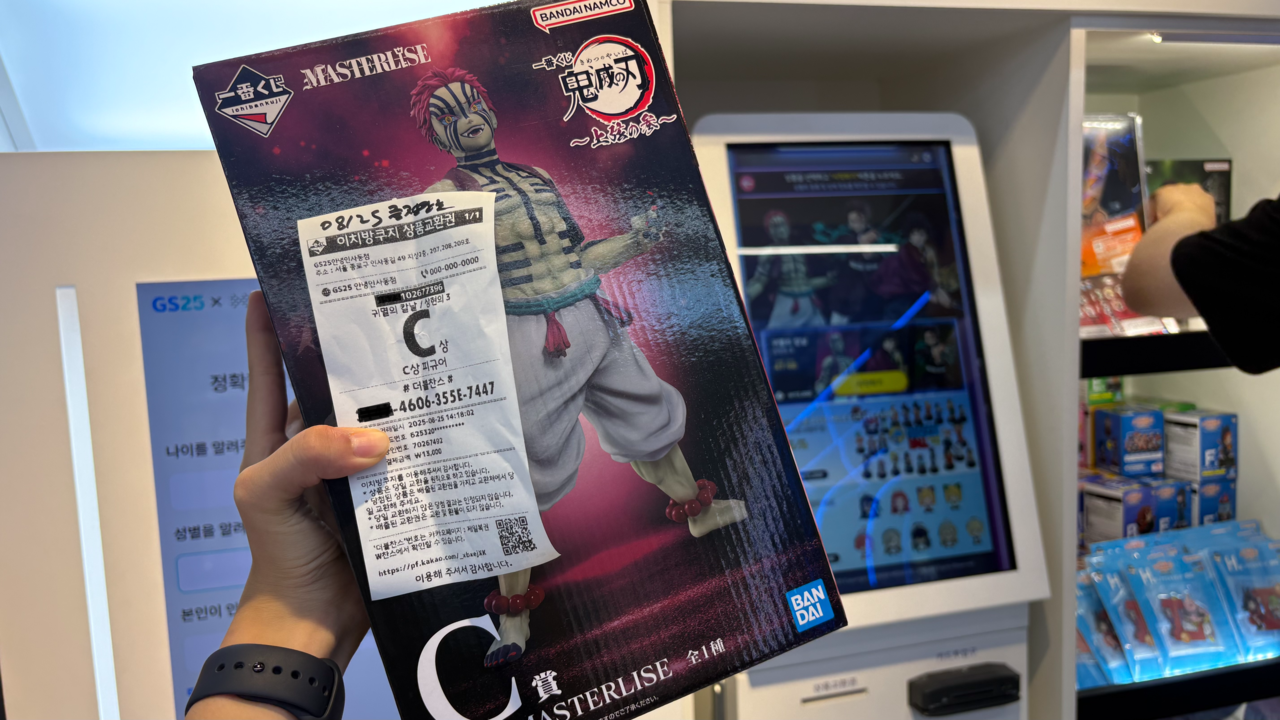
Convenience stores have also jumped on the random-unboxing wave. GS25, buoyed by the success of its Ichiban Kuji lottery kiosks introduced last year, rolled out gacha kiosks at four stores — in Myeong-dong, near Cheonggyecheon, in Hongdae and in Anseong — starting in March. The chain plans to expand to 16 locations this month. Sales from its Ichiban Kuji kiosks rose 45.2 percent in June compared with June last year, when the machines were first introduced.
CU, which first installed gacha machines in February last year, has grown its network to 40 stores. Related sales over the past three months rose 44.2 percent year on year. The chain plans to expand to 100 locations by the end of the year.
Lee Hong-ju, a professor of consumer economics at Sookmyung Women's University, said consumers today care more about how they experience a purchase than what they actually buy. "Random boxes offer an uncontrolled kind of fun — you can't predict the outcome — and the anticipation of not knowing whether you'll get what you want becomes a game in itself," she said. She added that for companies, random products tied to various intellectual properties can serve as an effective marketing tool..
siuu@heraldcorp.com