
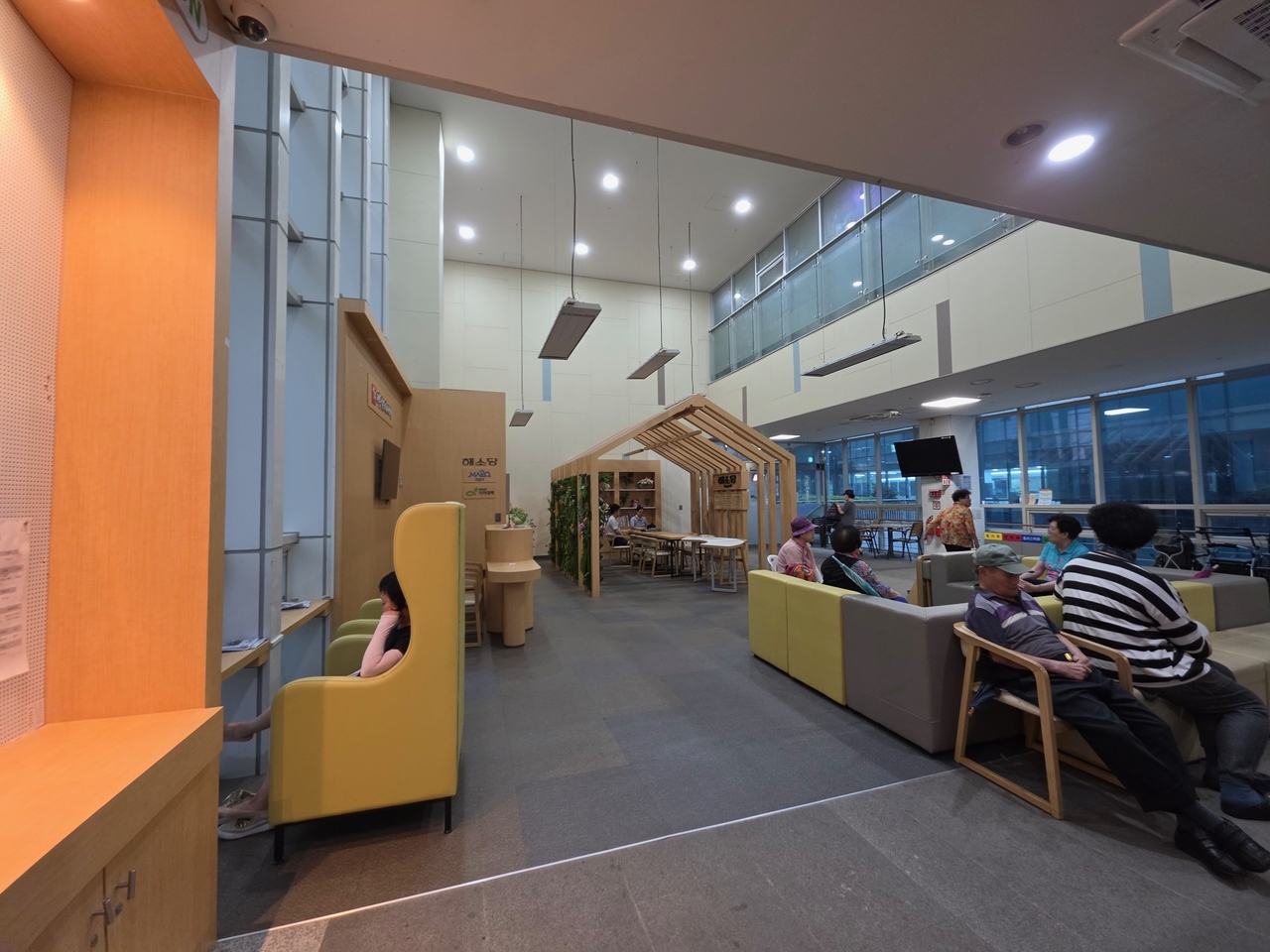
Mapo-gu is stepping up its summer heat response to protect residents' health and safety amid increasingly prolonged heat waves driven by climate change, expanding its network of cooling shelters and shade structures.
The district currently operates 83 general cooling shelters at community centers, senior centers and elderly welfare facilities, and has designated two "safety lodges" — dedicated cooling shelters for low-income, housing-vulnerable residents aged 65 and older — to help prevent heat-related harm.
General cooling shelters are open weekdays from 9 a.m. to 6 p.m., from May 15 through Sept. 30.
When a heat advisory or heat warning is in effect, cooling shelters at dong community centers extend their weekday hours to 10 p.m. and operate from 10 a.m. to 7 p.m. on holidays. When a severe heat alert or tropical-night advisory is issued, weekday hours extend to 10 p.m. and holiday hours run from 10 a.m. to 10 p.m.
Safety lodges operate from 3 p.m. to 11 a.m. the following morning during heat advisories, giving housing-vulnerable residents a safe place to shelter from the heat overnight.
The district also plans to expand cooling shelter access by bringing in public facilities and everyday private venues — including banks, supermarkets and religious institutions — to make shelters more accessible to all residents.
Once new facilities come on board, the Mapo Central Library and the Mapo District Sports Center will also be available as cooling shelters.
The district is installing shade structures at busy crosswalks and intersections to shield pedestrians from intense sunlight and help prevent heat-related illness.
This year, Mapo-gu added 23 smart shade structures and 11 manual shade structures, bringing the totals to 74 smart and 73 manual units now in operation.
From July 1 through Monday, the district worked with the Mapo-gu Voluntary Disaster Prevention Corps to inspect the newly installed structures for defects and operational issues, ensuring residents can use them without inconvenience through the hot summer months.
The district has also relaunched a natural urban shade initiative, using green spaces to lower surface temperatures and create a more comfortable living environment.
On June 25, a pin oak tree was planted on the traffic island at Sinchon Rotary and designated "Urban Shade Tree No. 1."
The planting marks the revival of the shade-tree project first launched during the seventh elected-term administration. Building on "Urban Shade Tree No. 1," the district plans to resume its campaign to plant 5 million trees, steadily expanding natural shade throughout the urban core.
"As heat waves grow more severe every year due to climate change, it is vital that we respond with care to protect residents' daily lives," said Mapo-gu District Mayor Yoo Dong-gyun. "We will do our utmost to consistently expand cooling shelters accessible to everyone — along with shade structures and natural tree shade — so that all residents can enjoy a safe summer."
seouldream01@heraldcorp.com




