
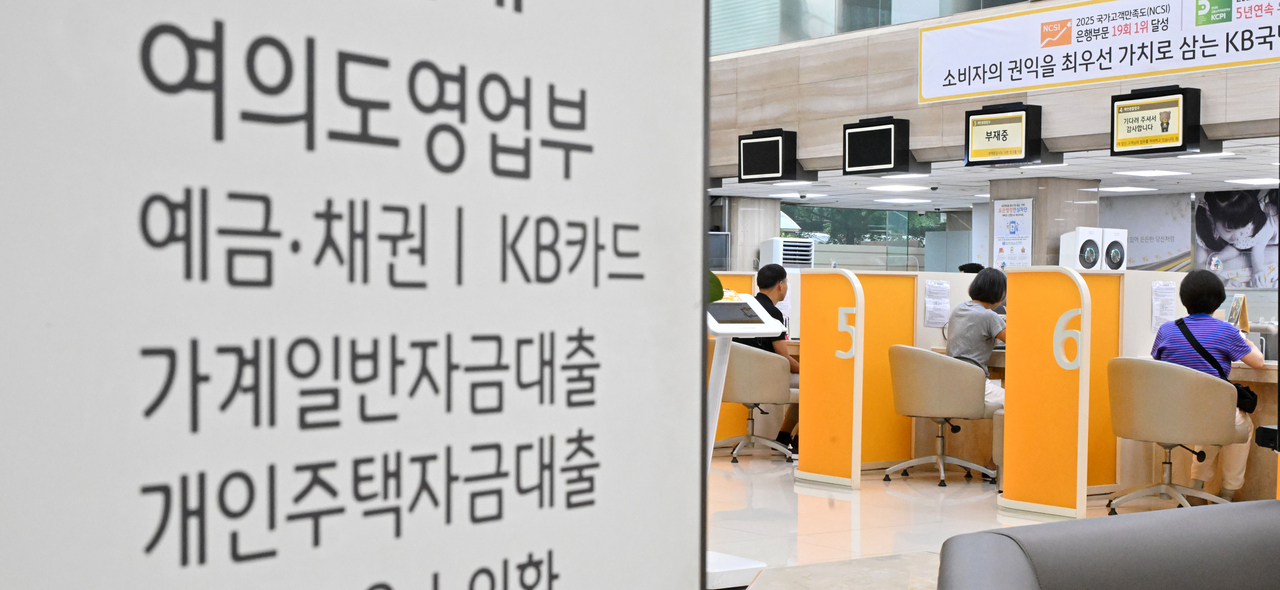
A 0.25-percentage-point rise in mortgage rates would add nearly 300,000 won ($199) in annual interest costs per borrower, according to data submitted to the National Assembly on Wednesday. With the Bank of Korea widely expected to raise its benchmark interest rate as many as twice before year-end, the burden on mortgage holders could grow considerably.
The data, which the Bank of Korea submitted to the office of People Power Party lawmaker Lee Jong-wook, showed that a 0.25-percentage-point increase in mortgage rates would raise total annual interest payments across all borrowers by 1.8 trillion won. The average per-borrower interest burden would climb from 5.84 million won to 6.14 million won — an increase of 296,000 won.
The figures cover all mortgage products from deposit-taking banks, non-bank deposit institutions and other financial institutions, including individual home-backed loans, jeonse loans and group loans.
As of the end of the first quarter, 35.6 percent of mortgage loans at deposit-taking banks carried variable rates, while 64.4 percent were on fixed rates.
Markets expect the Bank of Korea to raise its benchmark interest rate at its monetary policy meeting Thursday, with one additional hike anticipated before year-end. Some analysts project a total of three to four rate increases through next year.
The burden of repaying principal and interest on loans could continue to grow through next year.
Bank of Korea estimates show that a 0.5-percentage-point rate increase would add 3.7 trillion won to mortgage borrowers' annual interest payments, while a 0.75-percentage-point rise would add 5.5 trillion won. Per-borrower annual interest costs would reach an average of 6.43 million won and 6.73 million won, respectively — increases of 592,000 won and 889,000 won from current levels.
Vulnerable borrowers are expected to feel the impact of rising loan rates more acutely than others.
Bank of Korea data show that as of the end of the first quarter, borrowers who hold multiple debts and are either low-income or low-credit carried an average mortgage balance of 135.2 million won per person.
Multiple debtors are defined as borrowers whose combined number of lending institutions and loan products totals three or more — a threshold that in effect signals they have little room to borrow further from financial institutions.
Borrowers who took out loans to invest — a practice known in Korean as "bittoo" — are also facing a heavier load. Interest rates on other loan categories, including general credit loans, revolving credit lines and savings-backed loans, are expected to rise alongside mortgage rates.
The Bank of Korea estimates that a 0.25-percentage-point increase in rates would raise annual interest on such other loans by 1.5 trillion won, or an average of 76,000 won per borrower. A 0.5-percentage-point rise would add 3 trillion won in interest, and a 0.75-percentage-point rise would add 4.5 trillion won, translating to per-borrower increases of 153,000 won and 229,000 won, respectively.
kimstar@heraldcorp.com




