South Korea's minimum wage for next year has been set at 10,700 won ($7) per hour, a 3.7 percent increase from this year. The Korea Enterprises Federation said the decision is expected to deepen hardships for small business owners and will likely have a negative impact on jobs for vulnerable groups.
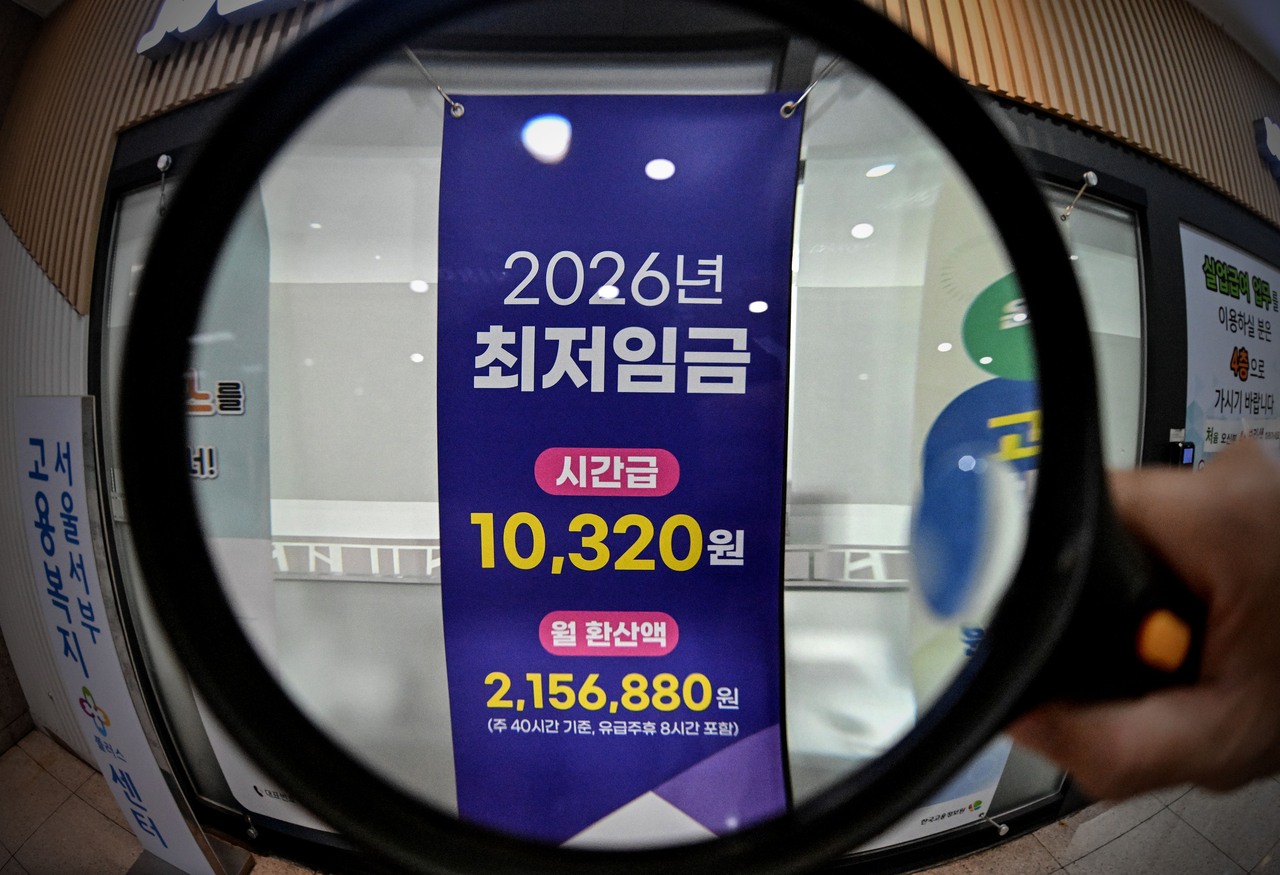
The federation released a statement Wednesday titled "Comment on the 2027 Minimum Wage Decision." Next year's minimum wage of 10,700 won represents a 380-won increase from this year's rate of 10,320 won per hour.
"Small merchants and self-employed business owners are already suffering a double burden of sluggish sales and rising costs, as consumer sentiment has weakened and domestic demand recovery has stalled amid compounding crises including a high exchange rate and high inflation," the federation said.
The federation said it was disappointed that the 2027 minimum wage was set at 10,700 won — exceeding last year's rate of increase of 2.9 percent — despite small business owners having hoped for a freeze. It added it was particularly regrettable that a differentiated minimum wage for sectors such as accommodation and food service, where the capacity to pay has already reached its limit, was not adopted.
The federation said the decision is expected to worsen conditions for small businesses and the self-employed, and expressed concern that it would also negatively affect jobs for vulnerable groups — including young workers and low-income earners — who are most directly exposed to the minimum wage.
It called for the institutionalization of sector-based differentiation in future minimum wage decisions, and said it hopes the system will be reformed to give priority to employers' ability to pay and productivity in the decision-making process.
Earlier in the negotiations, labor had initially demanded 12,000 won per hour — a 16.3 percent increase from this year — while management proposed a freeze at 10,320 won. After 12 rounds of revised proposals, the two sides narrowed the gap to 130 won, with workers' representatives settling on a final offer of 10,730 won and employers on 10,700 won. The employers' proposal prevailed in a vote, receiving 15 votes against 11 for the workers' proposal, with one invalid ballot.
Ryu Gi-seop, secretary-general of the Federation of Korean Trade Unions, criticized the outcome. "Given recent price levels and the rising cost of living, a 3.7 percent increase is in effect close to a freeze and falls far short of restoring the minimum wage's function as a living guarantee," he said.
Ryu Gi-jeong, executive managing director of the Korea Enterprises Federation, said self-employed workers and small business owners are going through an extremely difficult time. "A 3.7 percent increase is already too high, but we proposed it out of consideration for the hardships faced by the worker representatives," he said.
go@heraldcorp.com