Ecopro Group said Sunday that its investment in an Indonesian nickel smelter is expected to secure enough nickel to produce about 1.5 million electric vehicles — a volume approaching total domestic South Korean auto sales across both electric and combustion-engine vehicles. The group said it aims to use the investment to help build South Korea's electric vehicle ecosystem and strengthen the country's resource sovereignty.
Ecopro BM held investor relations sessions for domestic and foreign institutional investors from July 3 to 10, presenting an overview of its ongoing rights offering, the rationale behind it, and specific plans for how the proceeds will be used.
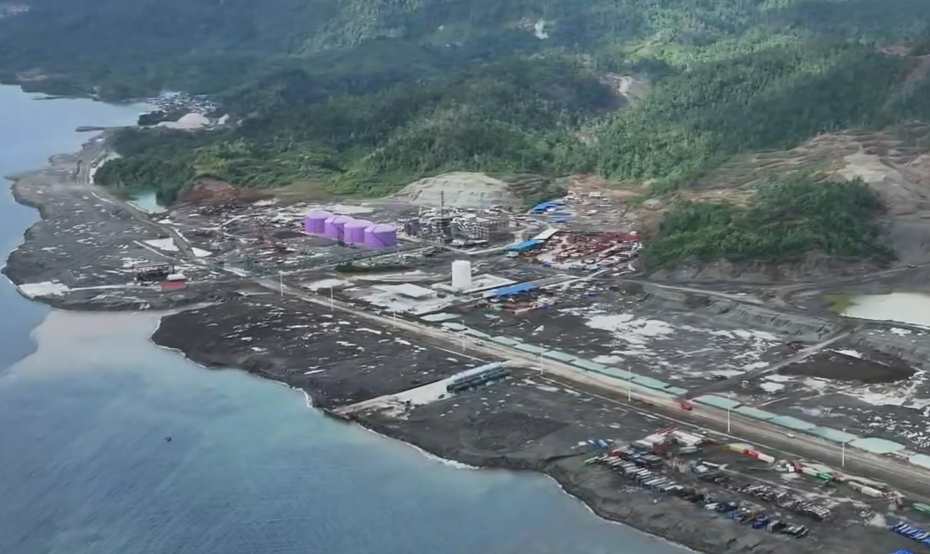
With the Indonesian government restricting new nickel smelter permits, Ecopro BM plans to use the rights offering to acquire a stake in the Bahodopi Nickel Smelting Indonesia (BNSI) smelter, maximizing its ability to navigate overseas regulatory constraints. Nickel produced at the BNSI smelter qualifies as a non-prohibited foreign entity (Non-PFE) raw material under the Foreign Entity of Concern (FEOC) guidelines.
Ecopro Group is expanding its nickel supply chain through its second-phase investment in the BNSI smelter, following its first-phase investment in the Indonesia Morowali Industrial Park (IMIP). The BNSI smelter, under construction in Sulawesi, Indonesia, is a joint venture with global partners including Indonesian state mining company PT Vale Indonesia (PTVI), with Ecopro Group serving as the majority shareholder and leading the project.
Over the past four years, Ecopro Group invested about 800 billion won ($532 million) in the first phase to secure 29,000 tons of nickel annually. The second-phase investment of 1.5 trillion won will add another 36,000 tons per year, bringing the group's total nickel supply rights to 65,000 tons annually — enough to produce about 1.5 million electric vehicles.
"Investment in nickel, a strategic mineral, is expected to play a positive role not only in enhancing the competitiveness of Ecopro BM and other affiliates, but also in easing global supply chain risks and strengthening the value chain needed to secure the competitiveness of South Korea's battery and electric vehicle industries," a group official said.
Ecopro Group is also using its cathode material factory in Debrecen, Hungary — linked to its Indonesian nickel supply chain — to strengthen its ability to meet regulatory requirements such as the EU's Critical Raw Materials Act (CRMA) and the EU-UK Trade and Cooperation Agreement (TCA). European automakers and global cell manufacturers have been exploring supply arrangements with the company.
The Ecopro BM factory in Debrecen, which began commercial production in May, is designed to proactively meet European regulatory requirements and has an annual production capacity of 54,000 tons.
Ecopro BM CEO Choi Moon-ho recently visited Hungary to meet with European automotive original equipment manufacturers and inspect production readiness at the Hungarian factory.
"The global battery industry has entered an era where resource security and the ability to navigate trade regulations determine a company's survival," Choi said. "We will secure leadership in the global nickel-manganese-cobalt battery market through the organic combination of Indonesian nickel raw materials — which fully satisfy US and European regulations — and our Hungarian production base."
Meanwhile, Ecopro BM is scheduled to hold a shareholder briefing for general shareholders on Thursday. The company plans to directly explain the rationale for the rights offering, its goal of achieving self-sufficiency in the Indonesian nickel supply chain, and the specific plans for how the funds will be used.
Ecopro BM also marked its 10th anniversary on Sunday, sharing with employees through its internal communications channel the investment and technological innovation achievements it has built alongside the capital markets. The company cited four drivers of its growth over the past decade — proactive infrastructure investment, technological innovation, capital market trust and expansion of global production capacity — and said it would "accelerate investment in the nickel smelter based on this rights offering to raise the competitiveness of our cathode materials."
likehyo85@heraldcorp.com