
Guide outlines basic principles and step-by-step precautions for AI-assisted design filings, offering practical reference for businesses and designers
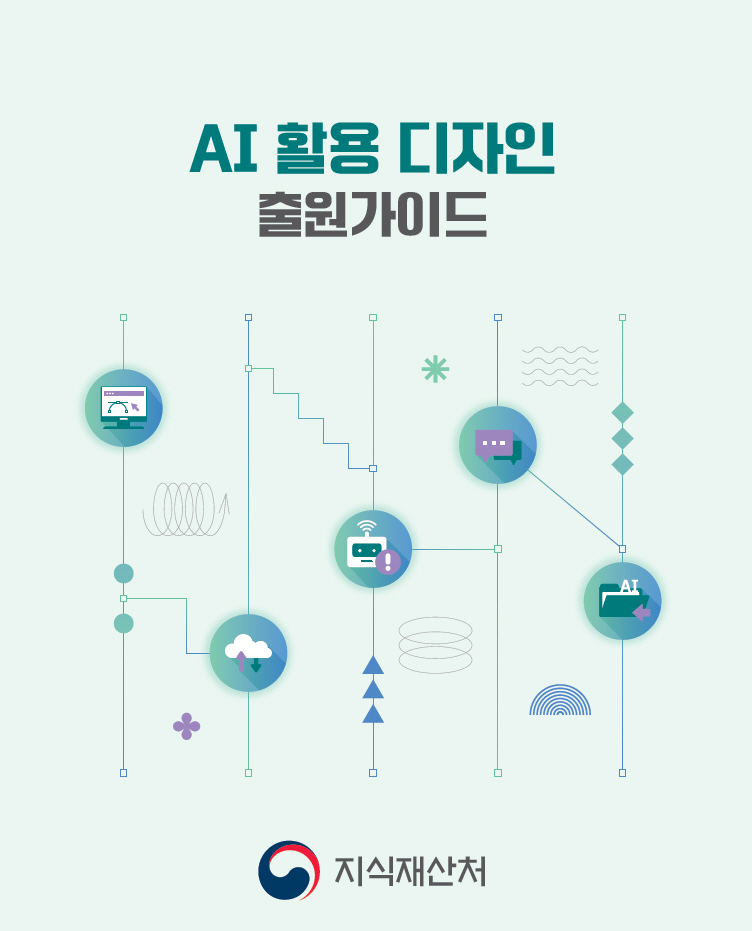
A new set of guidelines has been established laying out the basic principles and key precautions for filing design applications created with the help of AI.
The Korean Intellectual Property Office released the "Filing Guide for Designs Created Using AI" on Thursday to help applicants navigate the process of registering AI-assisted designs.
The guide draws on trends in major countries and input from practitioners in the design field. It focuses on clarifying whether AI-assisted designs are eligible for registration and on informing applicants of what to watch out for at each stage — creation, filing and examination.
AI-assisted designs can be registered if they meet the requirements
Designs created with AI assistance are eligible for registration under the Design Protection Act if they satisfy the standard requirements — novelty, non-obviousness (designs that can be easily created from publicly known designs or well-known forms are excluded from registration), and industrial applicability. However, if the design description states that AI was involved in the creation, the person listed as the creator must have made a substantive contribution.
For example, a substantive human contribution is recognized when the applicant provides specific prompts that influence the dominant aesthetic of the design — such as shape, proportion, composition or color — and then refines the output. By contrast, entering only a broad, generic prompt such as "create a chair design" and submitting the AI-generated result without any modification, reorganization, editing or supplementation would not be considered a substantive human contribution.
At the creation stage: manage input data security, document the creative process, and check for prior designs
Applicants should pay close attention to data security. Design drafts, product images and other materials entered during AI use may be incorporated into the AI service's training data and exposed publicly, which could result in the loss of the design's novelty.
It is also advisable to keep records of the creative process — including the original creative intent, the AI model used, prompt logs (a record of the questions and instructions submitted to the AI and the responses generated), and any selection, modification or reorganization steps — in case it becomes necessary to demonstrate the creator's eligibility or substantive contribution.
In addition, because AI can generate outputs identical or similar to designs that have already been disclosed, filed or registered, applicants should search for prior designs before filing to confirm that no identical or similar design exists.
At the filing stage: pay attention to how the creator and applicant are listed, and whether the drawings are suitable for filing
Only a natural person may be listed in the "creator" field of an application, while either a natural person or a legal entity may be listed as the "applicant." The name of an AI model must not be entered in either field. However, if a person is listed as the creator despite having made no substantive contribution and a design registration is obtained on that basis, the registration may be invalidated if the fact is later discovered.
AI-generated images may include perspective effects, lighting and background elements, or show inconsistencies in shape and proportion across drawings. Rather than submitting such images as-is, applicants should modify and adjust the lines, surfaces, proportions and composition to produce drawings suitable for filing.
At the examination stage: human contribution, drawing consistency and novelty are assessed together
During examination, if there is doubt about whether a substantive human contribution was made to the creation of the applied design, the examiner may request supporting materials such as records of the creative process or a creator confirmation statement. If the applicant cannot demonstrate a substantive human contribution, the design application may be rejected.
If the overall shape or proportions across drawings are inconsistent, the application may be found to fail the industrial applicability requirement. If a design draft or other material created with AI assistance has been publicly disclosed, the application may also be rejected for lack of novelty.
Nam Young-taek, director general of the Trademark and Design Examination Bureau at the Korean Intellectual Property Office, said the guide was prepared to support the smooth filing and protection of AI-assisted designs as their use becomes more widespread. "We will continue to monitor trends in major countries and advances in AI technology, and work to develop timely design policies that keep pace with a changing environment," he said.
The "Filing Guide for Designs Created Using AI" is available to the public on the Korean Intellectual Property Office's website.
kwonhl@heraldcorp.com



