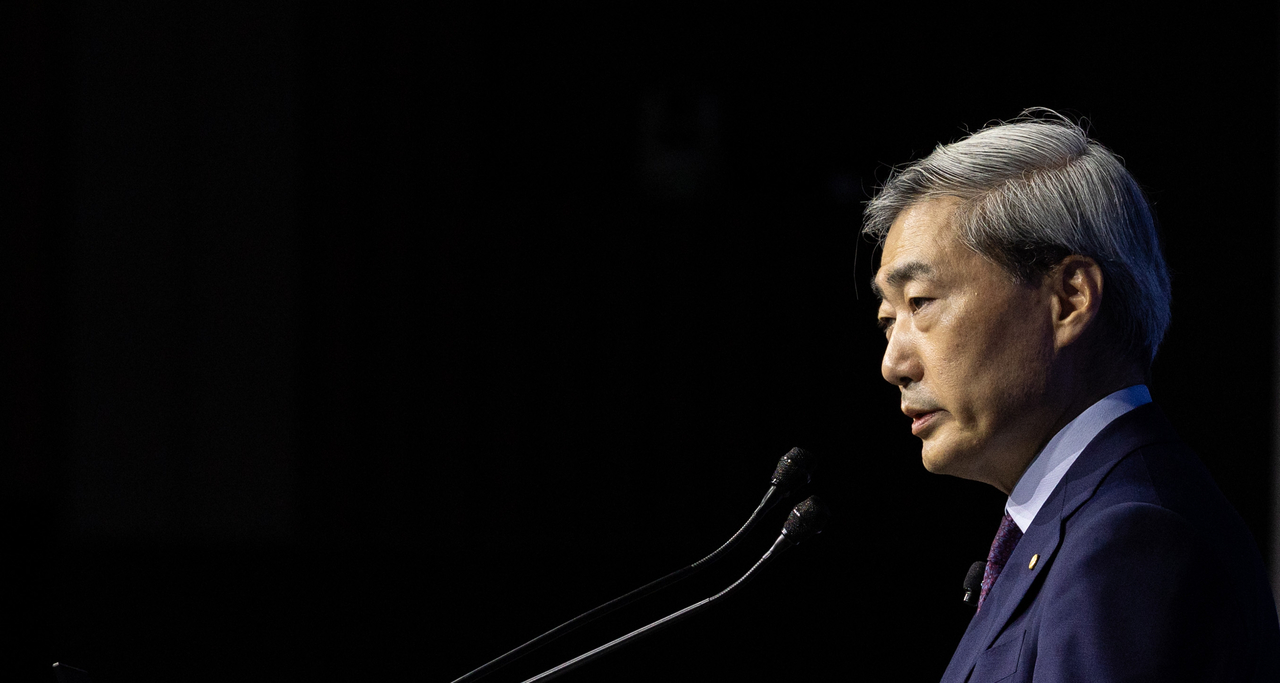
Bank of Korea Gov. Shin Hyun-song has again called for a benchmark interest rate hike, one week before the Monetary Policy Board convenes to set policy direction. With upside pressures on the economy growing and inflation expected to remain elevated for an extended period, the central bank's tightening stance is becoming increasingly pronounced.
Speaking at a briefing before the National Assembly's Finance and Economy Planning Committee on Thursday morning, Shin said South Korea's economy had expanded on the back of strong semiconductor exports driven by the global spread of AI, adding that improvements in the terms of trade from rising semiconductor prices had significantly lifted nominal GDP growth. "The semiconductor cycle is expected to remain favorable and Middle East tensions to ease, supporting continued solid growth going forward," he said.
On consumer prices, Shin said the pace of increase had accelerated sharply in the first half of the year due to rising international oil prices. He projected that inflation would remain elevated for a considerable period, as the pass-through of higher costs accumulated to date would continue for now and demand-side pressures build — even as Middle East tensions ease.
Uncertainty in financial and foreign exchange markets has also grown. Shin said volatility in key price variables had widened as external uncertainty increased. He noted that the won-dollar exchange rate had been fluctuating at elevated levels in the mid-to-upper 1,500 won range, despite a large current account surplus, as foreigners continued net selling of domestic equities and the US dollar remained strong.
The monthly average exchange rate last month stood at 1,528 won — the highest since the foreign exchange crisis — extending a two-month rising streak from April's 1,485 won. The rate is currently subject to both upward and downward pressure, with demand for the won expanding through factors such as SK hynix's listing of American depositary receipts in the United States, while geopolitical tensions weigh on the other side.
On Wednesday, the won closed the regular trading session — measured at 3:30 p.m. — at 1,498.5 won per dollar on the Seoul foreign exchange market, down 29.7 won from the previous session. It was the first time the won had closed the regular session below 1,500 won since May 14, when it ended at 1,491 won, a gap of 37 trading days. The won then surged again as tensions between the United States and Iran escalated. On Thursday morning, the rate touched 1,507.5 won around 6:34 a.m. before gradually retreating to 1,496.8 won around 9:16 a.m. As of 9:20 a.m., it was trading slightly higher at around 1,499 won.
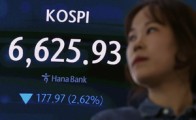
On the stock market, Shin said share prices had climbed sharply, supported by strong earnings across major industries and improvements to capital market regulations, but had recently pulled back somewhat as foreign investors expanded selling for profit-taking and portfolio rebalancing. He added that yields on government bonds had risen considerably on concerns about domestic and overseas inflation and shifting expectations for monetary policy, before paring some of those gains to reflect falling international oil prices following the US-Iran ceasefire agreement.
On the financial system, Shin said it had remained broadly stable, supported by expanding growth in the real economy and the sound resilience of financial institutions despite high external uncertainty. He cautioned, however, that elevated volatility in financial and foreign exchange markets, along with renewed acceleration in housing prices in the Greater Seoul area, posed latent risks of growing financial imbalances.
Shin then reiterated the case for a rate hike. "The Bank of Korea has kept the benchmark interest rate at 2.5 percent since July last year, but in terms of future monetary policy operations, we judge that it will be necessary to raise the benchmark interest rate at an appropriate time, taking into account inflation running above target, improving growth momentum and heightened financial stability risks," he said.
Shin first raised the prospect of a rate hike at the Monetary Policy Board meeting in late May and has since signaled a tightening bias on multiple public occasions. Thursday's remarks came one week before the July 16 policy meeting, and markets widely expect the board to raise rates at that meeting.
Shin also stressed the need for institutional reforms to stabilize financial and foreign exchange markets, including the launch of round-the-clock foreign exchange market trading. "The Bank of Korea has actively worked to stabilize financial and foreign exchange markets in coordination with the government amid high domestic and external uncertainty, and is pursuing various institutional improvements to respond effectively to changes in the financial and economic environment," he said. He added that the central bank had begun operating the foreign exchange market 24 hours a day this week to improve access to South Korea's foreign exchange and capital markets, and that work to build an offshore won settlement system was also proceeding on schedule.
He further noted that the Bank of Korea had extended interest payments on excess foreign currency reserve requirements in June to support foreign exchange market stability and improve supply-demand conditions, and that foreign exchange swap operations with the national pension fund were also underway.
Shin said the central bank was also working on multiple fronts to build a more stable and efficient digital payment ecosystem in response to the accelerating digital transformation of finance and the economy. He added that the Bank of Korea was continuing in-depth research into structural challenges — including the low birth rate, aging, balanced regional development and climate change — to help raise the economy's growth potential, and was working to propose policy alternatives from a neutral, long-term perspective.
Meanwhile, in its written briefing submitted to the committee, the Bank of Korea said upward revisions to chipmakers' operating profit forecasts were continuing and the government was working to improve capital market regulations, adding that the possibility of a sustained downward trend in domestic share prices was limited.
On recent Kospi movements, the central bank said share prices had swung sharply since May as foreign profit-taking and mid-year portfolio rebalancing added to downward pressure. It projected that share prices could remain highly volatile going forward, influenced by concerns over the AI industry, monetary policy stances in major economies and shifts in global capital flows. On a more positive note, it forecast that the global semiconductor cycle would continue to expand for a considerable period, driven by the broadening use of AI and growing investment in related infrastructure.
The Bank of Korea flagged downside risks, however, including a financial market correction stemming from concerns about AI profitability, a pullback in big tech's physical investment and energy bottlenecks.
The central bank also laid out its position on stablecoins, saying they should be introduced with consideration not only for their industrial applications but also for their macroeconomic implications — including monetary and foreign exchange policy and financial stability — as well as their potential risks. It said that when legislation for won-denominated stablecoins is drafted, it would be important to put in place safeguards such as giving priority issuance rights to a banking-sector-led consortium and establishing a statutory policy body among relevant authorities.
kimstar@heraldcorp.com