The Seoul High Court has issued the first ruling recognizing delivery riders as employees under the Labor Standards Act, while the government separately reviews plans to extend retirement pension support to special-type and platform workers such as delivery drivers.
With the judiciary acknowledging the employee status of platform workers and the government moving to broaden the social safety net, efforts to bring platform workers into the formal labor system are gaining momentum.
The Seoul High Court's 38th-1 Civil Division ruled Friday in favor of plaintiffs in an appeal filed by members of the Riders Union over wrongful dismissal and unpaid wages. The court found that delivery riders who work while connected to a platform application and perform their duties under the direction and supervision of the company must be recognized as employees under the Labor Standards Act.
The court said the Labor Standards Act must be interpreted to reflect the realities of platform work. It cited as grounds for recognizing employee status the fact that riders do not independently secure customers but accept orders solely through the platform app, and that delivery fee calculations, payment terms, vehicle dispatch and other aspects of work are carried out under standards and controls set by the company.
The ruling makes clear that platform companies cannot easily evade responsibility under labor law by pointing to the form of their contracts. It is expected to influence future debates over the scope of labor law protections, including social insurance, severance pay and annual leave.
Amid the ruling, the government is reviewing plans to extend fiscal support under "Pureunssiaat," the small and medium-sized enterprise retirement pension fund system, to special-type workers and freelancers such as delivery drivers, insurance agents and designated driver service operators.
Currently, when employees at small and medium-sized enterprises earning up to 2.81 million won ($1,840) per month enroll in Pureunssiaat, the government adds an amount equal to 10 percent of the employer's contributions to the worker's retirement pension account. The government is now discussing extending that support to special-type and freelance workers, who became eligible to open individual retirement pension accounts this month.
Pureunssiaat is a fund-type retirement pension system operated by the Korea Workers' Compensation and Welfare Service. As of the end of last month, 42,243 workplaces and 190,000 workers had enrolled. The fund stood at 1.91 trillion won, with a return of 8.67 percent last year.
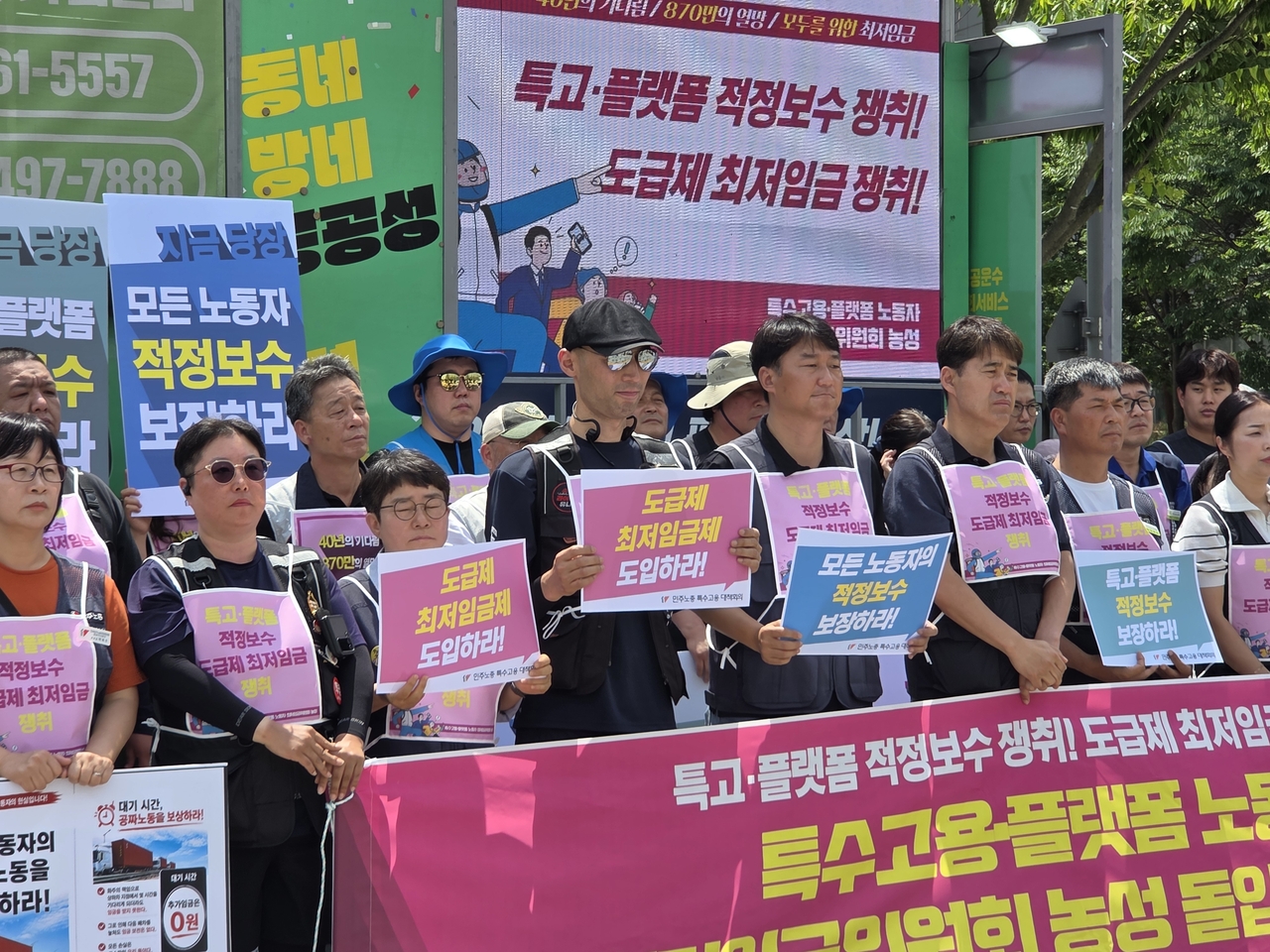
Labor groups said the ruling should accelerate both the expansion of the social safety net and revisions to labor law. The Korean Public Service and Transport Workers' Union said the decision was "the first case recognizing delivery riders as employees under the Labor Standards Act" and called on platform companies to "fulfill their obligations as employers, including social insurance and severance pay."
The government's review of expanded pension support and the court's recognition of employee status take different approaches — one through social protection, the other through labor law — but both reflect a broader push to bring platform workers, long excluded from formal protections, into the established system.
However, debates over the scope of employee recognition, the cost burden on platform companies and the legal status of special-type workers are expected to continue.
fact0514@heraldcorp.com