Prosecutors indicted all four of South Korea's major oil refiners — SK Energy, HD Hyundai Oilbank, GS Caltex and S-Oil — on charges of violating the Monopoly Regulation and Fair Trade Act, alleging they colluded to manipulate fuel prices. The price spike that followed the outbreak of the US-Iran war was driven by a secret agreement between HD Hyundai Oilbank and SK Energy, prosecutors said, adding that the companies also engaged in gapjil, or abusive business practices, against gas station operators.
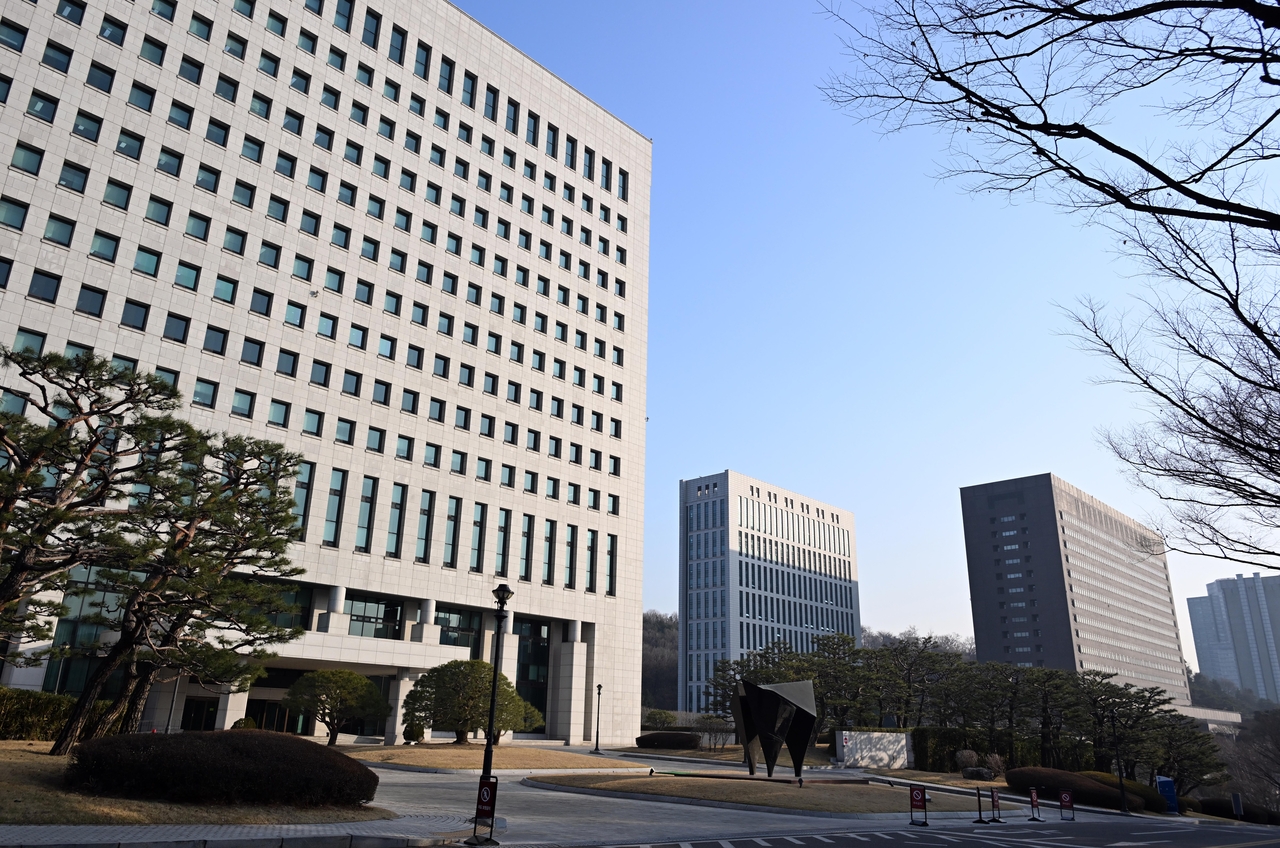
Na Hee-seok, head of the fair trade investigation division at the Seoul Central District Prosecutors' Office, said Monday at the Seoul High Prosecutors' Office in Seocho-gu that investigators detected abnormal price-manipulation activity in the immediate aftermath of the US-Iran war and launched a probe into the refiners' pricing structures. Eight people in total were indicted, including one pricing division head who was taken into custody, Na said.
The office indicted HD Hyundai Oilbank's pricing division head, identified only as A, in detention, and charged two other executives — a senior manager identified as B and a legal affairs executive vice president identified as C — without detention. C also faces charges of destroying evidence. GS Caltex's domestic sales division head, identified as D, was also indicted without detention on fair trade law violations.
Prosecutors said the price surge that followed the outbreak of the US-Iran war resulted from a backroom agreement between HD Hyundai Oilbank and SK Energy, amounting to a cartel worth approximately 14.2 trillion won ($9.22 billion). Under the arrangement, SK Energy agreed to raise prices roughly 30 to 40 won per liter higher than HD Hyundai Oilbank, with GS Caltex and S-Oil then following the colluded price, prosecutors said.
According to prosecutors, HD Hyundai Oilbank and SK Energy had been sharing invoice price information with each other since around July 2024, setting prices at a fixed interval to consolidate their respective market positions. Individual A had worked at SK Energy as a pricing information officer before moving to HD Hyundai Oilbank last August, and prosecutors believe A led the agreement to spike prices immediately after the war broke out.
Criminal charges related to the war-triggered price collusion were filed only against HD Hyundai Oilbank and SK Energy. While GS Caltex and S-Oil engaged in what prosecutors described as "conscious parallel conduct" that distorted competitive order, their behavior did not meet the threshold for criminal punishment under the fair trade law, and they were not indicted on those specific allegations. When the conscious parallel conduct of GS Caltex and S-Oil is factored in, however, the total scale of the collusion rises to 26 trillion won.
Prosecutors also found that all four refiners had required independent gas station operators to sign exclusive purchase contracts, under which stations were obligated to buy their entire petroleum supply from a single refiner while the refiner unilaterally set the supply price after the fact. Gas stations had no way of knowing the exact product price in advance and were left entirely dependent on whatever price the refiner chose to impose, prosecutors said.
A 2009 corrective order by the Korea Fair Trade Commission and a 2013 Supreme Court ruling had already established that exclusive purchase contracts signed against the will of gas station operators were prohibited, yet the refiners continued to enforce such contracts up to the present, prosecutors said. Gas station owners had little choice but to comply, fearing costly damages suits from the refiners, according to prosecutors.
"When we interviewed officials from the Korea Petroleum Association as witnesses, we heard that 'the refiners have a king-like structure' and that 'price competitiveness has been lost,'" Na said. "We had already made clear that refiners must not coerce operators or impose disadvantages to prevent them from handling competing products — yet this has been happening all along."
Prosecutors said C had learned in advance of a Fair Trade Commission on-site inspection and ordered the deletion of all computer records containing competitors' pricing information, and that by the time of both the commission's inspection and a subsequent prosecutorial search and seizure, a significant volume of evidence had already been lost. D was also found to have learned of the inspection in advance and ordered the deletion of internal messenger conversations.
The government introduced a petroleum price ceiling system in March in response to the fallout from the US-Iran war, aiming to stabilize consumer prices. Under the system, the minister of trade, industry and energy sets an upper — or lower — limit on petroleum product sale prices to moderate price swings, with the government able to provide fiscal support when losses arise. The refining industry has argued that the Singapore international petroleum product price, known as MOPS, should serve as the benchmark.
Prosecutors said the four refiners' claim that the government's cost-based loss compensation standard fails to reflect the structural characteristics of the industry was not appropriate, and that they had submitted supporting evidence to the Ministry of Trade, Industry and Energy. "The refining industry says it is difficult to calculate costs on an accounting basis and therefore the government's standard is wrong — but the materials we obtained confirm that each company does in fact recognize and manage manufacturing costs for individual products in its accounting," Na said.
bell@heraldcorp.com