
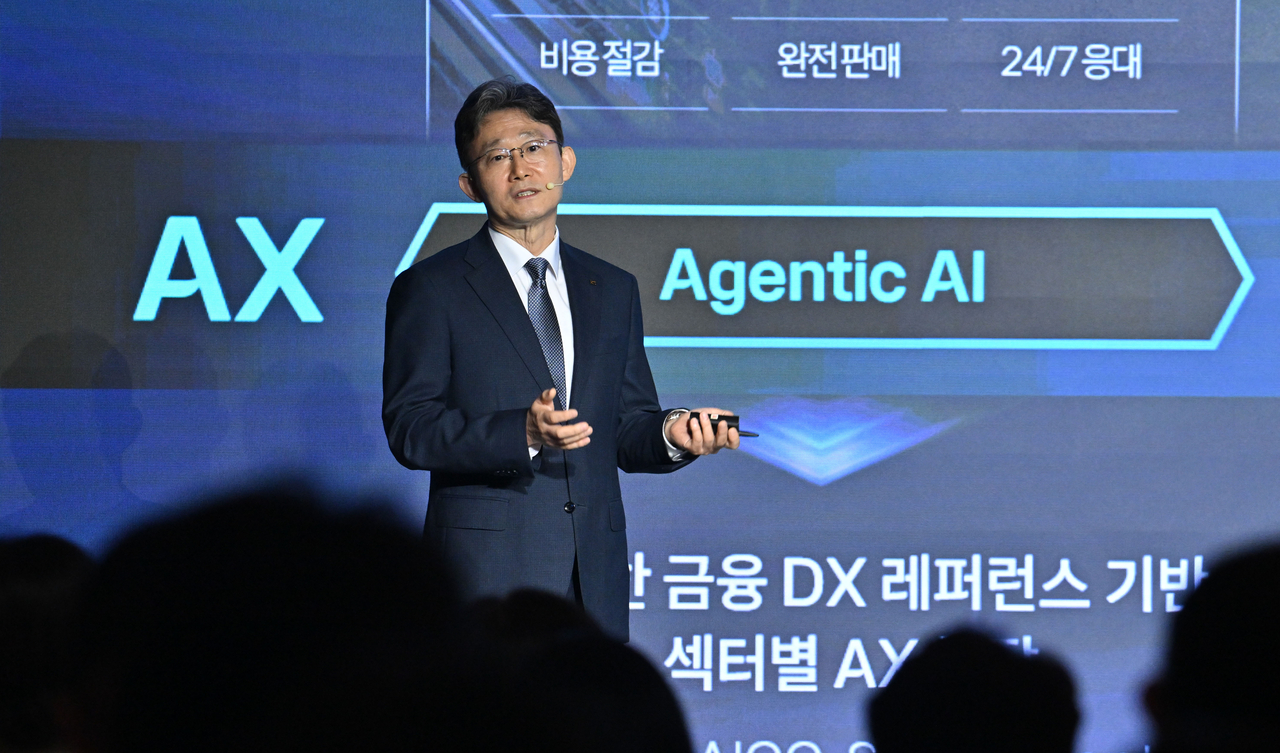
KT Corp CEO Park Yun-young has announced plans to invest 12 trillion won ($7.79 billion) in telecommunications and 6 trillion won in AI infrastructure as the company pursues its transformation into an AX, or AI transformation, platform company.
In the telecom segment, Park pledged to restore customer trust lost last year following lapses in femtocell management and a personal data breach, and to reinforce the company's role as a national backbone telecommunications provider. He also vowed to build out AI data center and submarine cable infrastructure to position KT Corp as Asia's central hub for AI transformation connectivity.
Park made the announcement Monday at his first press briefing since taking office — held to mark his 100th day as CEO — at Pullman Ambassador Seoul East Fall in Gwangjin-gu, Seoul. "We will solidify the essence of telecommunications and lead South Korea's rise as an AX powerhouse," he said.
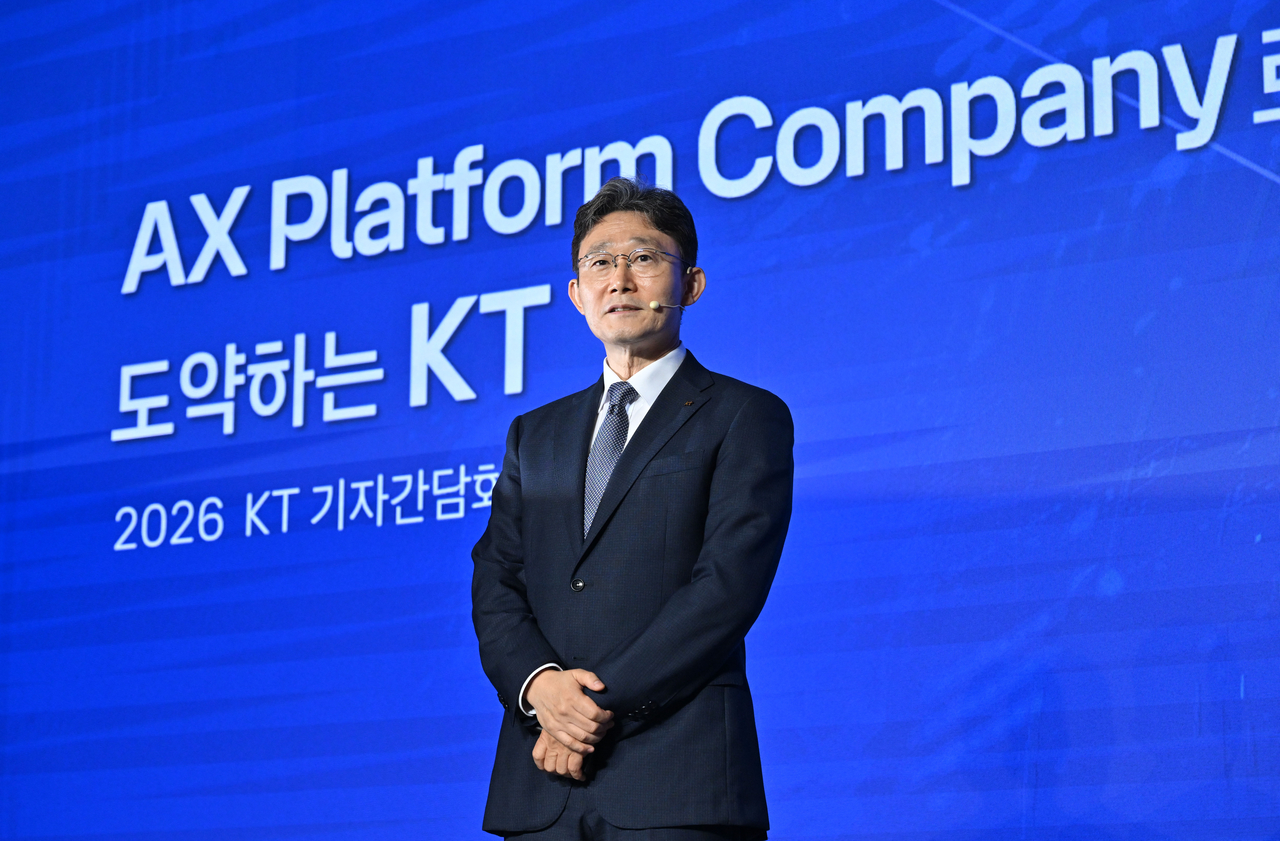
Park said KT Corp will invest approximately 12 trillion won over three years in information security, IT and network infrastructure to strengthen its core telecom competitiveness and its role as a national backbone carrier — allocating 4 trillion won to information security and IT, and 8 trillion won to the network.
To rebuild customer trust eroded by last year's femtocell mismanagement and data breach, the company will redefine its enterprise-wide security framework under a zero-trust principle.
Specific measures include integrating fragmented IT and network security operations along with crisis-response governance; separating the chief information security officer and chief privacy officer roles, bringing in outside experts and doubling the information security workforce; and forming a KT Corp-led industry-academia-research advisory committee, collaborating with white-hat hackers, and pursuing joint research and business development.
On the network side, KT Corp will pursue leadership in next-generation core technologies — 6G, satellite and data center interconnect — to prevent a repeat of the femtocell-related failures.
In the satellite segment, the company plans to directly operate and control multiple satellites across geostationary and low-earth orbits to secure communications sovereignty and maintain uninterrupted connectivity even during disasters or national security emergencies.
![KT Corp's Gwanghwamun Building West headquarters. [Provided by KT Corp]](https://wimg.heraldcorp.com/news/cms/2026/07/06/news-p.v1.20260706.762ab59a3dc844959817c317c57156c0_P1.jpg)
Park also outlined plans to expand AI infrastructure for both business-to-business and business-to-consumer applications, while identifying a token factory and stablecoin services as new growth engines for the company's AX business push.
KT Corp will invest 5 trillion won in AI infrastructure to build an additional 1-gigawatt AI data center, enabling the company to handle large-scale training and inference workloads and deliver ultra-low-latency real-time inference nationwide.
Alongside that, the company will invest 1 trillion won to prepare for surging global submarine cable traffic linked to its AI data centers, adding more than 90 terabits per second of supply capacity through proactive submarine cable investment. On top of that, KT Corp will expand industry-specific AX services targeting B2B sectors including finance, the public sector, manufacturing and healthcare, while also rolling out AX capabilities across B2C operations from subscription sign-up through customer service.
The company will also accelerate efforts to optimize token cost structures driven by rising AI usage. It plans to combine its 1-gigawatt network of distributed AI data centers and proprietary AI models with a token optimization engine, drawing on the precision billing and settlement capabilities built up through its telecommunications network. The result will be a token factory capable of supporting token generation, brokerage and billing.
KT Corp is also moving into the digital financial platform market, planning to unveil an optimal business model together with K bank — which has 16 million customers — and BC Card, which operates 350,000 merchant affiliates and holds strong payment and settlement capabilities.
In addition, the company will diversify its AI partnerships beyond Microsoft to include global AI leaders such as Google and Palantir, as well as domestic AI firms Upstage, Rebellions and Saltlux.
"Even as the AX era expands the scope of connectivity from people to AI, KT Corp's fundamental mission of keeping South Korea connected will not change," Park said. "We will further solidify the essence of our telecommunications business and, building on that foundation, achieve meaningful growth that propels South Korea to become an AX powerhouse."
ko@heraldcorp.com




