South Korea is launching a 24-hour foreign exchange market as the won-dollar rate holds above 1,500 won for a 34th consecutive trading day. The government aims to make it easier for foreign investors to trade the won, drawing offshore transactions into the domestic market and broadening demand for the currency. Markets broadly expect the shift to support won internationalization and exchange-rate stability over the medium to long term, though analysts see limited scope for an immediate pullback given the ongoing flight of foreign capital.
According to the Bank of Korea, the Seoul foreign exchange market will move to a round-the-clock won-dollar trading regime starting Monday. Trading hours, previously running from 9 a.m. to 2 a.m. the following day, will be extended through the early-morning hours, in effect enabling 24-hour trading.
The measure was designed to improve offshore investors' access to won trading and to lure transactions currently conducted in the non-deliverable forward market into the domestic market. The core goals are to narrow trading gaps, sharpen price discovery and expand the base of won transactions.
The market's attention, however, is fixed on how much the change can actually do to pull the exchange rate down from its entrenched position above 1,500 won.
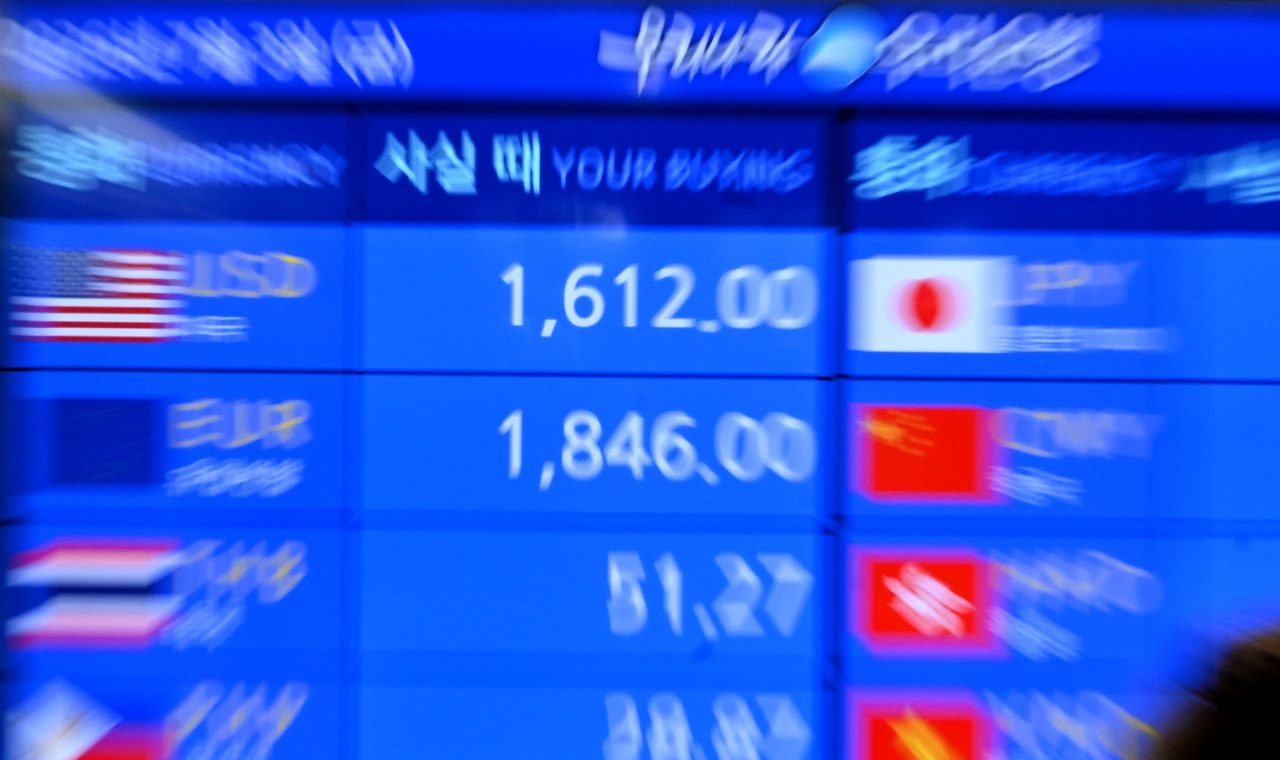
The average won-dollar rate in the first half of this year stood at 1,484.56 won — the second highest on record for any first half, trailing only the 1,493.08 won average during the currency crisis in the first half of 1998. The rate has held above 1,500 won for 34 consecutive trading days from May 15 through July 3, the longest such streak since the currency crisis.
The won's weakness has stood out even among major currencies. The won fell 5.92 percent against the dollar from the start of this year through July 3, the third-largest decline among G20 currencies, behind only the Turkish lira and the Indonesian rupiah. That drop is more than double the roughly 2.7 percent gain in the dollar index over the same period.
Market participants point to the flight of foreign capital as the primary driver of the won's weakness.
Foreign investors net sold more than 156.5 trillion won ($101 billion) worth of shares on the main stock market from the start of this year through July 3 — far exceeding the pace seen in the first half of last year. Analysts say the pressure on the won has intensified as foreigners sell domestic equities and convert the proceeds into dollars.
Experts forecast the won will remain elevated at around 1,500 won in the near term, as foreign investors are likely to continue rebalancing their portfolios for some time.
"There is no shortage of analysis suggesting foreign investors still have room for additional net selling," said Seo Jeong-hun, a senior research fellow at Hana Bank. "The exchange rate will likely stay above 1,500 won at least through early August."
Still, there is hope that extending trading hours could have a positive effect on won demand and exchange-rate stability over the medium to long term.
If offshore investors who have been trading in the non-deliverable forward market due to previous time restrictions shift to the domestic market, dollar supply could increase and price discovery could improve.
"Overseas financial institutions have shown strong interest in the extended trading hours," said Lim Hwan-yeol, a senior researcher at Woori Bank. "We expect the change to draw offshore demand into the onshore market."
Some analysts caution, however, that trading volumes may be insufficient in the early stages of the new regime, potentially amplifying volatility rather than dampening it.
"In the early phase, with few market participants, there is a risk that gaps in asking prices could widen price volatility," said Moon Jeong-hee, chief economist at KB Kookmin Bank. "As trading settles and liquidity grows, conditions should gradually stabilize."
The government plans to further upgrade won trading infrastructure, including introducing an offshore won settlement system next year. Markets view the shift to round-the-clock trading not so much as a short-term fix for the exchange rate, but as a first step toward won internationalization and the modernization of South Korea's foreign exchange market.
attom@heraldcorp.com