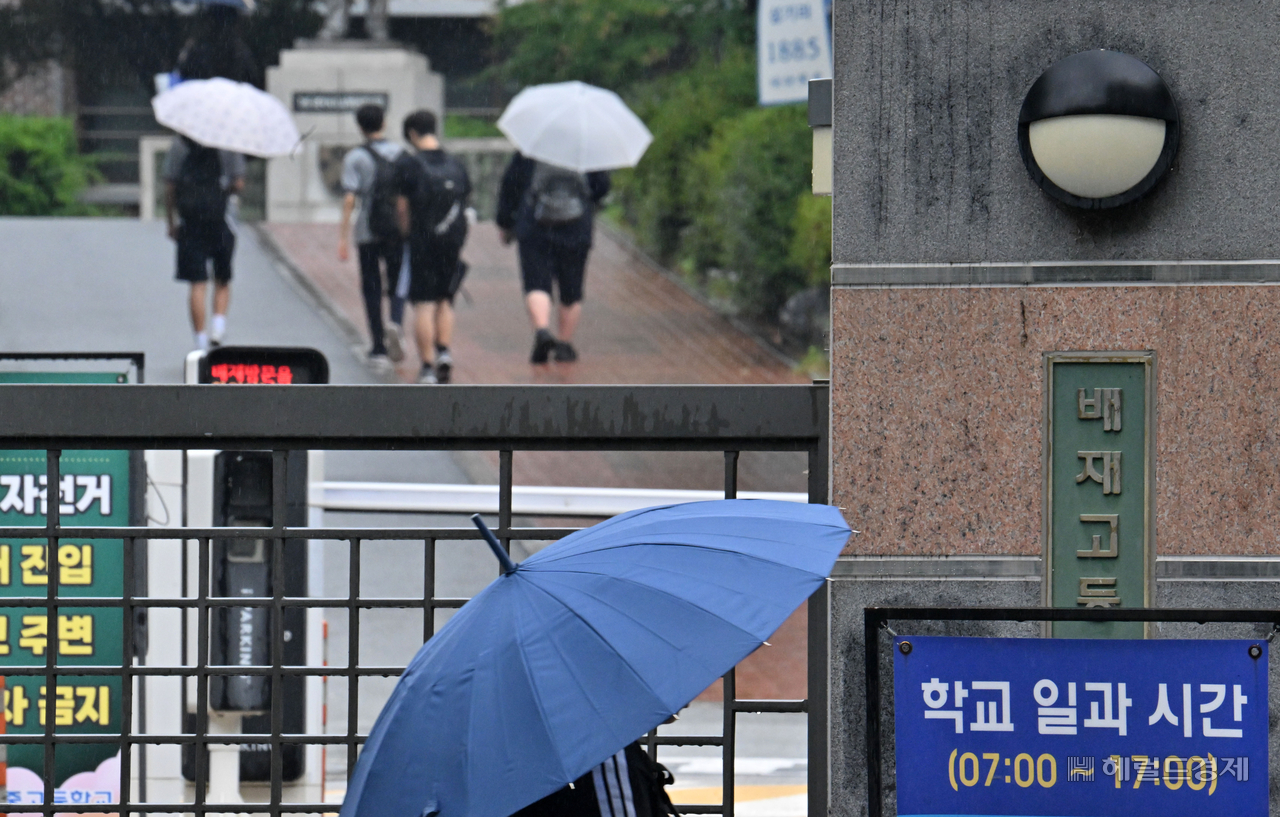
The social fallout from Baejae High School's baseball team and its inappropriate cheering chants shows no sign of abating. Parents of baseball players — including those from Baejae — have begun calling for self-reflection over what they describe as a deeply entrenched culture of unsportsmanlike taunting in youth baseball. Meanwhile, police have launched an investigation after an online post threatened that explosives had been planted at Gwangju First High School, the team's opponent in the game at the center of the controversy.
Members of the country's largest online community for baseball parents — with 45,000 members — have been voicing sharp criticism of dugout taunting culture in the wake of the Baejae incident, according to Yonhap News Agency.
In a recent post, one parent wrote: "Adults allowed this kind of cheering culture because winning was everything. Raise your hand if you ever protested to a coach or manager and said 'this is wrong.' No one here is without responsibility."
Another parent said the culture of mockery from the dugout was "a long-standing bad habit," adding: "Baejae clearly crossed a major line, but as parents we have to acknowledge that a harmful culture exists — it's just a matter of degree."
The same parent recalled a post-game incident: "After a game, parents got very angry and started shouting at the opposing players. The opposing players came over, bowed and said 'we're sorry,' then walked away laughing. I remember being absolutely furious."
Analysts say the phenomenon stems from the "elite sports" model that dominates youth athletics in South Korea.
Jeon Yong-bae, a professor of sports management at Dankook University and an adviser to the Korea Baseball Organization commissioner, told Yonhap that elite sports inevitably breed an obsession with winning. "Talking to these players about sportsmanship is like telling a student cramming for the college entrance exam to always live righteously," he said.
Kim Hyun-su, chair of the Citizens' Alliance for Sports and a former head of the National Human Rights Commission of Korea's special sports human rights investigation unit, said current sports human rights education "in effect only covers physical and sexual assault," adding that "hate and mockery are an entirely different problem."
Kim Chang-woo, chair of the Athletes' Parents Alliance, said human rights video programs produced by the Korean Sport & Olympic Committee and the Sports Ethics Center are often left running without anyone watching, making them largely ineffective. "It would be far better to give parents who know the sports environment well the opportunity to participate as educators," he said.
The threats have also extended to Gwangju First High School, the opposing school in the game that sparked the Baejae controversy. The Korean National Police Agency said it would "respond strictly" to any online posts that defame or threaten schools or students involved in the case, including those constituting violations of the Act on Promotion of Information and Communications Network Utilization and Information Protection or public intimidation charges.
Police received a report Friday that a post had appeared online claiming explosives had been planted at Gwangju First High School. Authorities evacuated students and staff with the help of the fire department and searched the campus, but no explosives were found.
The threatening post was reported to contain claims that the futures of Baejae High students — who received heavy disciplinary penalties for their mocking chants targeting the Gwangju First High baseball team — had been ruined.
The Baejae High baseball team is scheduled to visit Gwangju First High School on Sunday to deliver a formal apology for chants that mocked the May 18 pro-democracy uprising and denigrated the region.
20ki@heraldcorp.com