
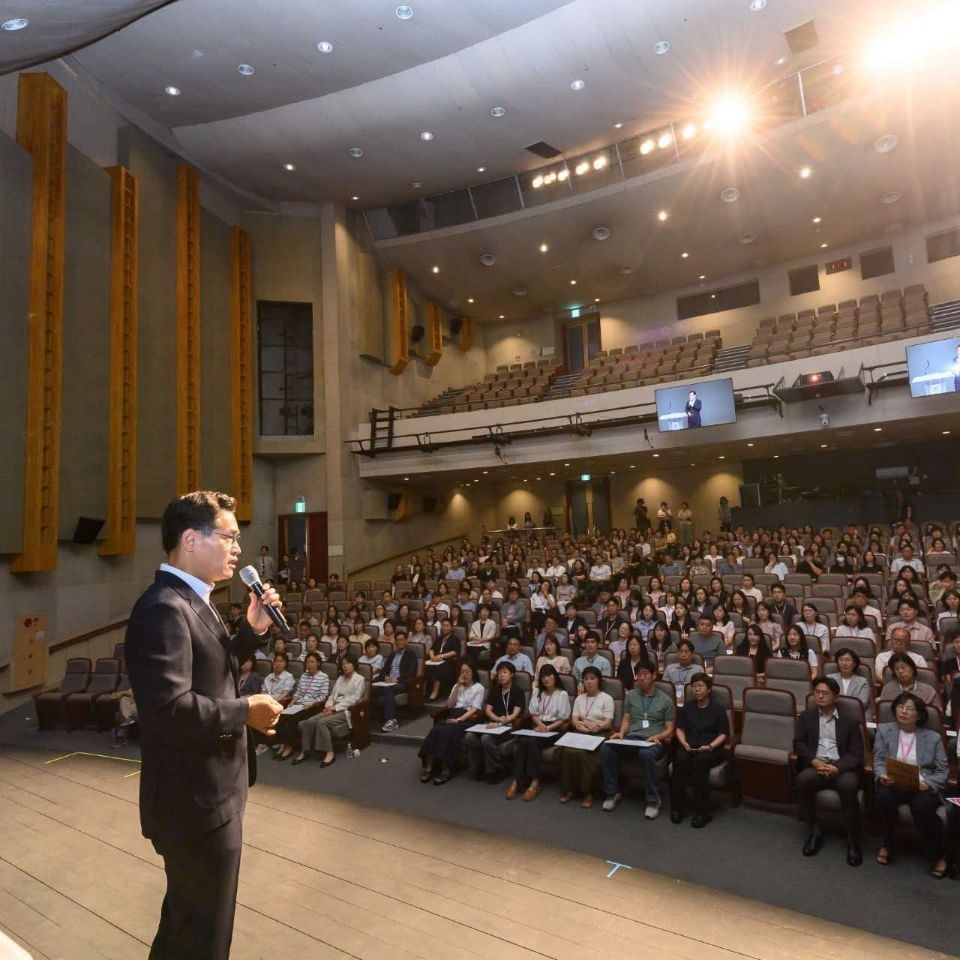
Lee Gi-jae, the Yangcheon-gu district mayor known among colleagues as a "gentleman," opened his second term by forgoing a large public inauguration in favor of a staff assembly, signaling a commitment to practical governance from the outset.
Lee said he chose to skip the customary inauguration ceremony to concentrate the organization's energy on policy execution, cut unnecessary event costs and reduce administrative waste, and focus on delivering results that residents can feel directly.
The staff assembly was attended by more than 410 senior officials and team leaders at Grade 6 and above — the core of the district administration. The event centered on sharing the vision and key priorities for the new term and reaffirming each department's commitment to driving policy over the next four years.
Lee outlined seven administrative goals to guide Yangcheon-gu's "uninterrupted progress" over the coming four years, stressing field-centered governance and proactive communication.
The seven goals are: a convenient city, a green future city, an economically vibrant city, a safe city, a premium education city, an enjoyable city and a warm city.
Expanding the urban rail network tops the priority list — the district plans to push forward the Seonam Line (formerly the Mokdong Line), the Gangbuk Transverse Line and the Sinjeong Branch Line extension to Gimpo, while accelerating 66 urban renewal projects involving reconstruction and redevelopment to raise the city's competitiveness and residential quality.
Alongside this, the district aims to build business infrastructure to secure future growth engines, expand support for residents affected by airport noise, establish an education special zone, promote culture and leisure, and broaden tailored welfare services — all toward making Yangcheon "a better place to live, a district with an even brighter tomorrow."
To strengthen momentum behind key projects in the new term, the district established two dedicated units directly under the district mayor's office starting Tuesday.
A subway promotion team was set up to oversee the urban rail expansion drive, handling progress management, coordination with relevant agencies and strategy development. A new civil affairs communication office was also created to proactively manage major resident complaints and deepen direct communication with the community, marking the start of a more resident-focused approach to administration.
"I want the new term to be defined not by grand formalities but by substantive governance that looks more deeply into the lives of residents," Lee said. "I will focus all our energy on swiftly advancing policies aimed solely at Yangcheon's development and the happiness of its residents, stripping away unnecessary formality."
A senior official at the district office said Lee had long earned the trust and respect of staff through his clean and modest conduct. "Many say that choosing a staff assembly over a showy inauguration is entirely in keeping with who he is," the official said. "Residents, too, are responding positively, seeing it as a practical start to governance."
Having won reelection, Lee's decision to lead with substance over form has drawn attention to the pace of policy execution Yangcheon-gu is expected to maintain over the next four years.
seouldream01@heraldcorp.com




