VIP introductions scrapped; crowds spill outside art hall at inauguration
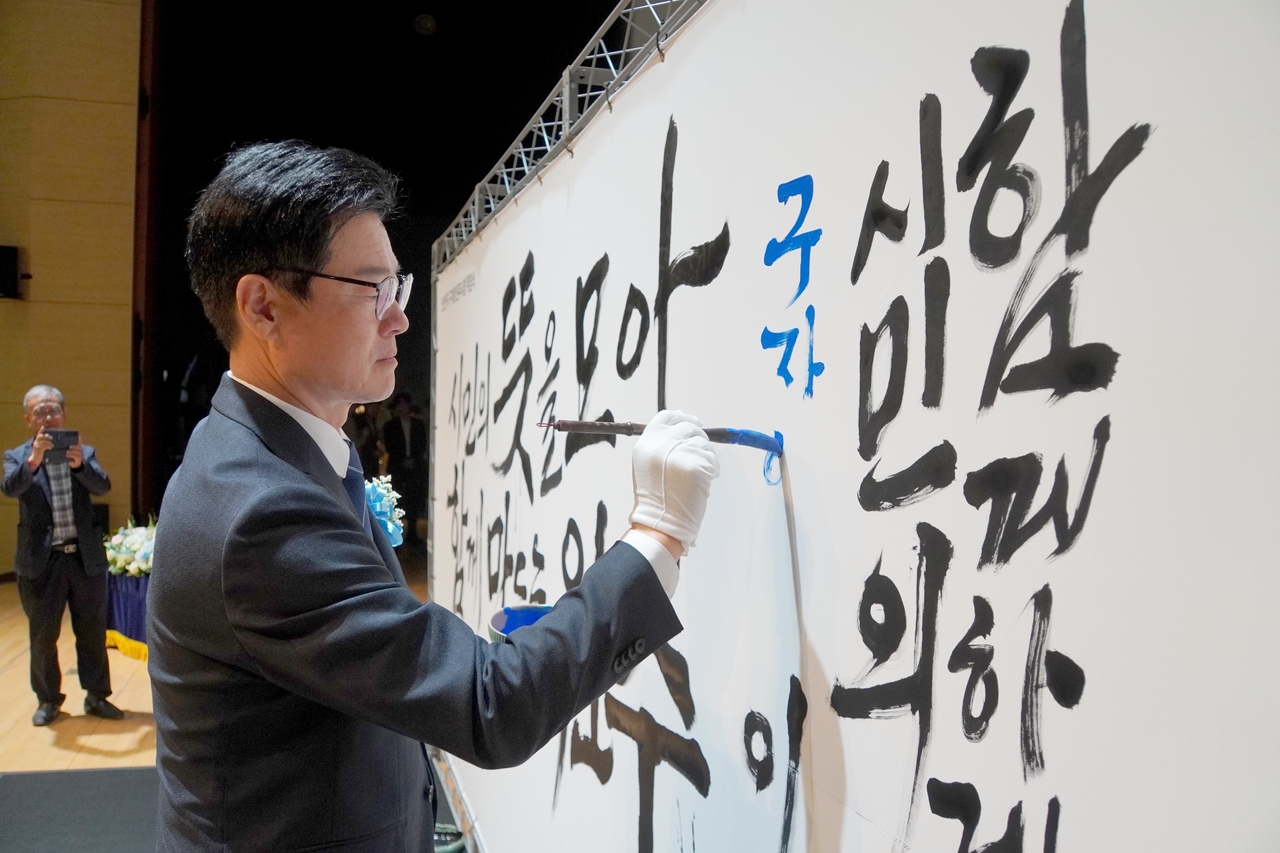
Newly inaugurated Wonju Mayor Koo Ja-yeol said Tuesday he would pursue economic stability, regional economic revitalization and the cultivation of future industries, anchoring his administration around what he called the "era of citizen sovereignty in Wonju" as the core value of the ninth directly elected city government.
He also urged city officials not to "lord over citizens," telling them to "run to the scene, listen, and solve problems."
President Lee Jae-myung sent a congratulatory letter to the inauguration, saying: "The people have entrusted me with the responsibility of running the country, and Mayor Koo Ja-yeol with the weighty duty of taking responsibility for the lives of Wonju residents. Our roles differ, but I believe the weight of responsibility we each carry — to improve people's lives — is no different. For South Korea's great leap forward, the role of local governments, which create change closest to where people live, has never been more important. Real change that people can feel will only begin when the central and local governments join forces. Let us all move forward boldly toward a Wonju where life is better, a South Korea that grows stronger, and a tomorrow full of hope. I ask that you keep your eyes on the people alone and fulfill the duty they have given you. I look forward to Wonju leaping forward as a region that creates warm change and new hope in the lives of its residents."
Koo held his inauguration ceremony Tuesday morning at Baekun Art Hall, adjacent to Wonju City Hall. About 1,000 people had been expected to attend — including citizens, community leaders from various sectors, heads of institutions and organizations, and civil servants — but more people turned out than anticipated, filling the hall to capacity and drawing additional crowds into the lobby and outside to celebrate his inauguration.
In keeping with the citizen-centered theme of the ceremony, the customary introduction of VIP guests was dropped entirely. Instead, only three groups were introduced: a 120-year-old woman recognized as the city's oldest resident, an ordinary family in their 30s building their lives in Wonju, and citizens who volunteer for the community.
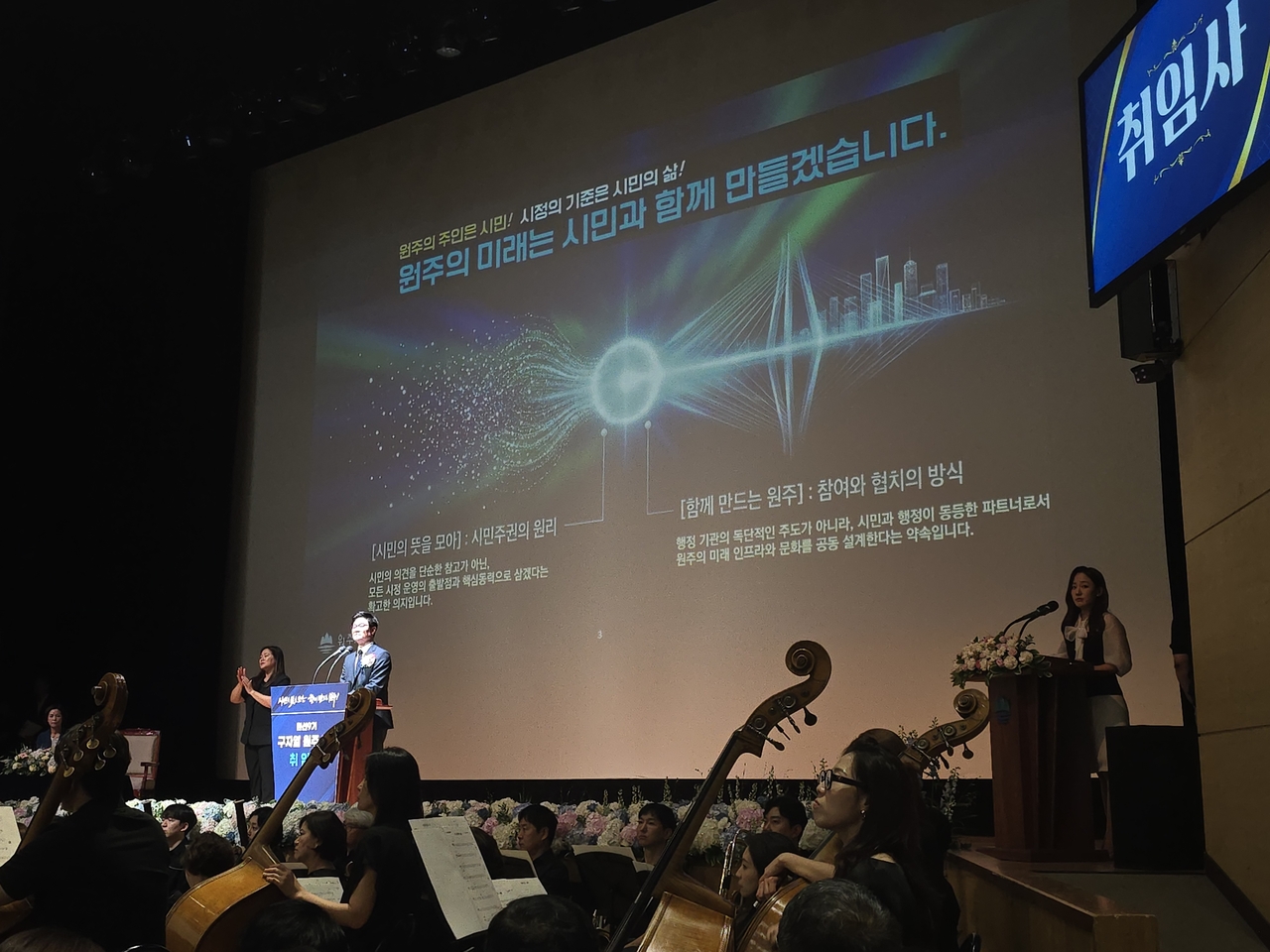
Koo laid out five policy directions for his administration: "Half-price Wonju," aimed at reducing the economic burden on citizens; "High-tech Wonju," positioning the city as a central hub for advanced technology in the mid-country region; "Vibrant Wonju," focused on attracting youth, families, women and the middle-aged; "Charming Wonju," to further develop tourism through culture, arts, nature and gastronomy; and "Safe Wonju," pursuing innovation in welfare, the environment and the social safety net.
On the high-tech agenda in particular, he outlined five priorities: introducing AI transformation, building a medical AI ecosystem, advancing transportation innovation and smart mobility, creating new spaces through the regeneration of idle land, and driving data-based commercial district innovation.
He stressed that these were "not election slogans but the policy direction of the Wonju city government," signaling his intent to keep his promises.
For city officials, he set out three directives: go to the field and practice hands-on administration; put citizens first and listen to their voices; and pursue innovative administration as problem-solvers.
"I will be an errand-runner who does not lord over citizens," he said. "I will be a partner who holds the cold hands of residents and shares responsibility for the joys and sorrows of their lives."
Using policy-making authority to control citizens has been a practice ingrained in local civil service culture for centuries — and one reason many young people aspire to become civil servants. Whether Koo can truly transform Wonju's public sector into one that serves at the citizens' behest remains to be seen.
abc@heraldcorp.com