Ministry of Land, Infrastructure and Transport holds comprehensive task force review meeting to discuss further reform measures
South Korea is accelerating efforts to dismantle a cartel built on networks of former railway public institution officials. In the first half of the year, Korail expanded penalties on companies that rehire retired employees, while the Korea Rail Network Authority sharply reduced the share of internal evaluators in bid reviews from 50 percent to 30 percent. The government has now pledged to pursue more fundamental reforms.
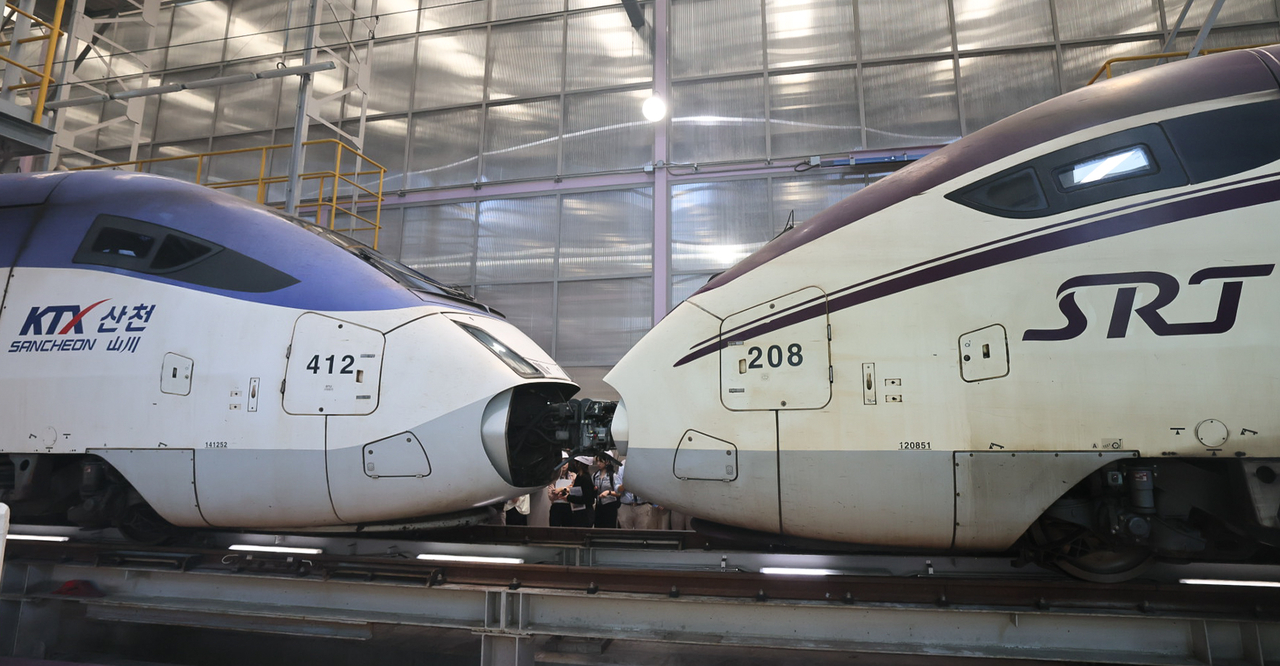
The Ministry of Land, Infrastructure and Transport said it formed a task force to fully block the longstanding old-boy network among railway sector retirees and dismantle the railway cartel entirely. The ministry held a comprehensive review meeting Monday to assess progress and discuss additional improvement measures. Korail, the Korea Rail Network Authority, the Korea Railroad Research Institute and SR are all participating in the task force.
Each institution reported that it has been monitoring and managing the implementation of countermeasures through its own internal task force on a monthly basis. Initiatives such as building a database of retired employees, expanding integrity education and introducing third-party oversight are all proceeding on schedule.
Korail revised its contract processing guidelines on April 15 to apply penalty deductions to companies that rehire retired employees, and has already applied the new rules to a recently announced tender for new ITX-Maeum trains. The company also ran an expert observer program as a third-party oversight measure during its 2026 rolling stock procurement process to ensure fair bidding.
SR added a clause blocking preferential treatment of former officials to its retiree security pledge agreements in May, and plans to pilot a QR code-based voluntary disclosure system from August — requiring bidders to self-report whether any retired SR employees are on their payroll.
The Korea Rail Network Authority cut the share of internal evaluators in comprehensive evaluation reviews from 50 percent to 30 percent, and extended the restriction period on contracts involving retired employees from two years to three years for negotiated contracts. The changes aim to block former-official networks from winning deals and to strengthen fair contracting practices.
The Korea Railroad Research Institute, meanwhile, revised its inspection manual to ensure a fair and reliable type-approval process for railway vehicles. It also plans to build an AI-based conflict-of-interest monitoring system — tentatively named the "AI Conflict-of-Interest Monitoring System" — to proactively detect and prevent conflicts of interest among type-approval inspectors.
Kim Tae-byeong, director general of the ministry's Railway Bureau, said all railway institutions must live up to their responsibilities as trusted public bodies. "Korail and SR, which will merge in September, as well as the Korea Rail Network Authority and the Korea Railroad Research Institute, must fulfill their duties as integrated public institutions that earn the public's trust," Kim said. "The ministry will boldly reform the system and carry out eradication measures without fail so that all railway institutions lead the way in change and innovation."
smh@heraldcorp.com