Top-tier strategic body to chart Seoul's future
10 subcommittees covering housing, transport, economy, youth and balanced development
G3 Seoul Plan to be unveiled in September
Mayor Oh: 'We will deliver change that citizens can feel'
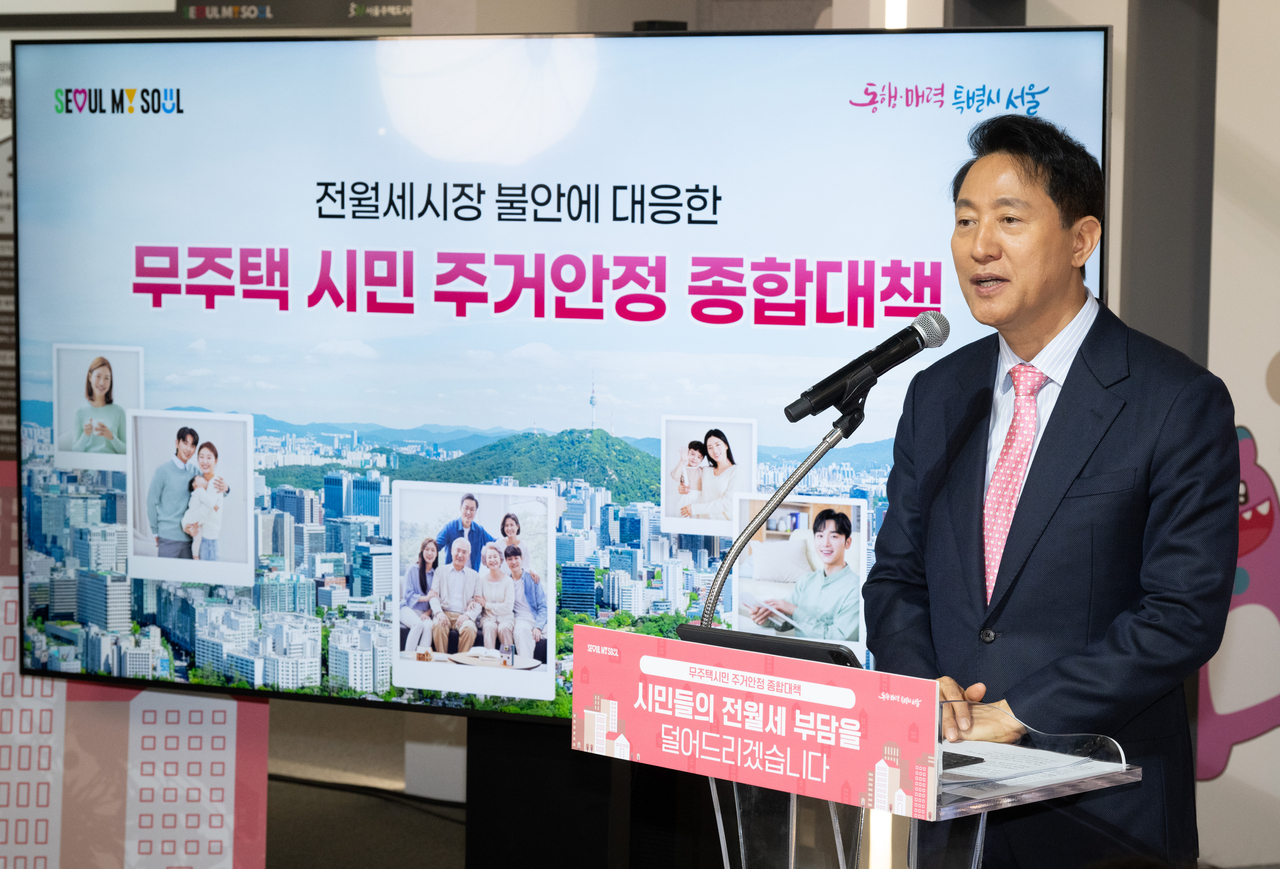
A project to propel Seoul into the ranks of the world's top three cities is now officially underway. The Seoul Metropolitan Government has pledged to move at speed so that residents can feel the difference.
The city announced the formal launch of the G3 Seoul Planning Committee — its highest-level policy planning body tasked with designing Seoul's future under the ninth elected administration — and said it has begun work on a "G3 Seoul Plan."
Last year, Seoul ranked sixth in the Global Power City Index published by Japan's Mori Memorial Foundation Institute for Urban Strategies, holding the same position as the year before. The gap with fifth-place Singapore, however, narrowed sharply — from 98 points the previous year to just 5 points.
The G3 Seoul Planning Committee is a public-private collaboration platform that will map out the city's vision and strategy over the next four years, serving as the central body for drafting the policy blueprint of the ninth elected administration. Drawing on the committee's deliberations, the city plans to develop the G3 Seoul Plan — aimed at lifting both urban competitiveness and residents' quality of life to world-class levels — and give concrete shape to a new growth vision for Seoul.
The G3 Seoul Plan is the administration's flagship comprehensive plan for the next four years, built around the vision of making Seoul a "Global Top 3 city and a special city for quality of life." It will set out strategic goals, priority tasks and an action plan.
The Seoul Metropolitan Government held the committee's inaugural ceremony Monday morning at the multipurpose hall on the eighth floor of Seoul City Hall.
The committee will define Seoul's future vision and growth strategy, identify and coordinate key policy tasks across sectors, and — crucially — translate policy ideas into concrete projects and institutional measures that feed into the G3 Seoul Plan. The committee is scheduled to operate for about 70 days following its launch.
Ahead of the launch, the city appointed former Seoul Deputy Mayor for Political Affairs Kim Byung-min and Lee Chang-moo, a professor of urban engineering at Hanyang University, as co-chairs of the committee. About 95 private-sector members will participate, organized into 10 subcommittees: seven sector-specific panels covering areas closely tied to daily life, and three special subcommittees addressing the administration's core agenda items.
The seven sector panels cover health and vitality, housing stability, transport innovation, the future economy, inclusive growth, global appeal, and safety and environment. The three special subcommittees handle overall vision coordination, youth affairs, and balanced development. The vision coordination panel will oversee and align Seoul's future direction and strategic framework; the youth panel will focus on issues critical to the younger generation — housing, employment, AI and social isolation; and the balanced development panel will conduct a comprehensive review of project structures and strategies to produce tangible results in narrowing the development gap between Gangnam and the areas north of the Han River.
The committee was deliberately composed to go beyond academic experts, incorporating practitioners with on-the-ground policy experience, young people, and voices from the fields of economy, culture, welfare and safety. The aim is to ensure the G3 Seoul Plan moves beyond declaratory vision and takes shape as a practical action plan that changes residents' lives.
Topics on the committee's agenda span housing supply, youth policy, health management, waterfront and green space, urban rail expansion, commuter transport, livelihoods, care services and public safety — a broad range of issues that bear simultaneously on Seoul's competitiveness and its residents' quality of life.
The committee will also designate high-impact, quick-win tasks as "Overwhelming Completion Projects," to be managed separately. By intensively reviewing flagship initiatives directly tied to daily life — covering livelihoods, housing, transport, care and safety — the city aims to produce visible policy results from the outset of the new administration.
The city plans to release the G3 Seoul Plan in September, following the committee's deliberations.
"The G3 Seoul Planning Committee is a platform for collective intelligence to design the next four years of Seoul, and the starting point of the ninth elected administration," Mayor Oh Se-hoon said. "We will gather the insights of top experts and the voices from the field to build an actionable plan that citizens can feel."
ikson@heraldcorp.com