UN International Day Against Drug Abuse
Addiction Recovery Forum held at National Assembly
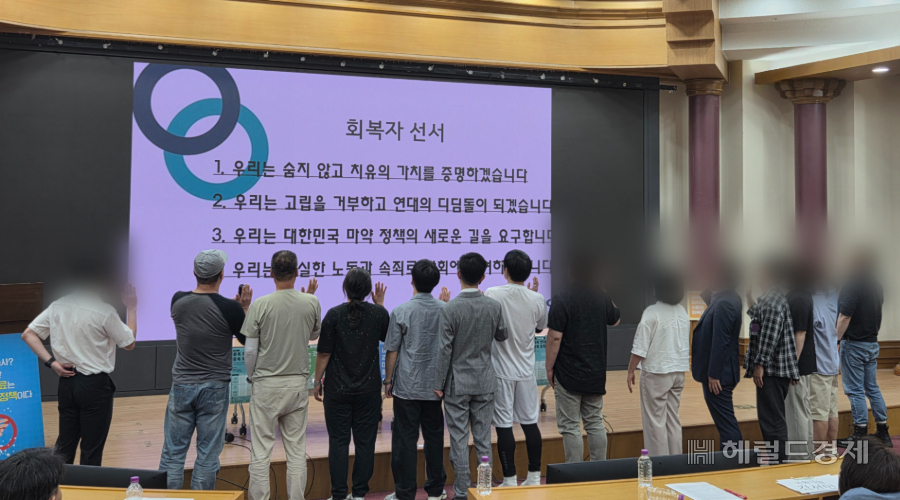
"We refuse isolation and will become stepping stones of solidarity." "We will contribute to society through honest work and atonement." "We will not hide — we will prove the value of healing."
These were the words of the recoverers' pledge recited Friday by people living with or recovering from drug addiction, who gathered to mark the UN International Day Against Drug Abuse on June 26. Those who have achieved recovery and those still in the process came together to share mutual support, comfort and encouragement.
The Addiction Recovery Alliance hosted the forum at the National Assembly Members' Office Building in Yeongdeungpo-gu, Seoul. Participants shared personal accounts of the recovery process and discussed policy proposals for improving the institutional framework surrounding rehabilitation.
The forum was attended by Rep. Kim Seon-min of the Rebuilding Korea Party, Yun Hyeon-jun, head of the Addiction Recovery Alliance, and Lee Dong-wook, secretary-general of the Korea Addiction Support Center.
Recovering addicts took the floor first, describing the policy failures they had experienced during their addiction. Park Se-hyeok, a recovery support worker at the Korea Anti-Drug Movement Headquarters known by the nickname "Baccus Park," said he had spent 20 years addicted to drugs, accumulated seven drug-related convictions and served more than 13 years in prison. "In all that time, I cannot recall a single instance of receiving education for treatment or recovery," he said, pointing to the absence of rehabilitation programming within the corrections system.
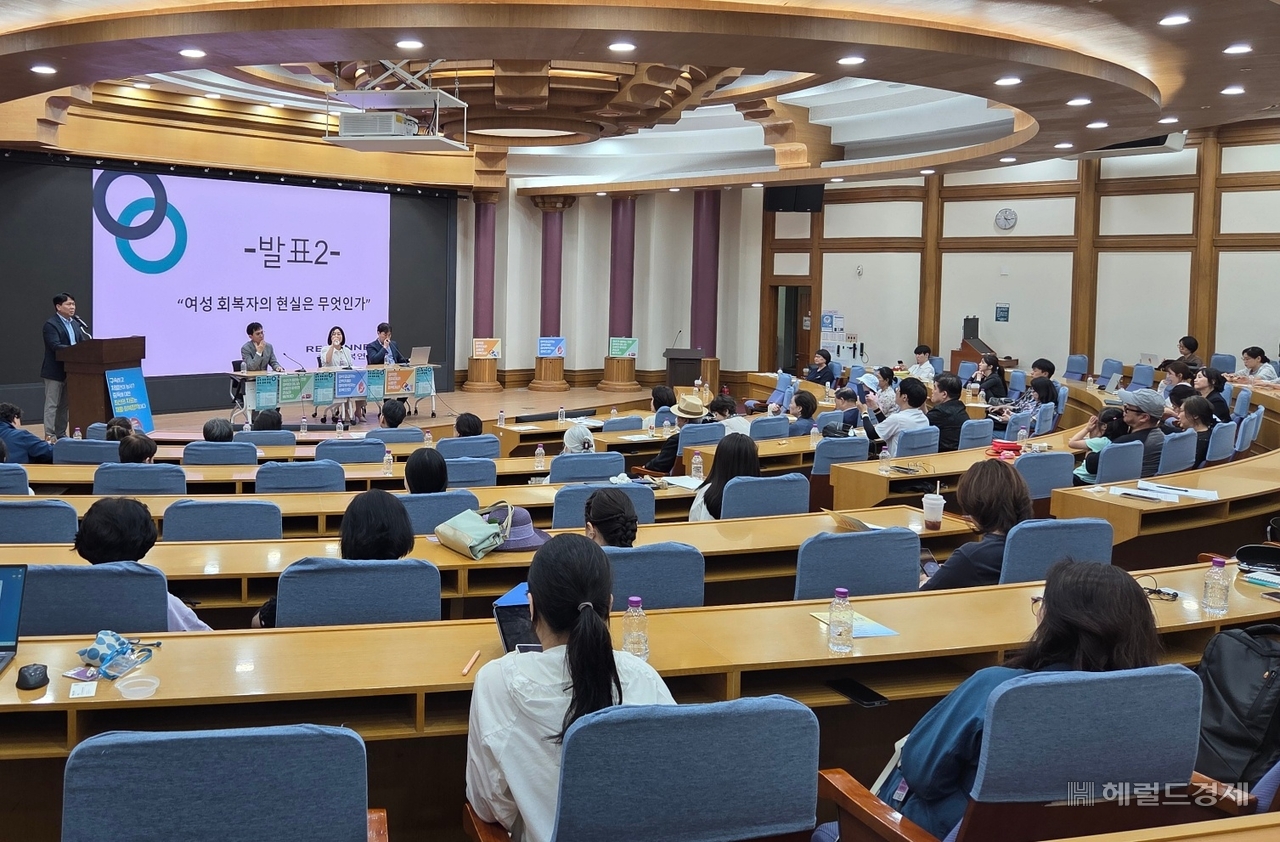
Park also cited Article 2, Paragraph 2 of the Narcotics Control Act, which requires the state and local governments to take measures and secure funding to prevent drug abuse and to promote treatment, protection and social welfare for drug addicts. "But what is the reality?" he said. "I have never once felt that responsibility — so clearly written into law — actually being fulfilled."
"The law says protect us, but reality does not," Park said. "I only hope that what has already been written into law will actually be carried out. It is the desperate wish to receive help from fellow recovering addicts that brought me here today," he said.
Ban Seung-yeong, an activist with the Jesus Walk Together movement, said he had hoped for systematic rehabilitation when he entered prison, as policies had changed and drug education and treatment facilities for drug offenders were now in place. "But I was left to fend for myself," he recalled.
Ban said he had reached out to Lee Dong-wook of the Korea Addiction Support Center and others outside the prison walls for help. "I managed to get recovery books sent in and studied on my own," he said.
"Inside prison, you cannot see even one step ahead," he added. "Most people just give up, thinking recovery is impossible. Even if full-scale education is not feasible inside prison, having people who have recovered come in to share their experiences and run peer support groups would make a real difference for addicts trying to recover."
The Ministry of Justice, which oversees corrections for drug offenders, also presented its rehabilitation programs at the forum. Lee Seung-ryong, a corrections officer with the ministry's Drug Offender Rehabilitation Team, said the number of drug-related inmates at correctional facilities had doubled over the past six years. "About 12 percent of the total inmate population of roughly 63,000 are drug-related inmates," he said.
Lee said the ministry established a dedicated addiction rehabilitation unit — the Drug Offender Rehabilitation Team within the corrections bureau — in June 2023 in response to the surge. The team oversees the development of drug rehabilitation policies for correctional facilities and the construction of educational infrastructure to support them, he added.
"Those whose sentences have been confirmed on drug charges undergo various psychological assessments to evaluate their level of addiction, and are then classified and assigned to the appropriate rehabilitation programs," Lee said. Corrections officers with specialized qualifications in addiction psychology, along with outside instructors, run tailored rehabilitation courses that include group programs, individual counseling and support for social reintegration, he added.
The corrections bureau's drug rehabilitation programs are also expanding. Lee said dedicated drug offender rehabilitation divisions had been newly established this year at correctional facilities in Hwaseong, Busan and Cheongju Women's Prison, following recognition of the bureau's policy achievements. "If additional dedicated units and personnel are added next year, we expect to be able to provide professional rehabilitation treatment at correctional facilities," he said.
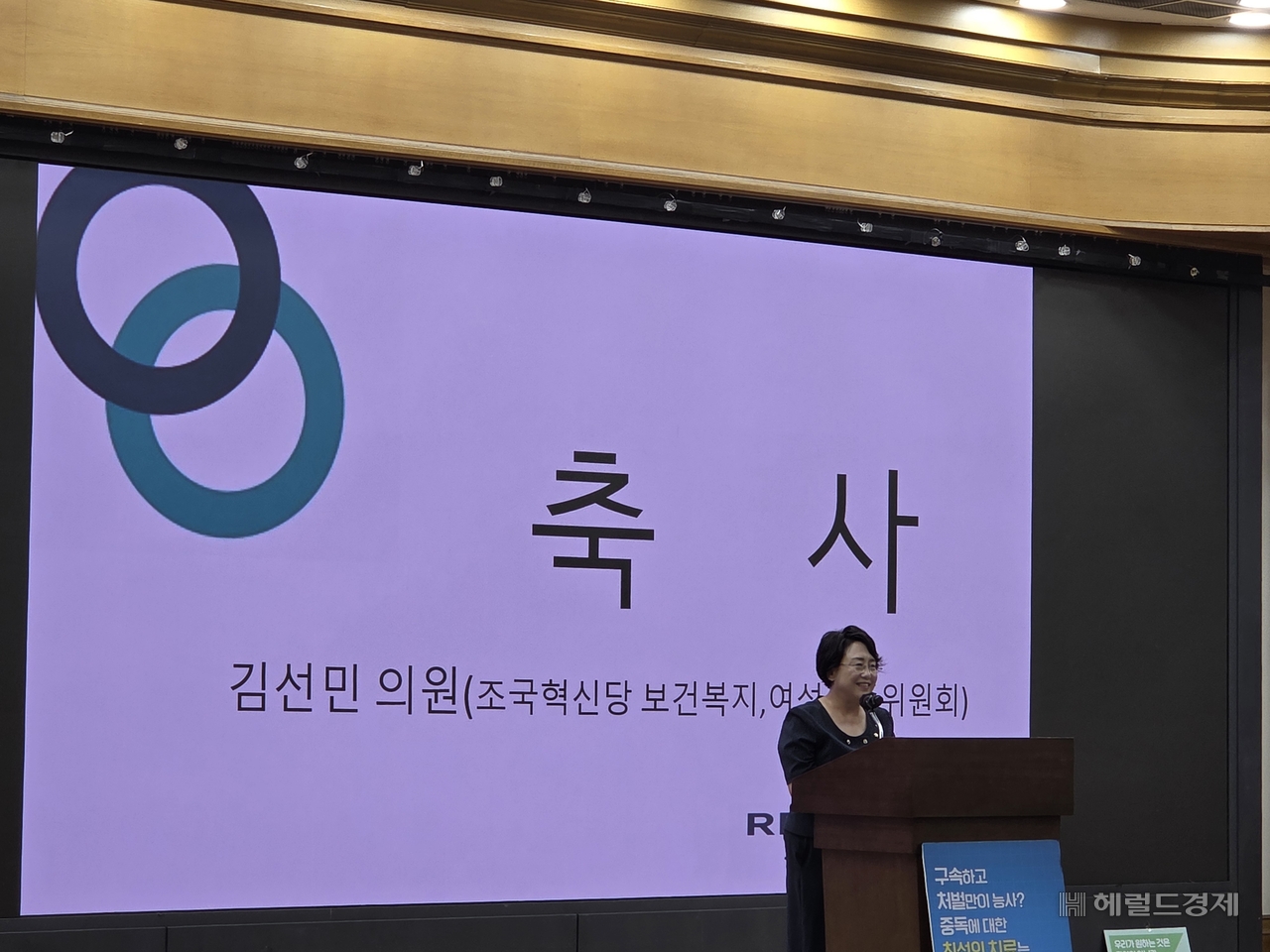
At the forum, Rep. Kim Seon-min, a physician-turned-lawmaker from the Rebuilding Korea Party, said the country's largest drug treatment ward — at the National Bugok Hospital — would be unable to operate its inpatient ward from August due to a shortage of doctors. "Even in such a difficult environment, there are people dedicating themselves to addicts and their families, and that gives me hope," she said.
Kim said it is widely understood that addiction cannot be overcome by willpower alone, and that recognizing this is the first step toward treatment. "If you identify the structural problems in our society that are preventing addicts from recovering, I will do my utmost to ensure that legislation and budget support follow," she said.
Yun Hyeon-jun, standing chair of the Addiction Recovery Alliance, said punishment-centered policies toward drug addicts had already shown their limits. "This third forum is a direct challenge to break the dark prejudices of our society. We will work to overcome the social and legal stigma that brands people as addicts," he said.
"Our entire society must come together to build an ecosystem of recovery," Yun added. "It is difficult for any individual to succeed on willpower alone. A policy shift is needed so that a tightly connected recovery ecosystem can be built for those overcoming addiction."
20ki@heraldcorp.com