
Jung Kwang-woo, chairman of Panotech, developer of energy-saving solutions
'Negawatt' and 'energy harvesting' represent new energy sources
Reducing carbon emissions: the most economical and eco-friendly energy approach
The answer lies not in energy to be created, but in energy not to be wasted
"Declare 'Energy Circular City Busan' vision and build a roadmap"
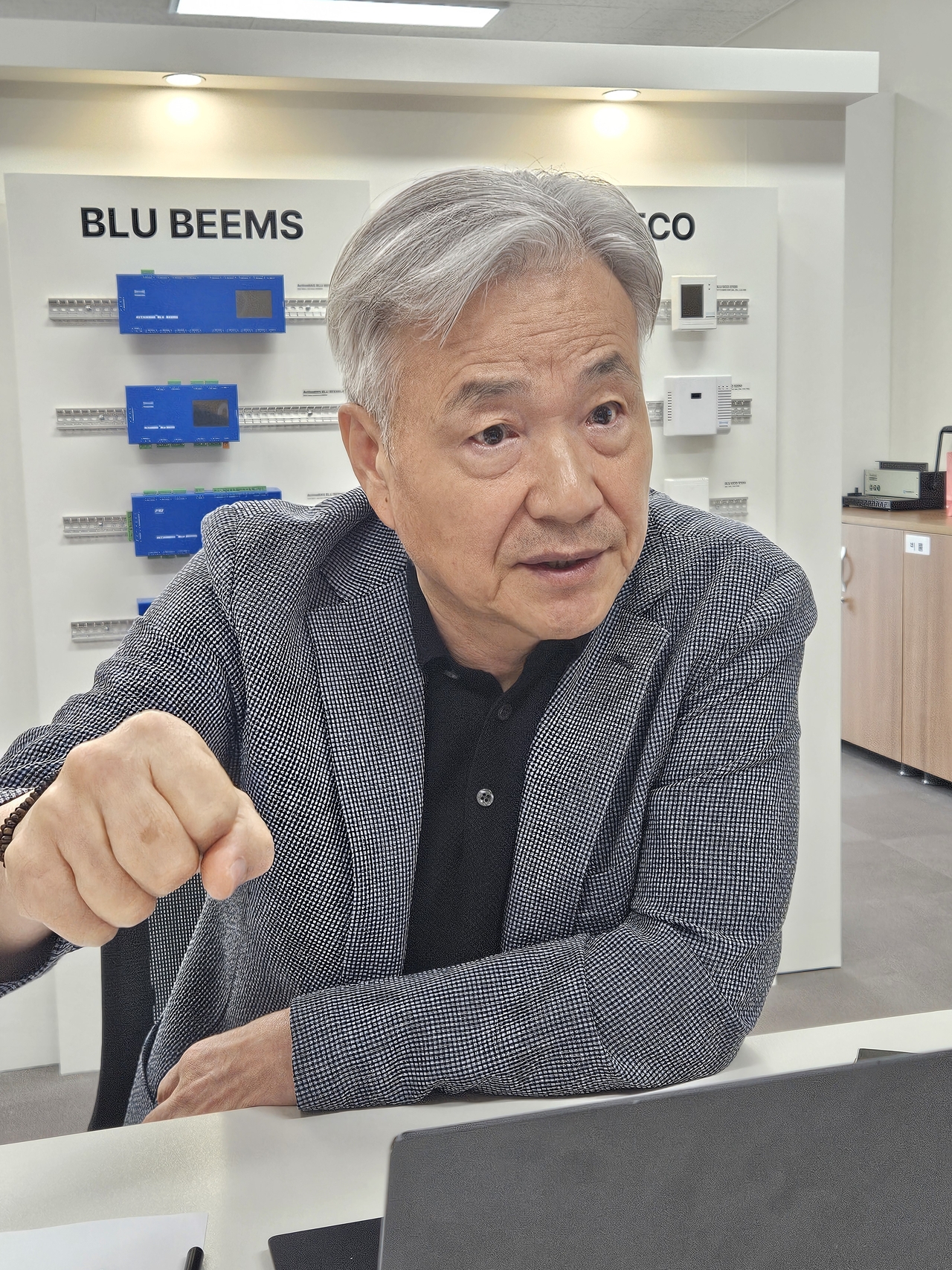
"Busan's competitiveness as a maritime capital will be determined not by the size of its ports or cargo volume, but by its energy competitiveness." As large-scale projects that will significantly increase energy demand — including the Gadeokdo New Airport, the Bukhang redevelopment and Eco Delta City — move forward, calls are growing for Busan to overhaul its energy strategy ahead of the launch of the city's ninth elected administration.
Jung Kwang-woo, chairman of Panotech and a visiting professor at Konkuk University's Department of Industrial and Management Engineering, sat down for an interview June 22 at Busan Venture Town in Mora-dong, Busan. "The answer lies not in energy we need to create, but in energy we must not throw away — and that is Busan's future growth engine," he said. The interview centered on two keywords — negawatt and energy harvesting — and explored the energy policy and carbon-neutral future that Busan, as South Korea's maritime capital, should pursue.
— What drew your attention to "negawatt" rather than RE100?
▶ RE100 — the voluntary campaign for companies to source 100 percent of their electricity from renewable energy by 2050 — is absolutely necessary, but it is not sufficient on its own. Saving energy is cheaper and faster than producing it. The question we should be asking is not "how much can we generate?" but "how little do we need to use?" A negawatt treats conserved electricity itself as a new energy resource. Unlike solar or wind power, it is unaffected by weather or seasons, making it the most stable energy source available.
— You mentioned there are several methods within the negawatt concept. Could you elaborate?
▶ The first is negawatt energy — energy produced by not consuming. It is the most economical and eco-friendly energy source available without building a single new power plant, and it can be secured through smart buildings, smart ports, demand response and high-efficiency equipment. The second is unused energy — energy that exists within a city but is discarded without being used, such as waste heat from ships, industrial complexes and data centers, sewage heat and LNG cold energy. The third is harvested energy — energy recovered from the surrounding environment, including vibration energy from ports and subways, pedestrian pressure energy, wind energy from building ventilation ducts, and wave and tidal energy. The fourth is surplus energy — energy left over after use — which can be put to work through inter-building power sharing, industrial-complex heat sharing, port energy sharing and reuse after storage in energy storage systems. The fifth is savings energy — energy secured through efficiency improvements such as LED lighting replacement, high-efficiency heating and cooling systems, inverter applications and smart controls.
— You noted that buildings account for 37 percent of global carbon emissions. What is the reality for public buildings in South Korea, and how much room is there for improvement?
▶ Building heating, cooling, ventilation and lighting account for about 27 percent, and construction and materials processes for about 10 percent, together making up 37 percent of energy-related carbon emissions. That means the battle for carbon neutrality is not just at power plants — it is in buildings. Energy efficiency in South Korean buildings is far below that of advanced countries. Public buildings are the ideal space for local governments to apply energy harvesting policies. Introducing zero-energy building standards, building energy management systems and AI-based smart control technology can cut energy consumption by 20 to 40 percent, and those savings themselves constitute negawatts.
— What are the specific ways to put negawatt into practice in Busan?
▶ First, AI-based building energy management systems should be expanded to public institutions and schools. Second, a smart port should be built around Busan Port through the electrification of cargo-handling equipment, shore power supply systems and AI-based energy control. Third, an energy harvesting industry should be nurtured to make use of waste heat from ships, LNG cold energy, industrial-complex waste heat and sewage heat, and pilot projects involving local companies should be expanded to build a new energy industry ecosystem. Finally, a citizen-participatory energy platform should be established to provide incentives and carbon points for energy savings.
— You ran a business in Pangyo, Seongnam, and taught students there. What motivated you to come to Busan and start a new venture?
▶ Seongnam has a population of about 920,000 and its buildings are concentrated in Pangyo, but the total energy output is not that large. Busan is a city where buildings, ports, logistics and maritime infrastructure are all concentrated. The range of sites where negawatt and energy harvesting can be applied — not just buildings but ships as well — is more diverse than in any other city. With large-scale development projects such as the Gadeokdo New Airport, Jinhae New Port, Bukhang and Eco Delta City all moving forward at the same time, it is also a land of opportunity where energy circular design can be incorporated from the outset.
— Where would you say Busan's current energy policy stands?
▶ Busan has consistently laid the groundwork for carbon neutrality through expanding renewable energy, improving energy efficiency in public buildings and building an eco-friendly transportation system. Its weakness is that energy policy remains supply-oriented. Going forward, energy demand will surge as large-scale national projects advance — the Gadeokdo New Airport, Jinhae New Port, Bukhang redevelopment, Eco Delta City and AI data centers. The city must move beyond producing energy and evolve into an "energy circular economy" that conserves, recovers and reuses it. As South Korea's maritime capital, Busan holds a diverse array of energy resources — ports, ships, industrial complexes and public buildings — giving it the optimal conditions to build the country's first "energy circular city" model.
— In what direction should Busan's energy policy change?
▶ Busan's energy policy must shift from production-centered to circulation-centered. The measure of success should no longer be how many solar panels have been installed, but how much energy has been conserved, recovered and reused, and how many local companies have participated and created jobs. Citizens will sustain their engagement only if they receive tangible benefits — lower electricity bills, energy points — rather than the abstract concept of carbon neutrality. Cities that lead in carbon-neutral technology will attract future investment and talent. Resources secured through energy savings can be reinvested in youth employment, education, welfare and urban safety. Busan is not a city short on energy — it is a city overflowing with energy it has yet to tap.
— What policy proposals would you offer to the transition committee of Mayor-elect Jeon Jae-soo's ninth elected administration?
▶ Busan should be the first city in South Korea to declare a vision of "Energy Circular City Busan" and establish a roadmap for a virtuous cycle of production, conservation, recovery and reuse. The competitiveness of the maritime capital will be determined by energy competitiveness, not port size or cargo volume. A "five-pillar energy circular economy model" should be built, encompassing negawatt energy, unused energy, harvested energy, surplus energy and savings energy. By leveraging the unique strengths that only Busan as a maritime capital possesses, the city can simultaneously achieve carbon neutrality, local business growth, quality job creation and enhanced urban competitiveness.
kaf2002@heraldcorp.com




